
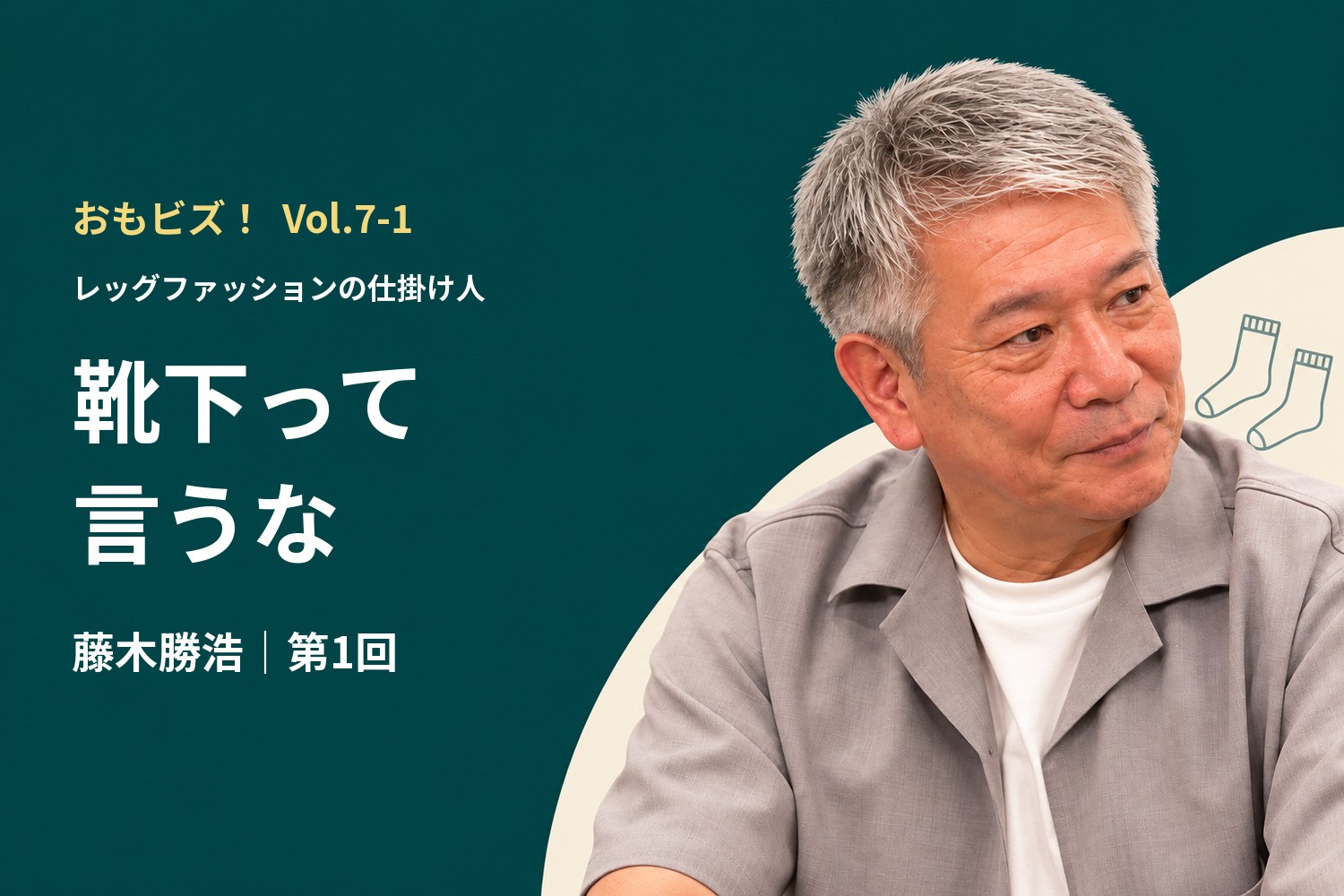
おもビズ! Vol.7-1 靴下はもう「靴下」と呼ばない|レッグファッションを仕掛ける社長・藤木勝浩 | 藤木勝浩さん 第1回
おもビズ! Vol.7-1
靴下はもう「靴下」と呼ばない|レッグファッションを仕掛ける社長・藤木勝浩 | 藤木勝浩さん 第1回
(The English version follows the Japanese text.)
毎日使う身近な商品に、どんな新しい価値を見つけられるでしょうか。おもビズの今回のゲストは、靴下の製造・販売を手がける株式会社マサキ代表取締役の藤木勝浩さん。幹てつやさんとザックさんが、長く続く市場をどう捉え、仕事の可能性を広げていくのかを聞きます。入口になるのは、靴下を「レッグファッション」と呼ぶ藤木さんの視点です。
藤木さんの仕事には、海外の工場で商品を作り、日本の流通へ卸すという流れがあります。普段、店頭で何気なく選んでいる一足も、作る人と届ける人の仕事を経て、私たちの手元に来ています。動画では、その事業の仕組みとともに、成熟市場と呼ばれる靴下業界が話題になります。身近すぎて見過ごしている商品を、作り手の側から見直すきっかけになる対話です。
市場について藤木さんは、一人あたり年間14〜16足、日本全体では年間14〜15億足という規模感を紹介します。これは動画内で示される藤木さんの説明です。40年変わらないと語られる市場を、藤木さんは「安定している」と捉えます。長く続く需要をどう受け止めるかによって、そこから考える事業の問いも変わる。その見方が、この回の大切な論点です。
そこで登場するのが、ライフスタイルを提案する「レッグファッション」という考え方です。足元に何を身につけるかを、暮らしや装いとの関係から考えてみる。そう捉えると、商品を見るときの関心も広がりそうです。自分たちが扱うものを、いつもの商品名だけで説明していないでしょうか。お客さんのどんな時間や場面に関わる仕事なのか、言葉にしてみたくなります。
対話では、コンビニの靴下が流行しているという話題も出てきます。日常の買い物の中で選ばれる商品にも、改めて目を向ける余地があります。どこで出会い、どんな理由で手に取り、どう使うのか。動画の話題を自分たちの仕事へ引き寄せるなら、そうしたお客さんの場面を観察してみることが、小さな実践の入口になるのではないでしょうか。
この回から考えたいのは、自分たちの仕事をどんな言葉で捉えているかという問いです。長く続いている需要を確かめ、その中で暮らしとの接点を探す。藤木さんの話は、身近な商品にも、まだ考えられることがあると気づかせてくれます。皆さんの仕事では、いつもと違う呼び方をすると、どんな価値が見えてくるでしょうか。靴下からレッグファッションへと視点が広がる対話を、ぜひ動画でご覧ください。
Omobiz! Vol.7-1:
No Longer Just “Socks”|Katsuhiro Fujiki on Creating Leg Fashion | Katsuhiro Fujiki, Episode 1
What new value could we discover in a product we use every day? This episode of Omobiz features Katsuhiro Fujiki, who heads Masaki (株式会社マサキ), a company that manufactures and sells socks. Tetsuya Miki and Zack ask how he sees a long-established market and the possibilities within his work. The starting point is Fujiki’s decision to describe socks as “leg fashion.”
Fujiki’s business involves making products at overseas factories and supplying them to distribution channels in Japan. An everyday pair of socks reaches us through the work of people who make it and people who bring it to market. The conversation introduces that business model and the sock industry’s reputation as a mature market. It offers a chance to reconsider a familiar product from the perspective of someone who produces it.
In the episode, Fujiki describes annual consumption as roughly 14–16 pairs per person and the Japanese market as 1.4–1.5 billion pairs a year. These figures are presented as his account in the conversation. He describes a market that has remained much the same for forty years and sees it as stable. How we understand long-standing demand can change the business questions we ask. That perspective is central to this episode.
His idea of leg fashion places the product within a proposal about lifestyle. What we wear on our feet can be considered in relation to daily life and the way we dress. Looking at it this way may broaden what we notice about the product. Do we explain what we offer only through its familiar product name? What moments in a customer’s life does our work contribute to? Those are useful questions to put into words.
The conversation also touches on the popularity of socks sold at convenience stores. Even products encountered during routine shopping deserve a fresh look. Where do people discover them, why do they pick them up, and how do they use them? For readers connecting the conversation to their own work, observing those everyday customer situations could be a practical first step.
This episode invites us to consider the language through which we understand our work: recognizing enduring demand and exploring how it connects with people’s lives. Fujiki’s account suggests that even familiar products leave room for further thought. In your own work, what value might become visible if you described what you do differently? Watch the episode to follow the shift in perspective from socks to leg fashion.



この記事へのコメントはありません。