
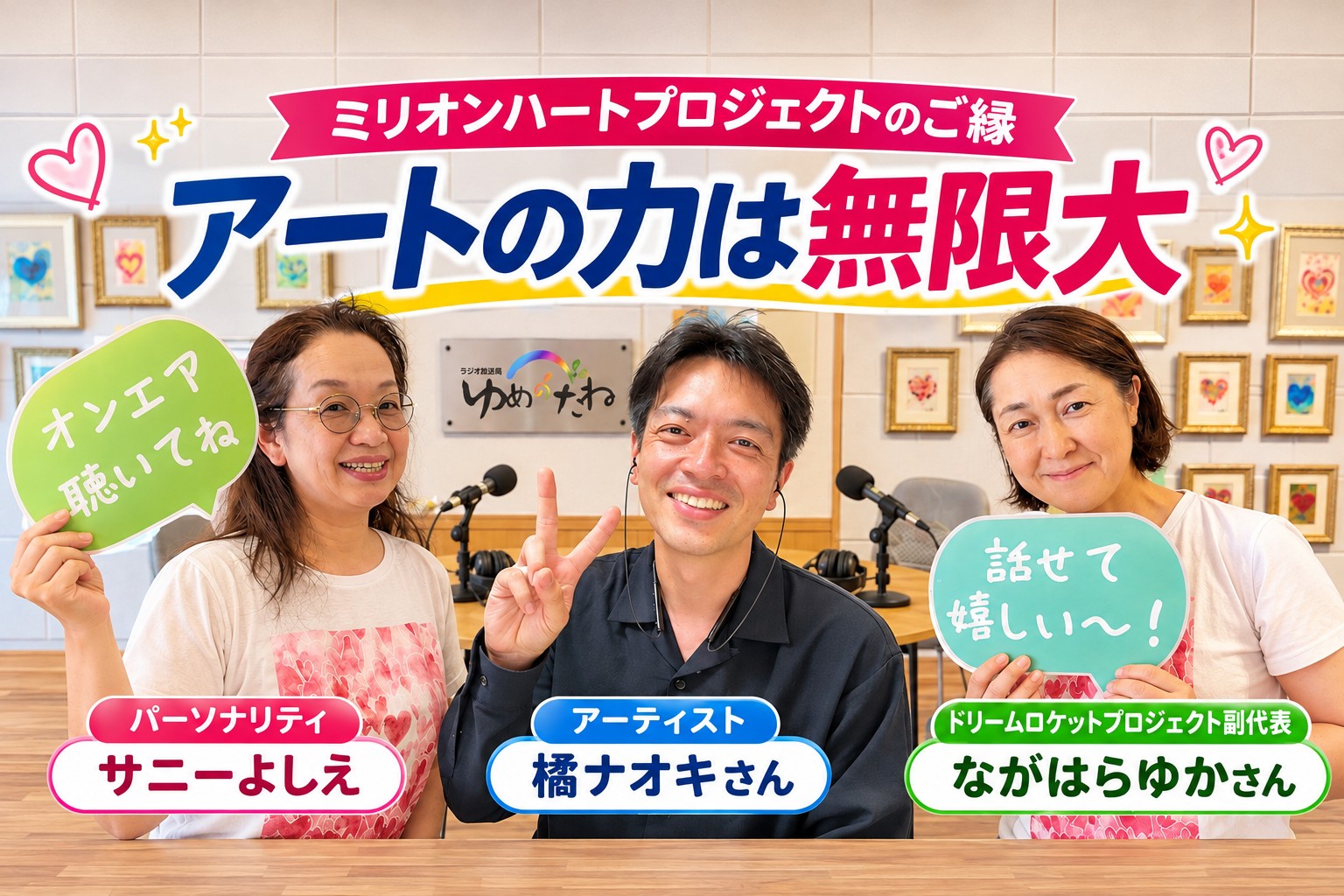
くも晴れ Vol.17 楽しむ気持ちから、応援の輪をつくる。
くも晴れ Vol.17
楽しむ気持ちから、応援の輪をつくる。
(The English version follows the Japanese text.)
ゲスト:アーティスト 橘ナオキさん/ドリームロケットプロジェクト ながはらゆかさん
「どんなことがあっても、自分にとっては最高の一日になる。」そんなコンセプトで、Creative Guildのコアメンバーの有賀 悦江さんがお届けするラジオ番組「It’s always sunny! くもの上はいつも晴れ」。今回は、大阪を拠点に活動するアーティストの橘ナオキさんと、ドリームロケットプロジェクトのながはらゆかさんを迎え、アートを楽しむ気持ちが、誰かを応援する力へとつながる対話をお届けします。
橘さんが取り組む「ミリオンハートプロジェクト」は、作品を手にする喜びとチャリティを結ぶ活動です。支援する人の手元にも自分が描いた絵が届く。その楽しさを大きくしたいと語ります。有賀さんとながはらさんも参加した富士山頂へのAED設置の挑戦では、橘さんが支援者向けの作品を山頂まで運び、そこから郵送しました。届いたはがきの消印を見て声を上げたという二人の話から、応援する側も挑戦を共にしていたことが伝わってきます。
作品は、頭の中に完成形を描いてから、その通りに仕上げるばかりではありません。橘さんが力を発揮しやすいのは、絵の具のにじみや、色と形が出会って起きる変化を見ながら描く方法。目の前の現象を受け取り、「こちらの方が美しい」「こうすると面白い」と、その都度判断を重ねます。自然に起きることとの協働ともいえる制作の話は、計画だけでは生まれない発見に目を向けさせてくれます。
人生の転機を尋ねられた橘さんは、障がいを持って生まれて来た息子さんの存在を挙げました。お子さんとの時間を優先し、ケアを中心に暮らしを組み立てるため、会社員を辞める選択をしたと振り返ります。家族との生活を考えた選択が、今のアーティストとしての歩みにもつながっている。その語りからは、仕事の形を、自分にとって大切なものから見直す視点も受け取れます。
話題は、ながはらさんたちが開く子ども向けのロケット教室へ。自分で作り、ボタンを押して飛ばし、回収する一連の体験を通じて、少し自信を持ってもらいたいといいます。話を聞いた橘さんも、この活動への関心を語りました。アートを応援していた人の活動が、今度はアーティストの好奇心を動かす。対話の中で、関心が互いに行き交っていきます。
Creative Learningとして考えたいのは、楽しさを、誰かと関わり続ける入口にできることです。好きな作品や気になる活動を一つ見つけ、どんな思いで続けているのかを知ってみる。感想を伝えたり、参加できる機会を探したりする。そんな身近な関わりから、自分にも相手にも嬉しい応援の形が見つかるかもしれません。
Kumo Hare Vol.17 —
Enjoyment Opens a Circle of Support
Guests: artist Naoki Tachibana and Yuka Nagahara of the Dream Rocket Project
“No matter what happens, each day can still become the best day for you.” Guided by this idea, Creative Guild core member Yoshie Aruga hosts It’s Always Sunny! Kumo no Ue wa Itsumo Hare. This episode brings together Osaka-based artist Naoki Tachibana and Yuka Nagahara of the Dream Rocket Project to explore how enjoying art can become a way to support others.
Tachibana’s Million Heart Project connects the pleasure of owning an artwork with charitable giving. People who contribute also receive a picture he has painted, and he wants their enjoyment to be part of the experience. Aruga and Nagahara both supported a project to install an AED at the summit of Mount Fuji. Tachibana carried artworks for supporters up the mountain and posted them from the summit. Both women recall their excitement on seeing the postmarks. Their stories convey a sense of sharing the journey, even from a distance.
His creative process also leaves room for discovery. Rather than always reproducing a finished image from his mind, Tachibana describes watching paint spread and responding to the encounters between colours and shapes. He repeatedly decides what would look more beautiful or interesting as the work develops. This collaboration with naturally occurring effects invites us to notice discoveries that a plan alone cannot provide.
Asked about a turning point in his life, Tachibana names his son, who was born with a disability. He recalls leaving salaried employment to prioritise time with his son and organise daily life around caring for him. A choice shaped by family life also helped lead him towards his present work as an artist. His account offers a way to reflect on working arrangements through what matters most in one’s life.
The conversation turns to the children’s rocket workshops that Nagahara and her colleagues organise. Making a rocket, pressing the launch button and retrieving it are intended to help children gain a little confidence through an unfamiliar experience. Listening to her, Tachibana becomes interested in the workshops himself. People who supported an artist now find their own activities sparking his curiosity. Interest moves in both directions.
For Creative Learning, our invitation is to consider enjoyment as an opening for a continuing relationship. Find one artwork or activity that interests you and learn about the intentions behind it. Share an impression or look for a chance to take part. Through such ordinary connections, you may discover a form of support that feels rewarding to both you and the people involved.



この記事へのコメントはありません。