
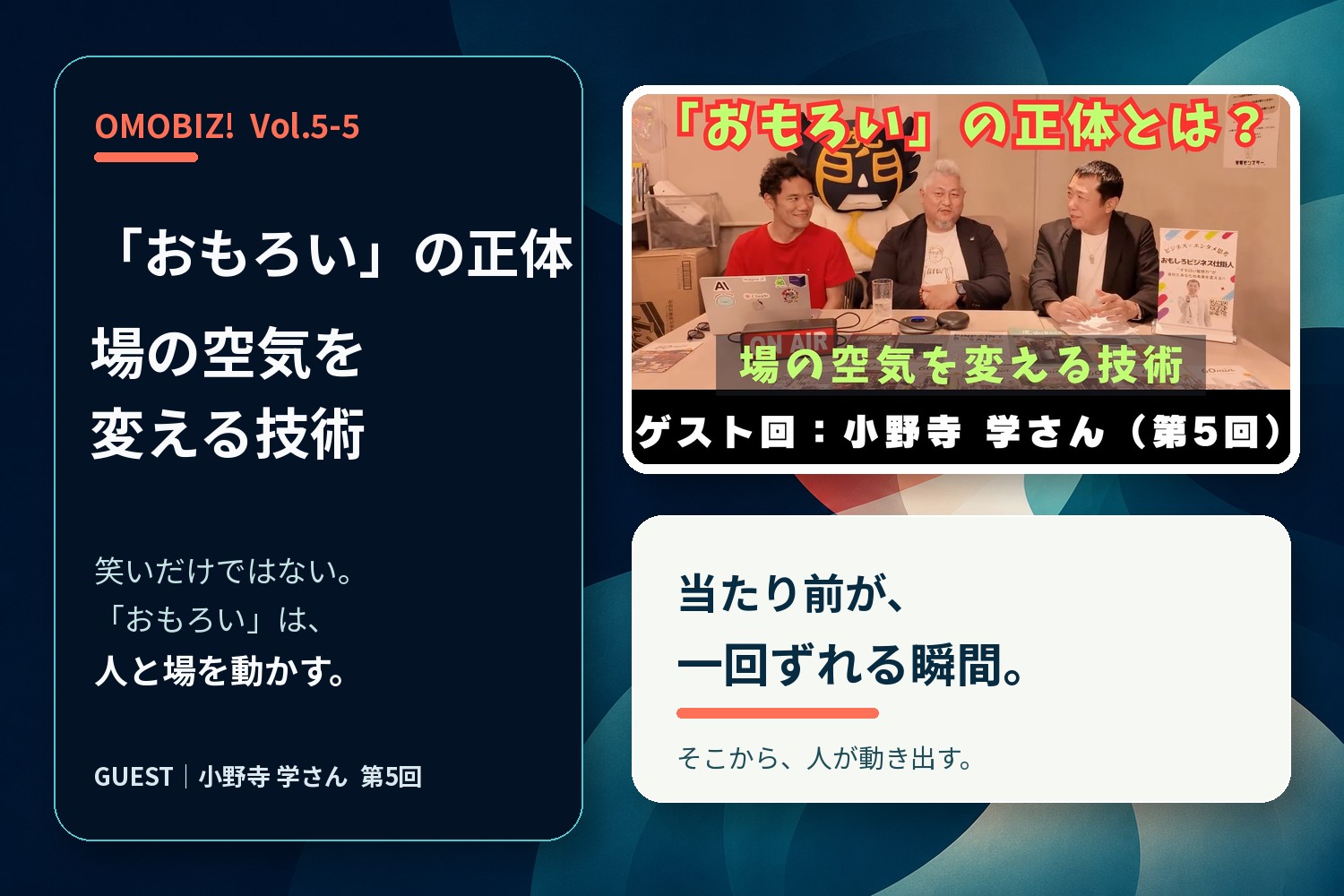
おもビズ! Vol.5-5 「おもろい」の正体と、場の空気を変える技術
港区発! 面白ビジネス仕掛け人! ― 小野寺学さん 第5回
「おもろい」の正体と、場の空気を変える技術
(The English version follows the Japanese text.)
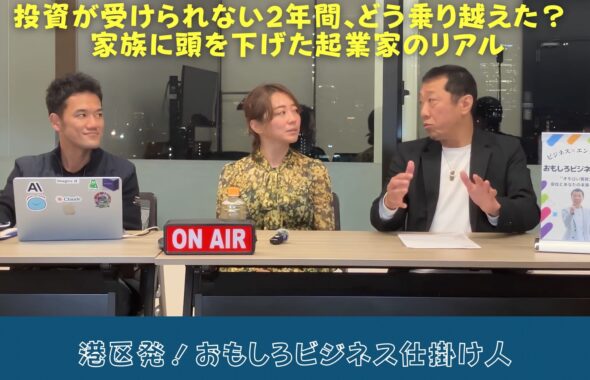
Creative Guildの仲間たちがお届けする「おもビズ!(おもしろビジネス仕掛け人)」では、さまざまな分野で活躍する“面白い人”や“面白いテーマ”を取り上げ、その人ならではの視点や対話から、これからの社会やビジネスのヒントを探っていきます。パーソナリティを務めるのは、人やビジネスの“面白さ”を独自の角度から引き出す幹てつやさん。そして、AIやデジタルを身近な学びとして届ける“AIパパ”ことザックさん(佐藤雄大さん)です。
今回もゲストは、虎ノ門を拠点にアート&デザイン、映像、イベント、まちのコトづくりに取り組むグー・チョキ・パートナーズ株式会社 代表取締役の小野寺学さん。第5回では、番組名にも掲げられている「おもろい」とは何なのかを、真正面から掘り下げます。笑えること、楽しいこと、新しいこと。どれも“おもろい”の一部ですが、それだけでは捉えきれません。
番組内のAIは、“おもろい”を「当たり前が一回ずれる瞬間」と表現します。「そう来る?」「そんなのあり?」と、世界の見え方がふっと変わる。そのずれによって、人は笑ったり、驚いたり、動き出したりする。小野寺さんの実践には、重たい空気や行き詰まった状態を少し軽くし、人が参加できる状態へ変えていく力があると整理します。
小野寺さん自身は、“おもろい”とは、何かがひっくり返ること、みんなが詰まっているところが開くこと、世の中に少し変化が起きることだと語ります。単に人を笑わせるだけではなく、それまで動かなかったものが動き、見方や関係が変わること。その変化そのものに面白さを感じているのです。
その象徴が、小野寺さんがプロデュースする港区観光大使「カモ虎課長」です。覆面をかぶった“戦うサラリーマン”で、スーツをたくし上げてレスラー風のパンツに見せ、腕時計と革靴も身につけています。この姿を地域の素朴な催しではなく、虎ノ門ヒルズのど真ん中で展開する。その場所との大きなずれが、驚きや笑いを生み、人が関わるきっかけになります。奇抜さは目的ではなく、固定された見方を揺らす仕掛けとして働いています。
幹さんにとっての“おもろい”も、笑いをつくることにとどまりません。自分の仕掛けによって人の反応や見方が変わり、ムーブメントが起きること。誰もやらないと思っていたことをやり遂げ、「そこまでやるのか」と驚かれること。そして、少し変わっている人の生き方や発想が、ビジネスの中で輝くことです。お二人の言葉に共通するのは、“おもろい”を観客の消費物ではなく、人と場を動かす力として捉えている点です。
小野寺さんは、仕掛けへの反応に長くとどまらず、次から次へと新しいことを試します。本人が語るように、うまくいかず“滑る”ことも少なくありません。それでも、反応を過度に恐れずに試し続ける。ここには、面白さを一度の正解ではなく、変化を生むための連続的な実験として扱う姿勢が見えてきます。
対話の終盤では、ベテランのお笑い芸人が登場した瞬間に場の空気を変える力へ話が広がります。同じ「どうも」という一言でも、20年以上積み重ねてきた人には、場をつかみ、緊張をほどく力がある。その力は表面的な話術ではなく、数多くの失敗や苦しさも含む経験の蓄積から生まれると語られました。笑いは単なる賑やかしではなく、場を読み、人が参加しやすい状態へ整える専門的な実践でもあります。
ビジネスやコミュニティで何かを動かしたいとき、必ずしも面白い話を用意する必要はありません。当たり前を少しずらす。詰まりをほどく。違和感を、誰かが参加できる形へ変える。そうして人の反応や見方が変わったとき、“おもろい”は新しい行動の入口になります。ぜひ動画本編で、小野寺さんと幹さんが語る“おもろい”の輪郭と、笑いが場を動かす瞬間をご覧ください。
OMOBIZ! — Interesting Business Instigators from Minato
The Nature of ‘Omoroi’: How to Shift the Atmosphere in a Room | Manabu Onodera, Episode 5
“OMOBIZ! — Interesting Business Instigators from Minato,” brought to you by members of Creative Guild, introduces fascinating people and themes while exploring ideas for the future of society and business through lively dialogue. The program is hosted by Tetsuya Miki, who draws out the interesting side of people and business from his own distinctive angle, and Zack, known as “AI Papa,” who makes AI and digital technology approachable as tools for learning.
The guest once again is Manabu Onodera, Representative Director of Goo Choki Partners Inc., whose work in Toranomon spans art and design, video, events, and community projects. Episode 5 takes on the question at the heart of the program itself: What does “omoroi” really mean? The Kansai-flavored word can suggest something funny, enjoyable, interesting, or unexpected, but the conversation shows that it reaches beyond any one of those meanings.
During the program, AI describes omoroi as the moment when the ordinary shifts slightly off its expected axis. A reaction such as “You went there?” or “Can that really happen?” changes the way the world is seen. People laugh, become surprised, or begin to move. In Onodera’s work, that shift often lightens a heavy atmosphere or opens a stuck situation so that others can participate.
Onodera describes omoroi as the moment when something turns over, when a blockage shared by many people opens, or when a small change occurs in the world. The point is not simply to make an audience laugh. It is to alter a perspective or relationship so that something previously motionless begins to move. The change itself is what he finds interesting.
A vivid example is Kamo Tora Kacho, the Minato City tourism ambassador character produced by Onodera. The character is a masked “fighting salaryman” whose business suit is rolled up to resemble wrestling trunks, while his watch and leather shoes remain in place. Bringing this figure into the center of Toranomon Hills creates a sharp mismatch with the setting. That contrast sparks surprise and laughter and gives people a reason to engage. The unusual appearance is not an end in itself; it is a device for shaking a fixed way of seeing.
For Miki, omoroi also goes beyond producing laughter. It appears when a project changes people’s reactions and perspectives, creates a movement, or accomplishes something others assumed no one would attempt. It also appears when an unconventional person’s way of living and thinking becomes a source of energy in business. Both speakers treat omoroi not as something passively consumed by an audience, but as a force that moves people and the atmosphere around them.
Onodera does not linger over the response to any single experiment. He keeps setting up the next one, even though, as he freely admits, many attempts fall flat. This willingness to continue without being governed by every reaction suggests a practical discipline: treat interestingness not as a one-time correct answer, but as a continuing series of experiments designed to create change.
Near the end of the conversation, the focus turns to veteran comedians and their ability to transform a room the moment they enter. Even a simple greeting can carry a different weight when it comes from someone with more than twenty years of accumulated experience. The speakers suggest that this command of atmosphere is built not only through technique, but through repeated failure, struggle, and recovery. Humor, in that sense, is a professional practice of reading a room and making it easier for people to join in.
Anyone trying to move a business or community does not necessarily need a polished joke. A small shift in what is taken for granted can be enough. Loosen what is stuck. Turn discomfort into a form that others can enter. When reactions and perspectives begin to change, omoroi becomes an opening for new action. Watch the full episode for Onodera and Miki’s exploration of the word—and for the moments when laughter visibly changes the room.


この記事へのコメントはありません。