
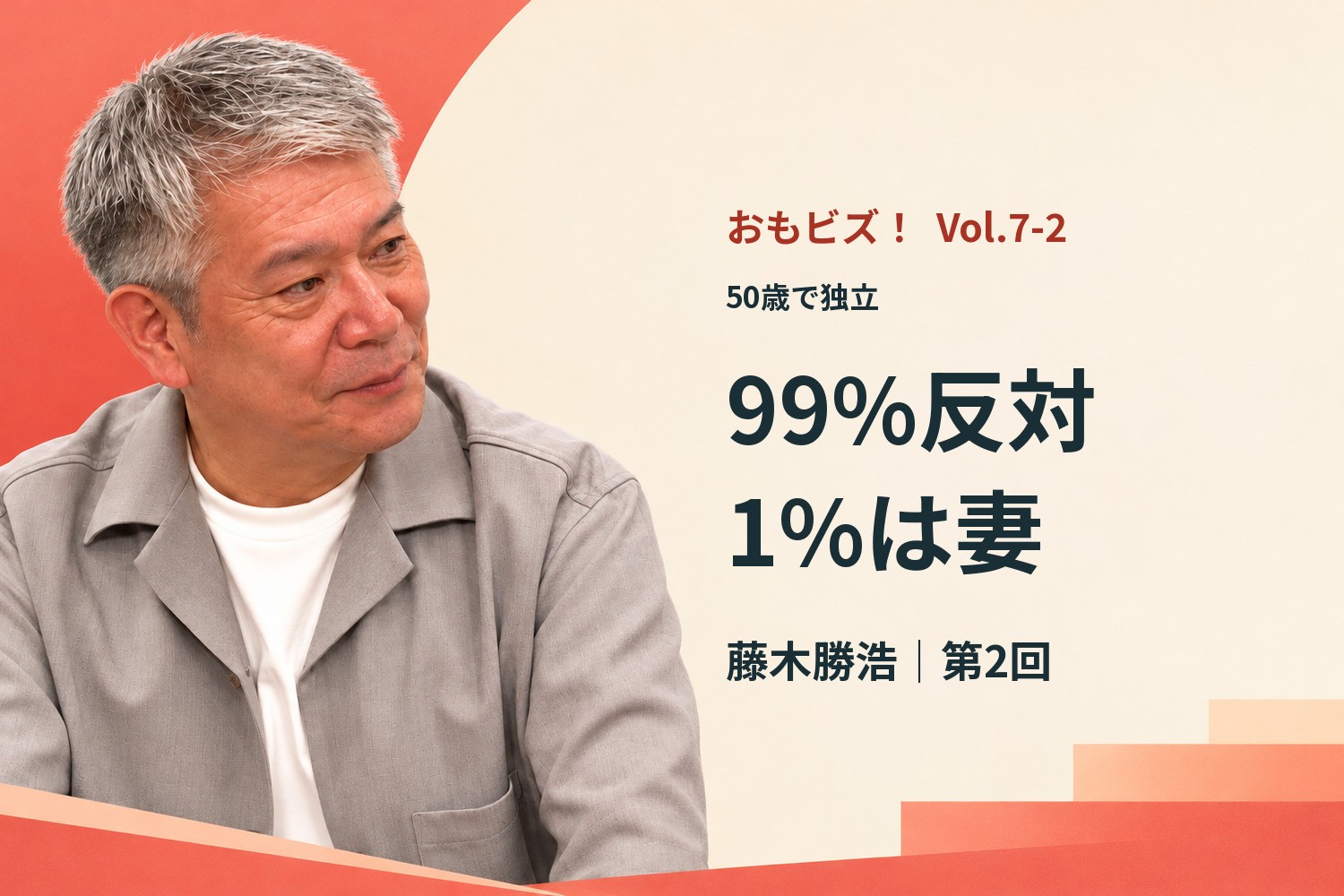
おもビズ! Vol.7-2 50歳で独立、99%が反対|1%の賛成は奥さんだった|株式会社マサキ 藤木勝浩 | 藤木勝浩さん 第2回
おもビズ! Vol.7-2
50歳で独立、99%が反対|1%の賛成は奥さんだった|株式会社マサキ 藤木勝浩 | 藤木勝浩さん 第2回
(The English version follows the Japanese text.)
人生が動く瞬間には、どんな経験や人との関係があるのでしょうか。おもビズの藤木勝浩さんシリーズ第2回は、株式会社マサキ代表取締役の藤木さんが、自身の歩みを振り返ります。幹てつやさんとザックさんとの対話で語られるのは、子供の頃の姿、高校時代のラグビー、そして50歳での独立。挑戦に向かう力を、具体的な経験から考える回です。
藤木さんは、子供の頃はおとなしく、人前で話すことがとても苦手だったといいます。そこから、全国の人が知っている高校に行きたいと考え、天理高校へ進みます。今の仕事ぶりや肩書からは分からない、本人にとっての出発点が語られる場面です。現在の姿だけを見て、その人が昔から同じように行動できたと思い込んでいないか。人の歩みを知る面白さも感じられます。
高校時代のラグビーについて、藤木さんはレギュラーにはなれなかったものの、夢は叶うということを教えてもらったと振り返ります。本人がその経験をどう受け止め、後の人生へつないできたのかが印象に残ります。自分の経験を思い返すときにも、目に見える結果に加えて、そこから何を受け取ったのかを確かめると、別の意味が見つかるかもしれません。
その後、アパレル会社に27年勤め、50歳で東京で独立します。周りの反応を藤木さんは「99%が反対」と表現し、「1%の賛成」が奥さんだったと語ります。長く勤めた先から独立するという判断を、本人と身近な人がどう受け止めたのか。挑戦を考えるときには、事業の見通しとともに、自分をよく知る人と話す時間にも目を向けたくなります。
対話には、夢を叶えるために必要なのはパワーだという藤木さんの考えも登場します。パワーから習慣へ、人生、人格、運命へとつながるという本人の捉え方です。ここから考えられるのは、挑戦を日々の習慣につなげるという問い。一度の大きな決意を、普段の行動としてどう続けるか。自分ならどんな小さな習慣から始められるか、考えてみる余地があります。
皆さんにとって、今も力になっている経験は何でしょうか。そして、新しい一歩を考えているなら、その思いを誰と話してみたいでしょうか。藤木さんの歩みは、人生の変化を考えるときに、過去の経験と現在の関係を一緒に見つめるきっかけになります。人前で話すのが苦手だった子供時代から、50歳での独立へ。その間に何があったのか、ぜひ動画の対話をご覧ください。
Omobiz! Vol.7-2:
Starting Independently at Fifty, with 99% Opposed|His Wife Was the 1% in Favor | Katsuhiro Fujiki, Episode 2
What experiences and relationships lie behind a turning point in someone’s life? In the second episode of his Omobiz series, Katsuhiro Fujiki, who heads Masaki (株式会社マサキ), looks back on his own journey. In conversation with Tetsuya Miki and Zack, he discusses childhood, high-school rugby, and setting up independently at fifty. The episode explores the energy behind a challenge through particular experiences.
Fujiki describes himself as a quiet child who found speaking in front of others very difficult. He later wanted to attend a high school known across Japan and went to Tenri High School. This is a starting point that his present-day role alone would not reveal. Do we sometimes assume that someone who acts confidently today has always been able to do so? Hearing about their journey can change how we see them.
Looking back on high-school rugby, Fujiki says that although he did not become a regular player, the experience taught him that dreams can come true. What stands out is the meaning he took from it and carried into later life. When considering our own experiences, we might look at the visible outcome alongside what we learned or received from taking part. Doing so may reveal another layer of meaning.
After twenty-seven years at an apparel company, Fujiki set up independently in Tokyo at fifty. He describes the response around him as “99% opposed,” with his wife representing the “1%” in favor. How did he and those closest to him understand the decision to leave a long-established workplace? For readers considering a challenge, the story offers a reason to make room for conversations with people who know them well, alongside considering the business outlook.
Fujiki also discusses his belief that realizing a dream requires energy. He describes a progression from that energy to habits, life, character, and destiny. One question readers can take from his perspective is how to connect a challenge with everyday habits. How could a major decision become something sustained through ordinary actions? What small habit might be a starting point for you?
Which past experiences still give you strength? If you are considering a new step, who would you like to discuss it with? Fujiki’s journey offers an opportunity to consider past experiences and present relationships together when thinking about change. Watch the conversation to follow the path from a childhood marked by difficulty speaking in public to setting up independently at fifty.





この記事へのコメントはありません。