
くも晴れ Vol.15 創る楽しさを、守る知恵とともに。
くも晴れ Vol.15 創る楽しさを、守る知恵とともに。
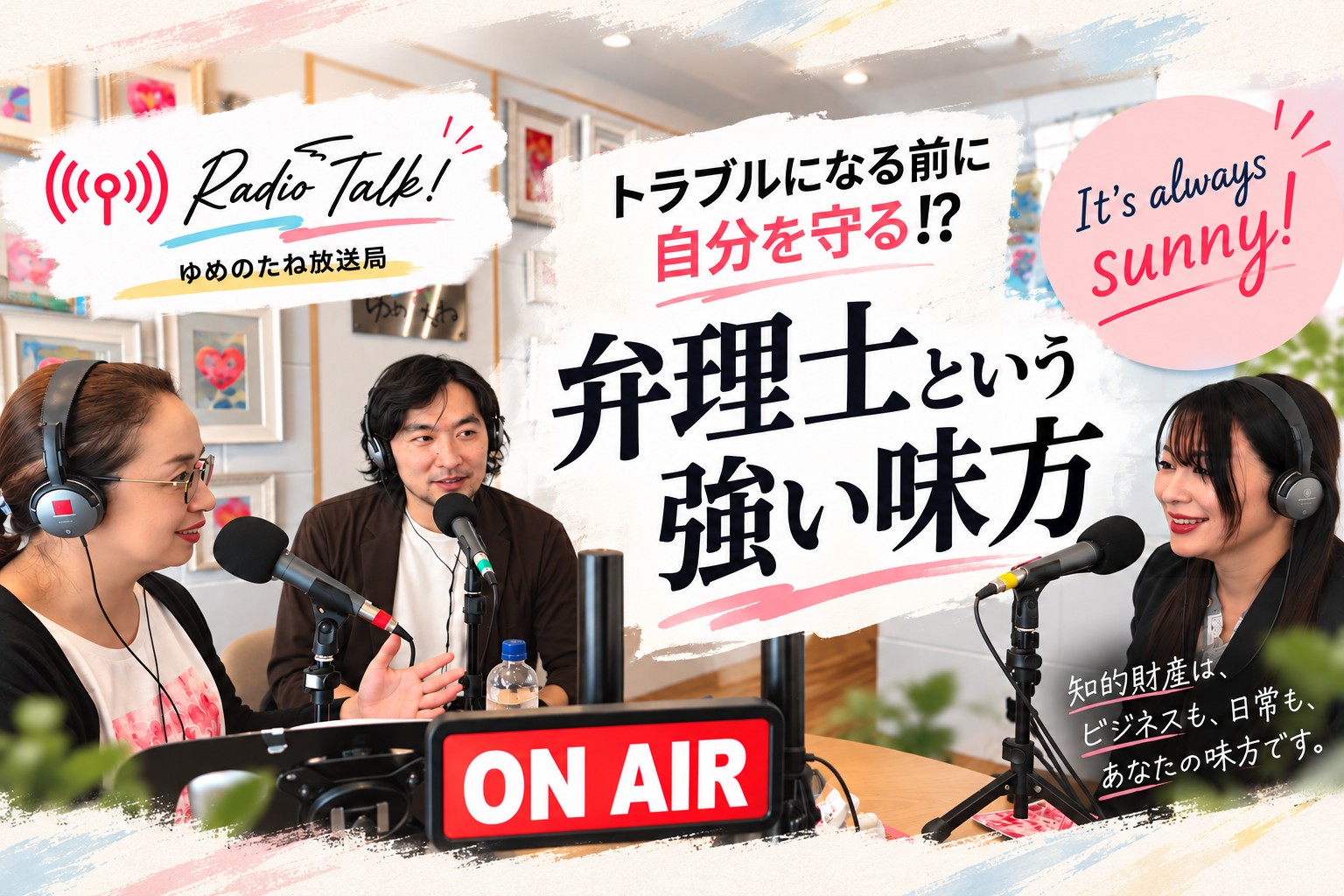
ゲスト:弁理士法人iRify国際特許事務所 所長弁理士 永沼よう子さん/クリエイター 須藤敦彦さん
(The English version follows the Japanese text.)
「どんなことがあっても、自分にとっては最高の一日になる。」そんなコンセプトで、Creative Guildのコアメンバーの有賀 悦江さんがお届けするラジオ番組「It’s always sunny! くもの上はいつも晴れ」。Vol.15は、弁理士の永沼よう子さんとクリエイターの須藤敦彦さんを迎え、自分と他者の創作を大切にするための知的財産との付き合い方を考える回です。SNSで写真や動画を発信する私たちにも、身近な問いが詰まっています。
永沼さんの原点は、小学生のときに作った学級新聞でした。思いを込めた新聞を隣のクラスに真似され、そちらが校内で優勝してしまった。悔しさを抱えて先生に相談し、図書館で手立てを探す中で出会ったのが著作権だったといいます。その経験は、創り手を守りたいという思いにつながり、弁理士としての仕事だけでなく、記事やメディアを通じた発信の動機にもなっています。
対話で印象的なのは、「悪気がなかった」で終わらせず、早い段階から知る機会をつくろうとする姿勢です。インターネットやAIによって、誰もが簡単に作品に触れ、発信できるようになりました。一方、知らないうちに他者の権利に関わることもあります。永沼さんは、学校の先生からも相談を受けると語ります。子どもだけに注意を求めるのではなく、大人も一緒に学ぶ必要があるのでしょう。
ミュージックビデオやVJに携わる須藤さんからは、創作の現場で感じる難しさも共有されました。時代の空気や見てきたものから、発想が似ることはある。その話を受け、永沼さんは著作権を考えるうえでの「アイデア」と「具体的な表現」の違いを説明します。似ているという印象だけで決めつけず、迷ったときには一人で判断せず、専門家など第三者の視点を借りること。その大切さが見えてきます。
話題はやがて、知識を教えるだけでなく、道徳の学びに組み込めないかという可能性へ。「自分の作品がそう扱われたら、どう感じるだろう」。そんな問いなら、家族や学校でも対話を始められます。真似された側も、真似したと言われた側も傷つかないようにしたい。対話に通うのは、創る人への敬意です。
Creative Learningとして受け取りたいのは、権利を知ることを、創る楽しさや安心を支える日常の習慣にする視点です。次の投稿や資料づくりの前に、使う写真や文章は誰が作り、どんな利用条件があるのか、一つ確かめてみる。迷う点は相談してみる。その小さなひと手間が、自分の表現と、誰かの大切な作品をともに尊重する一歩になるのかもしれません。
Kumo Hare Vol.15 — The Joy of Creating, with the Knowledge to Protect It
Guests: Yoko Naganuma, Patent Attorney and Head of iRify International Patent Office; and creator Atsuhiko Sudo
“No matter what happens, each day can still become the best day for you.” Guided by this idea, Creative Guild core member Yoshie Aruga hosts It’s Always Sunny! Above the Clouds, the Sun Is Always Shining. In Vol.15, patent attorney Yoko Naganuma and creator Atsuhiko Sudo explore how we can care for both our own creative work and the work of others. Their conversation raises questions for anyone who shares photographs or videos on social media.
Naganuma traces her motivation back to a class newspaper she made in elementary school. Another class copied the newspaper she had put so much effort into, and their version won a school competition. Frustrated, she spoke to her teacher and searched the library for something she could do. That was how she discovered copyright. The experience grew into a desire to protect creators, inspiring both her professional work and her efforts to explain intellectual property through articles and media appearances.
One striking theme is the importance of learning early, rather than stopping at “I didn’t mean any harm.” The internet and AI make it easier for everyone to encounter creative work and publish their own content. They also create situations in which people may affect someone else’s rights without realizing it. Naganuma describes receiving questions from schoolteachers. This suggests a need for adults to learn alongside children, rather than simply asking children to be more careful.
Sudo, whose work includes music videos and VJ performances, brings the perspective of creative practice. Ideas can resemble one another because people share the same cultural moment and encounter similar influences. In response, Naganuma explains the distinction between an idea and its concrete expression when considering copyright. The conversation points toward looking beyond an initial impression of similarity and seeking an independent perspective, including professional advice, when a question is difficult to judge alone.
The discussion eventually turns to a possibility: could this learning also become part of moral education? “How would I feel if my own work were treated that way?” is a question that families and schools can explore together. Behind the discussion is a wish to avoid hurting either the person whose work was copied or the person accused of copying. Respect for the person who creates runs through the conversation.
For Creative Learning, the invitation is to make awareness of rights an everyday habit that supports the joy and confidence to create. Before your next post or presentation, take one photograph or passage you plan to use and check who created it and what conditions apply. If something is unclear, ask for advice. That small act of care can help us respect both our own expression and someone else’s valued work.



この記事へのコメントはありません。