
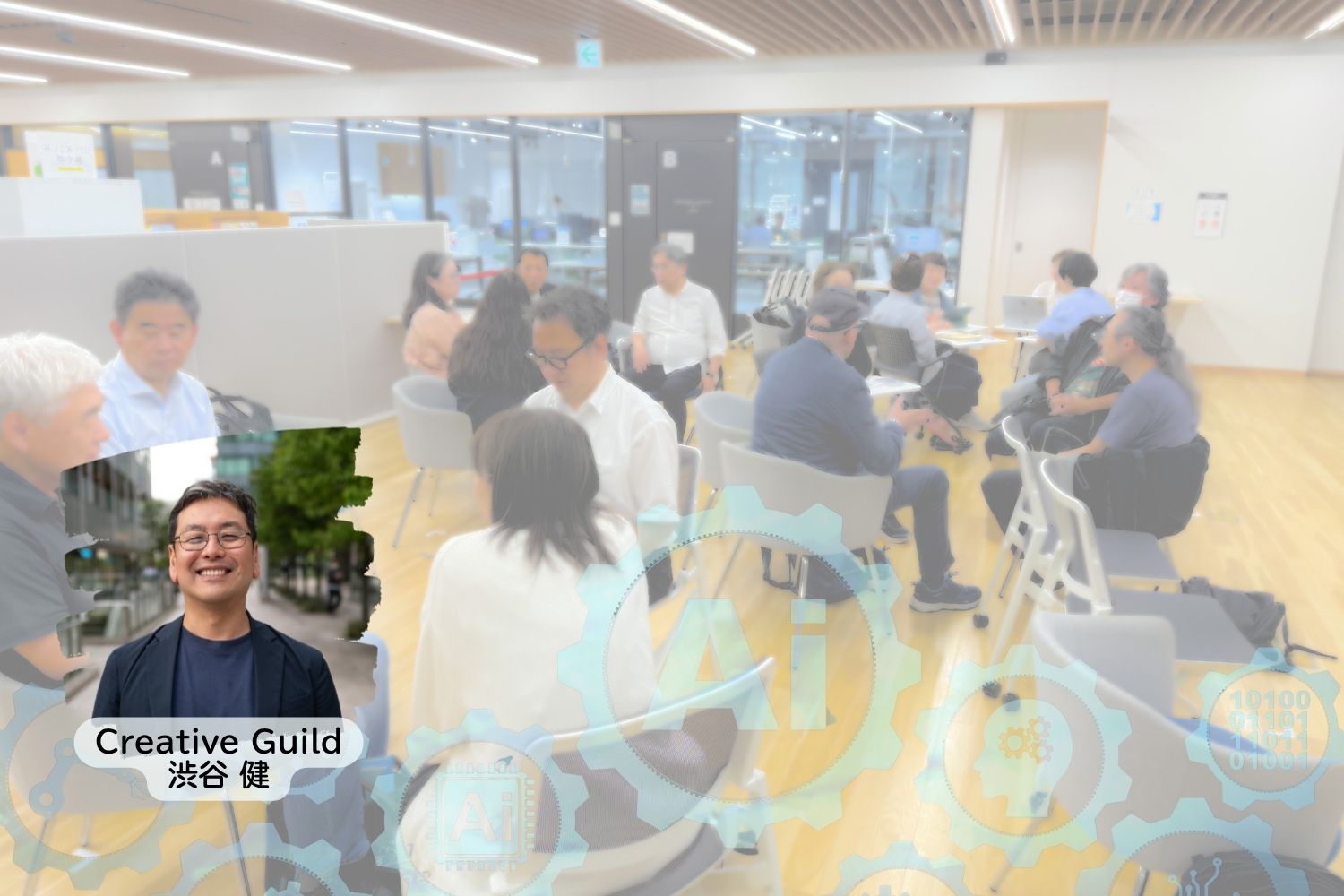
2026年6月のミニワークショップ:AIと対話で実践する、“想い”ある戦略・企画の描き方 開催レポート
港区立産業振興センター主催 ミニ・ワークショップ開催レポート:
AIと対話で実践する、“想い”ある戦略・企画の描き方
(The English version follows the Japanese text.)
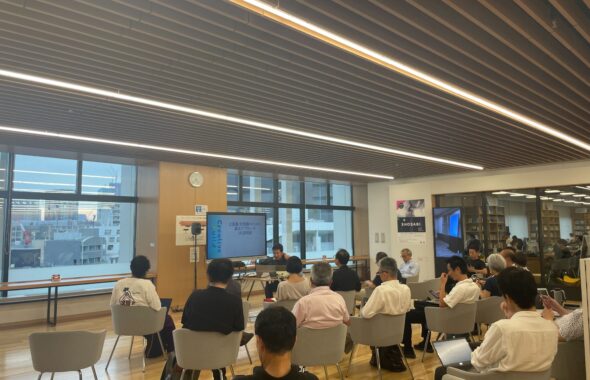
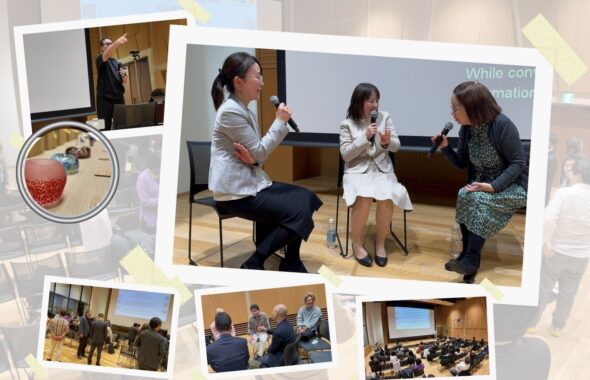
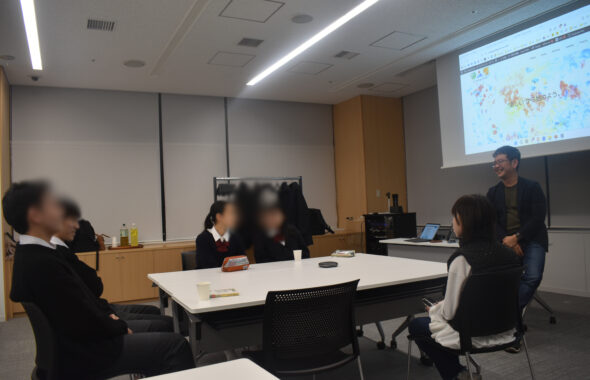
2026年6月16日、港区立産業振興センターのメンタリング・サポートプログラムの一環として、ミニ・ワークショップ「“想い”ある戦略・企画の描き方―対話とAIで再接続する、わたしと組織と社会の願い―」を開催しました。講師はCreative Guildのギルドマスター、渋谷健。会場とオンラインをつないだハイブリッド形式で、経営者、コンサルタント、会社員、起業準備中の方をはじめ、医療、飲食、DX、人材育成など、50名を超える多様な分野の皆さまにご参加いただきました。
今回のテーマは、心の中にある“やりたいこと”を、実際に動かせる戦略や企画へ変えていくこと。ワークショップでは、次の6つのステップと、それぞれを効果的に進めるためのAI活用方法を紹介しました。
- 自分自身のことをAIに理解してもらう
- 自分の“想い”を言語化する
- やりたいことを「なぜ」やりたいのか整理する
- 関連情報を調査し、自分でも理解する
- 戦略・企画の具体的な進め方を設計する
- 直近3か月のアクションプランにまとめる
AIを活用するうえで鍵を握るのが、AIへの指示文である「プロンプト」です。今回の大きなポイントは、そのプロンプト自体もAIに設計してもらうという考え方でした。プロンプト作成の負担を軽くすることで、人間は、自分の想いや企画の中身を深く考えることに、より多くの時間を使えるようになります。
AIにプロンプトを作成してもらう際には、まず何のために処理を行うのかという「目的」を明確にします。そのうえで、どの順番で問いかけるかを決める「質問シーケンス」、得られた情報をどのように整理するかを定める「分析シーケンス」、最終的にどのような成果物を作るかを指定する「アウトプット」の3点を設定します。さらに、AIが作成したプロンプトについてAI自身に解説してもらい、過不足を確認しながら調整していくことも重要です。
一方、AIを使えば短時間で整った企画書を作れるからこそ、注意も必要です。表面的には完成度が高く見えても、自分自身の理解が追いついていなかったり、現実の状況から離れていたりする可能性があります。AIに判断を委ねるのではなく、自分で考え、調べ、確認しながら、AIを壁打ち相手やサポート役として活用することが欠かせません。
終了後には、「プロンプトをAIに作らせる方法が印象的だった」「調査までできることに驚いた」「企画書やチラシ、新規事業に使いたい」「NotebookLMを試したい」といった声が寄せられました。また、「結局は自分の決断と行動が大切」「人に会い、対話しながら想いを磨きたい」という気づきも生まれました。
AIが進化する今だからこそ、自分は何を大切にし、どのような未来をつくりたいのかを問い直すことが重要です。自分で考え、対話し、調べ、小さく試す。その循環から、“想い”は戦略となり、企画となり、次の一歩へ変わっていきます。Creative Guildも、こうした循環を紡ぐ場であり続けられるよう、これからも“楽しい”を出発点に、地道に戦略と企画を練り、皆さまと一緒に実践していきます。
Mini-Workshop Report Hosted by the Minato City Industrial Promotion Center
Turning Aspirations into Actionable Strategies and Plans through Dialogue with AI
On June 16, 2026, the Minato City Industrial Promotion Center hosted a mini-workshop entitled “Designing Strategies and Plans with Purpose: Reconnecting Our Personal, Organizational, and Social Aspirations through Dialogue and AI.” The session was held as part of the Center’s Mentoring Support Program and facilitated by Takeshi Shibuya, Guild Master of Creative Guild.
More than 50 people participated through a hybrid format combining an in-person venue and online access. Attendees came from a wide range of backgrounds, including business owners, consultants, corporate professionals, aspiring entrepreneurs, and practitioners in healthcare, food services, digital transformation, and human resource development.
The workshop focused on transforming the things we genuinely want to pursue into strategies and plans that can be put into action. Participants were introduced to the following six-step process, together with practical ways to use AI effectively at each stage:
- Help AI understand who you are
- Put your personal aspirations and intentions into words
- Clarify why you want to pursue a particular goal
- Research relevant information and develop your own understanding
- Design a practical approach for implementing the strategy or plan
- Translate it into an action plan for the next three months
A key element of effective AI use is the prompt, or the set of instructions given to an AI system. One of the workshop’s main takeaways was that AI can also help design the prompt itself. By reducing the effort required to create effective prompts, people can spend more time thinking deeply about their aspirations and the substance of their ideas.
When asking AI to create a prompt, the first step is to clarify the purpose of the task. The prompt should then define three elements: a question sequence, which determines the order in which the AI asks questions; an analysis sequence, which specifies how the collected information should be organized and examined; and the desired output, which defines the format and content of the final deliverable. It is also important to ask the AI to explain the prompt it has created, review whether anything is missing or unnecessary, and refine it accordingly.
At the same time, the efficiency of AI-supported planning also creates risks. AI can quickly produce a polished-looking proposal, but the user may not fully understand its content, or the proposal may be disconnected from real-world conditions. For this reason, AI should not be entrusted with the final judgment. Instead, it is most effective when used as a thought partner, sounding board, and support tool, while the user continues to think, research, verify, and make decisions independently.
After the workshop, participants shared comments such as:
- “I was impressed by the idea of having AI create the prompt itself.”
- “I was surprised that AI could also conduct research.”
- “I would like to use it for business proposals, promotional flyers, and new business development.”
- “I want to try using NotebookLM.”
Other participants reflected that “ultimately, my own decisions and actions are what matter” and that they wanted to “meet more people and refine their ideas through dialogue.”
As AI continues to evolve, it becomes even more important to reconsider what we truly value and what kind of future we want to create. By thinking for ourselves, engaging in dialogue, conducting research, and testing ideas on a small scale, our aspirations can gradually become strategies, plans, and meaningful next steps.
Creative Guild will continue to serve as a place where this cycle can grow. Beginning with fun, we will keep developing strategies and plans through steady practice—and putting them into action together with everyone involved.



この記事へのコメントはありません。