
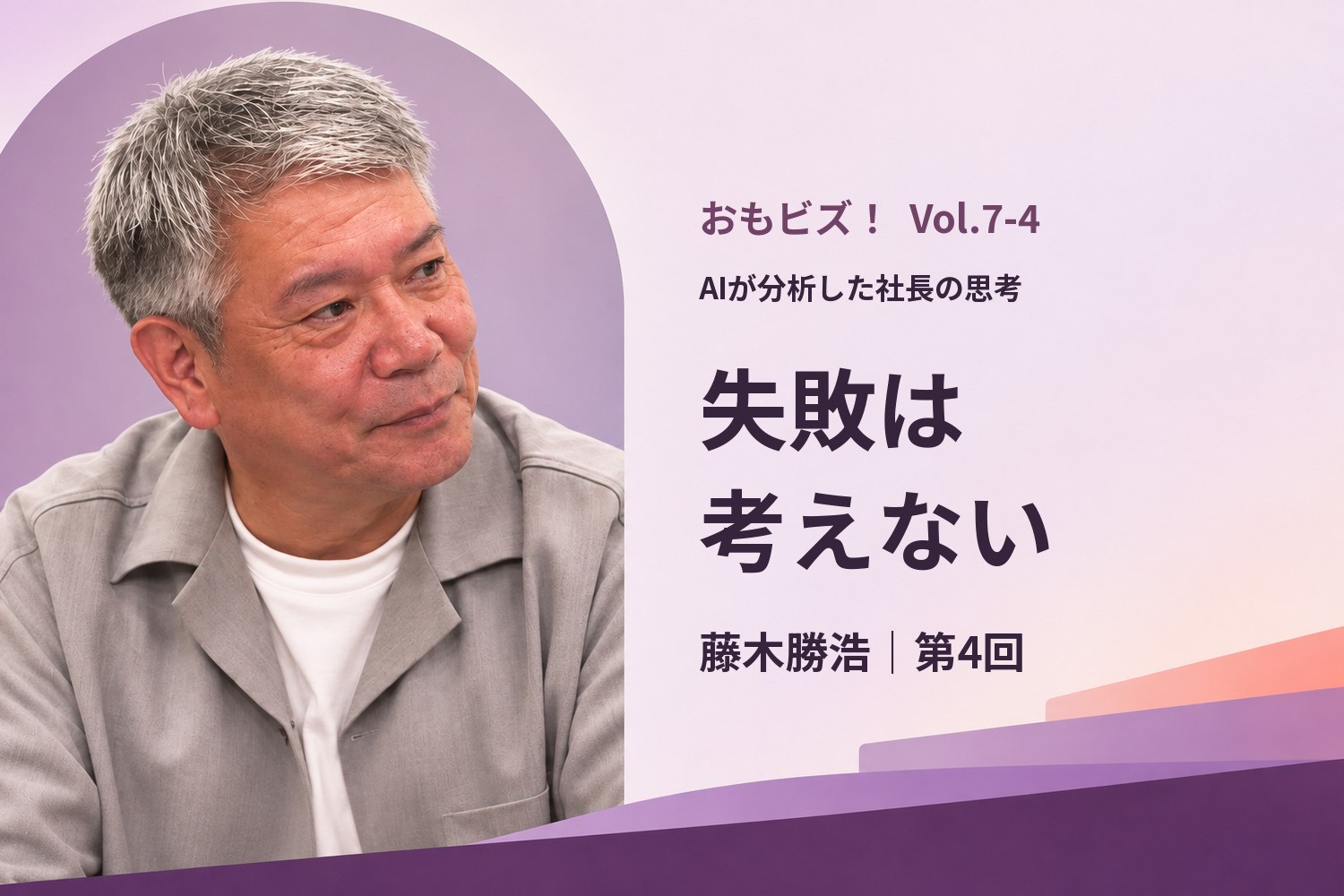
おもビズ! Vol.7-4 失敗を考える時間があるなら、夢の仕事に使え|靴下社長の思考モデルをAIが分析 | 藤木勝浩さん 第4回
おもビズ! Vol.7-4
失敗を考える時間があるなら、夢の仕事に使え|靴下社長の思考モデルをAIが分析 | 藤木勝浩さん 第4回
(The English version follows the Japanese text.)
夢に向かって動くとき、私たちは何に時間を使っているでしょうか。おもビズの藤木勝浩さんシリーズ第4回は、株式会社マサキの藤木さんが大切にする思考と習慣がテーマです。幹てつやさんとザックさんとの対話では、これまでの話をAIで整理しながら、挑戦に向かう本人の考え方を確かめていきます。
番組でAIが分析した思考モデルには、まず未来を見ること、1%でも可能性があれば飛び込むこと、近道を選ばないことが挙がります。肩書ではなく、今の自分の価値で信頼を作るという視点も含まれています。これは番組がこれまでの話から整理した藤木さんの思考モデルです。自分自身の経験も、こうしていくつかの言葉にしてみると、普段の選択に通じる考え方が見えてくるかもしれません。
印象的なのは、失敗したときにどうするつもりだったかという問いに、藤木さんが、考えていなかったので今は答えられないと応じるところです。失敗を考える時間があるなら、夢のための仕事に使いたい。そんな本人の姿勢が紹介されます。藤木さんにとって、まだ起きていない失敗を思う時間と、実際に仕事へ向かう時間は、どう違うのか。その問いを持って聞いてみたくなります。
もう一つの軸が、自分の名前で信頼を作ることです。この回でも、もともとの肩書ではなく、今の自分で向き合うという話題が登場します。過去の肩書にどんな力があるかに加えて、今の自分が何を届けられるのかを考える。読み手の仕事に引き寄せるなら、次に会う相手に、自分の現在の価値をどう伝えるかという、小さく具体的な問いにつながります。
趣味は仕事と大谷翔平だという藤木さん。その理由として挙げるのが、習慣を大切にする姿勢です。対話では朝4時半に起きるという日常も紹介されます。ここで考えてみたいのは、自分が目指すことのために、毎日どんな時間を確保しているかです。本人の習慣をそのまま取り入れる前に、自分の暮らしや大切な人との時間にも合う、続けられる行動を一つ探してみるのはどうでしょうか。
この回は、藤木さんが自分の経験をどう受け止め、日々の仕事へつないでいるのかを考える対話です。皆さんなら、挑戦のために準備しておきたいことは何でしょうか。そして、今日実際に動かせることは何でしょうか。自分に必要な備えと行動を考えながら、藤木さんの言葉に触れてみてください。AIによる整理と本人の受け答えを行き来する第4回の動画を、ぜひご覧ください。
Omobiz! Vol.7-4
If You Have Time to Think About Failure, Use It to Work Toward Your Dream|AI Analyzes a Sock Company President’s Thinking | Katsuhiro Fujiki, Episode 4
When we work toward a dream, what do we spend our time on? The fourth episode in Katsuhiro Fujiki’s Omobiz series explores the thinking and habits he values in his work at Masaki (株式会社マサキ). In conversation with Tetsuya Miki and Zack, an AI-assisted review of his earlier stories provides a starting point for exploring his own approach to taking on a challenge.
The thinking model presented through the program’s AI analysis includes looking toward the future first, taking a chance even when the possibility is only one percent, and avoiding shortcuts. It also includes building trust through the value he offers today rather than through a title. This is the program’s interpretation of Fujiki’s thinking, drawn from his earlier accounts. Putting our own experiences into a few phrases might likewise help us recognize ideas that recur in our everyday choices.
One striking moment comes when Fujiki is asked what he had intended to do if he failed. He responds that he cannot answer now because he had not thought about it. The episode presents his preference for spending that time working toward his dream. For Fujiki, what is the difference between time spent imagining a failure that has not happened and time spent doing the work? That is a question worth bringing to the conversation.
Another theme is building trust in his own name. The episode returns to the idea of engaging with others as the person he is today, rather than through a previous title. Alongside considering what influence a past position carries, we can ask what we can offer now. Applied to a reader’s own work, this becomes a small, practical question: how could you explain your present value to the next person you meet?
Fujiki describes his hobbies as work and Shohei Ohtani, pointing to the importance of habits as his reason for appreciating the baseball player. The conversation also introduces his routine of getting up at 4:30 in the morning. A useful question for readers is what time they make each day for what they hope to achieve. Before adopting his particular routine, could you find one sustainable action that also fits your own life and time with the people you care about?
This episode invites us to consider how Fujiki understands his experiences and carries them into his daily work. What would you want to prepare before taking on a challenge? And what could you actually move forward today? Keep your own needs for preparation and action in mind as you listen to his perspective. Watch the fourth episode to follow the exchange between the AI-assisted interpretation and Fujiki’s own responses.




この記事へのコメントはありません。