
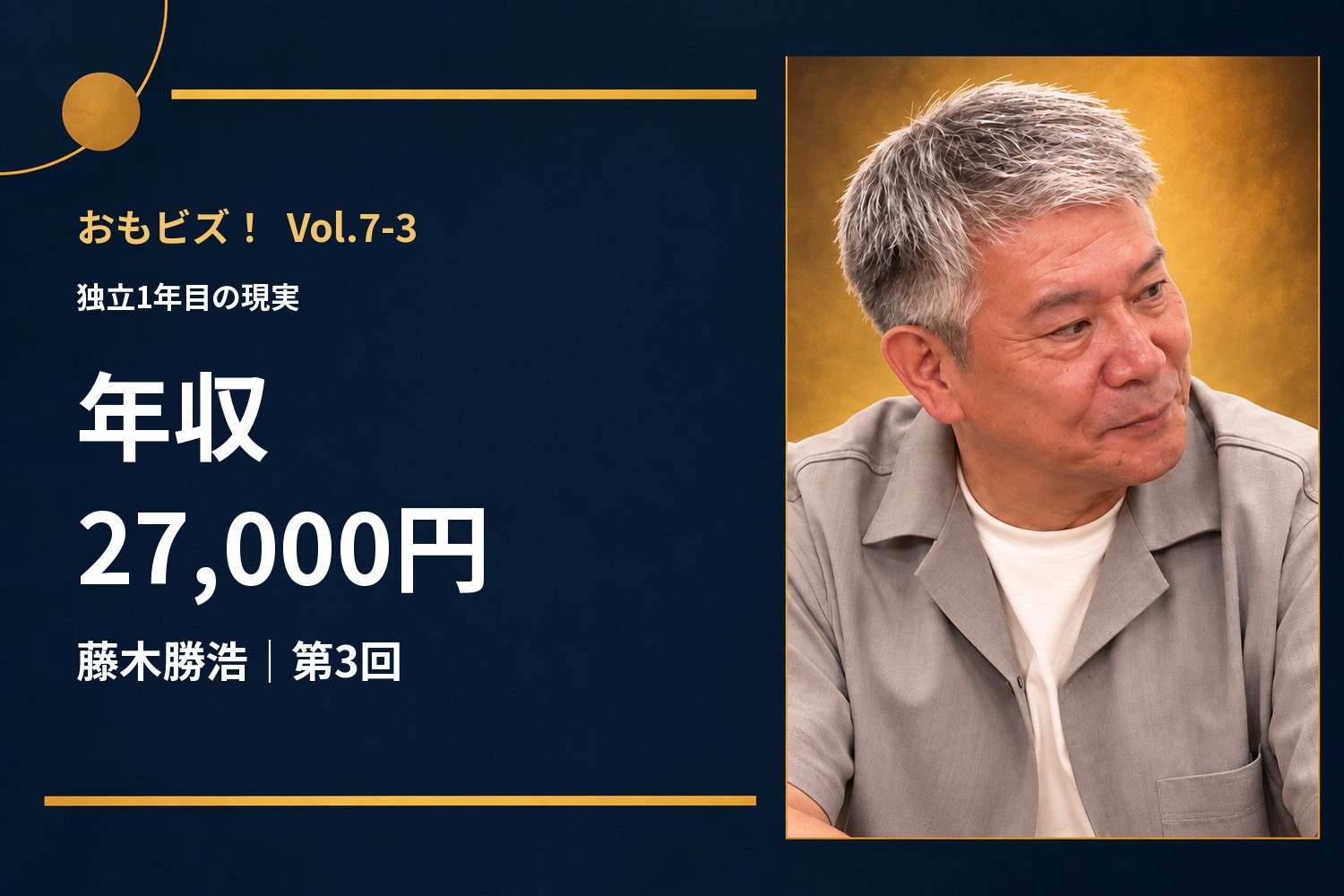
おもビズ! Vol.7-3 独立1年目の年収は27,000円|「あんたの顔がお金になってる」妻の一言で変わった | 藤木勝浩さん 第3回
おもビズ! Vol.7-3
独立1年目の年収は27,000円|「あんたの顔がお金になってる」妻の一言で変わった | 藤木勝浩さん 第3回
(The English version follows the Japanese text.)
独立すれば、それまでの経験や人とのつながりは、どのように仕事へつながるのでしょうか。おもビズの藤木勝浩さんシリーズ第3回は、株式会社マサキの藤木さんが、独立当初の「しくじり」を振り返ります。幹てつやさんとザックさんとの対話から見えてくるのは、収入の厳しさと、身近な人の言葉、そして自分の名前で信頼をつくるまでの時間です。
独立する前には応援すると言ってくれた人たちも、いざ独立すると名刺を受け取ってくれなかった。藤木さんは、そんな経験を語ります。独立1年目の収入は27,000円だったと振り返り、毎日図書館へ通っていたこと、奥さんは100円ショップでパートをしていたことも紹介されます。独立という決断の後に、実際にはどんな日々があったのかを知る場面です。
転機として語られるのが、奥さんの「あんたの顔がお金になってる」という言葉です。そんな人の靴下を誰が買うのかという問いは、仕事に向かう自分の姿を見直すきっかけになります。収入が必要な現実の中で、お客さんには自分がどう見えているのか。自分の都合と、相手が商品を選ぶ理由の間にある隔たりを、私たちも考えてみたくなります。
動画では、1円でも儲けるために頑張ることが一番の仕事だ、という言葉も紹介されます。お金に向き合うことと、お客さんに向き合うことを、自分の中でどう結びつけるか。その問いは、独立した人だけでなく、新しい仕事を任された人にも重なりそうです。今、目の前の相手が自分に何を期待しているのかを確かめることは、その仕事の役割を捉え直す入口になるかもしれません。
藤木さんは、前の会社の「のれん」を使わず、自分の名前で信頼をつくるのに2年半かかったと語ります。当時は一人で、電話1本と机1台だったという話も出てきます。それまで属していた会社の信用と、自分自身に寄せられる信頼を、本人がどのように受け止めていたのか。仕事の肩書や所属を離れたとき、自分は何を相手へ届けられるのかと考えさせられます。
この回は、独立の経験を華やかな結果からではなく、仕事が形になるまでの日々から見つめる対話です。身近な人の率直な言葉や、信頼が育つまでの時間を、自分たちの仕事に引き寄せて受け取れます。皆さんは今、どんな期待を受け取り、何を積み重ねているでしょうか。藤木さんの語る当時の経験と、奥さんの一言が投げかけた問いを、ぜひ動画でご覧ください。
Omobiz! Vol.7-3:
First-Year Income of 27,000 Yen|How His Wife’s Words Changed His Approach | Katsuhiro Fujiki, Episode 3
When someone sets up independently, how do their experience and relationships translate into work? In the third episode of his Omobiz series, Katsuhiro Fujiki of Masaki (株式会社マサキ) looks back on the difficulties of his early days in business. His conversation with Tetsuya Miki and Zack explores financial hardship, the words of someone close to him, and the time it took to build trust under his own name.
Fujiki recalls that people who had said they would support him before he went independent would not even accept his business card afterward. He says his income in the first year was 27,000 yen. The account also describes his daily visits to the library and his wife’s part-time work at a 100-yen shop. These details bring attention to the days that followed the decision to establish his own business.
A turning point came with his wife’s blunt observation: his face had become all about money. Her question about who would buy socks from someone like that prompted him to reconsider how he approached his work. Amid the practical need for income, how was he coming across to customers? Readers may find themselves considering the gap between their own needs and another person’s reasons for choosing a product.
The episode also introduces the idea that working to earn even one yen is his most important job. How can facing the financial reality of work connect with facing the customer? That question may resonate with people taking on a new assignment as well as those establishing a business. Asking what the person in front of us expects could be one way to reconsider the role we have been given.
Fujiki says that he chose not to rely on his former company’s established name and that building trust under his own name took two and a half years. He recalls working alone with one telephone and one desk. How did he understand the difference between the reputation of the company he had belonged to and the trust placed in him personally? His account invites us to ask what we can offer beyond a job title or organizational affiliation.
This episode examines the days before work takes shape through Fujiki’s experience of going independent. The candid words of someone close to him and the time needed for trust to develop offer questions we can bring to our own work. What expectations are you responding to now, and what are you building through everyday efforts? Watch the episode to hear his account and consider the question raised by his wife’s words.

この記事へのコメントはありません。