
くも晴れ Vol.16 「できた!」を育てる、体験のつくり方。
くも晴れ Vol.16 「できた!」を育てる、体験のつくり方。
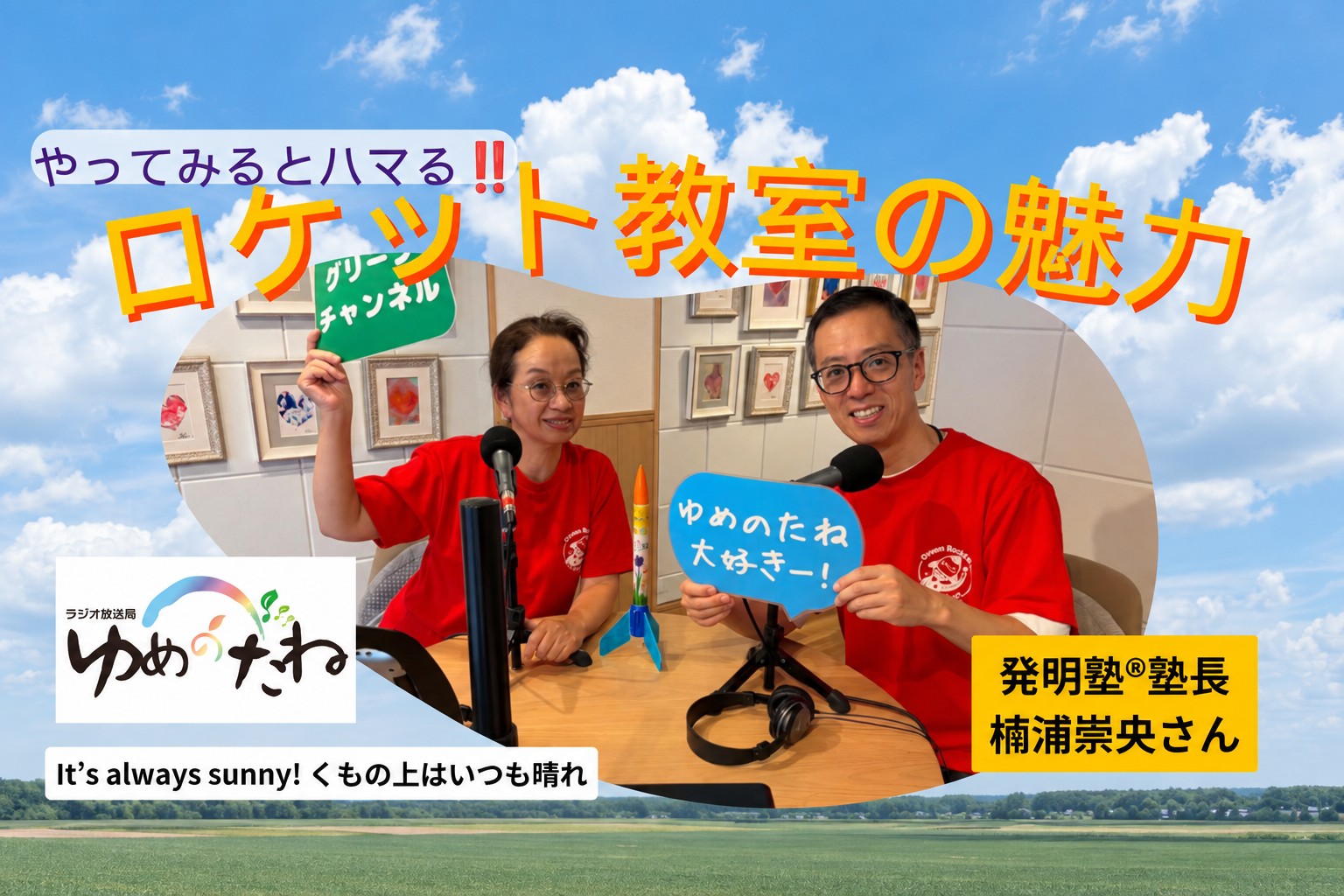
ゲスト|TechnoProducer株式会社 代表取締役CEO 「発明塾」塾長 楠浦 崇央
(The English version follows the Japanese text.)
「どんなことがあっても、自分にとっては最高の一日になる。」そんなコンセプトで、Creative Guildのコアメンバーの有賀 悦江さんがお届けするラジオ番組「It’s always sunny! くもの上はいつも晴れ」。今回は、TechnoProducer株式会社の代表取締役CEOで「発明塾」塾長の楠浦 崇央さんと、北海道・赤平で受講した植松電機のUEマイスター講習を振り返ります。
きっかけは、番組での有賀さんからのお誘いでした。ロケット教室のスポンサーとして関わっていた楠浦さんは、実際に自分で組み立てて飛ばす体験を経て、教室を支える側へと一歩を進めます。UEマイスター講習では、ロケット教室の目的や理念と、安全に運営するための知識・技術を学びます。二人の楽しそうな語りから、体験するたびに新しい発見があることが伝わってきます。
今回のききどころは、「知っている」と「できる」の間にある距離です。小さなロケットでも、自分の手で作り、発射ボタンを押して空へ飛ぶのを見ると、想像していたことが自分の経験になります。楠浦さんは、子どもがその思い出と自信を持ち帰れるところに、この教室の魅力を感じたと話します。
その体験を支えているのが、運営側の細やかな配慮です。風の影響や着地する範囲を考えて打ち上げること。自分で色を塗ったロケットを、木に引っかけずに持ち帰れるよう工夫すること。楠浦さんが印象に残ったのは、安全と、参加した子どもの大切な思い出を守ることが、一つにつながっている点でした。人材育成に携わる立場から、参加者として見るだけでは分からなかった裏側を学んだと振り返ります。
また、講習にはさまざまな地域や世代の人が集まり、受講後も連絡を取り合い、運営を助け合うつながりが生まれていました。一人では不安なことも、仲間がいればやってみようと思える。楠浦さん自身も、東京でのロケット教室を手伝うことになったそうです。参加する楽しさが、誰かの挑戦を支える楽しさへと広がっていきます。
この対話をCreative Learningとして受け取るなら、学びをつくる人の仕事は、説明する内容だけでなく、体験した人が何を持ち帰れるかまで考えることだと感じます。初めてのことに不安を覚えるのは、二人も同じ。まずは気になるロケット教室を探してみる。あるいは、まだ試していないことを一つ、小さくやってみる。自分で確かめた「できた」が、次の一歩の手がかりになるかもしれません。
Kumo Hare Vol.16 — Creating Experiences That Build Confidence
Guest | Takahisa Kusuura, CEO of TechnoProducer and head of Hatsumeijuku
“Whatever happens, it can still be the best day for you.” That is the idea behind It’s always sunny! Kumo no Ue wa Itsumo Hare, the radio programme hosted by Creative Guild core member Yoshie Aruga. In this episode, she and Takahisa Kusuura, CEO of TechnoProducer and head of Hatsumeijuku, reflect on the UE Meister training they attended at Uematsu Denki in Akabira, Hokkaido.
The journey began with Aruga’s invitation on the programme. Kusuura had supported rocket workshops as a sponsor. After building and launching a rocket himself, he took a step towards helping others have that experience. UE Meister training covers the workshops’ purpose and principles, together with the knowledge and skills needed to run them safely. Their enthusiasm makes it clear that each experience brings another discovery.
A central theme is the distance between knowing about something and being able to do it. Building a small rocket, pressing the launch button and watching it rise turns an imagined possibility into a personal experience. Kusuura was particularly drawn to the idea that children could take home both a memory and a sense of confidence.
Careful work behind the scenes makes that possible. Organisers consider the wind and where the rocket will land. They also try to keep a rocket that a child has decorated from getting caught in a tree, so it can go home with its maker. What impressed Kusuura was the connection between safety and protecting a child’s treasured memory. As someone involved in developing people, he found that taking part in the training revealed considerations he could not see simply by observing a workshop.
The training also brought together people from different regions and generations. Participants stayed in touch and offered one another help with running workshops. Having companions can make an uncertain first attempt feel more possible. Kusuura himself had already agreed to help at a workshop in Tokyo. The enjoyment of participating was opening into the enjoyment of supporting someone else’s attempt.
For Creative Learning, this conversation invites us to think about what people take away from an experience, as well as what we explain to them. This is our editorial reflection on the dialogue. Aruga and Kusuura both acknowledge feeling uneasy about trying unfamiliar things. You might begin by looking for a rocket workshop nearby, or by trying one small thing you have yet to do. An experience of “I did it” may offer a clue to your next step.



この記事へのコメントはありません。