
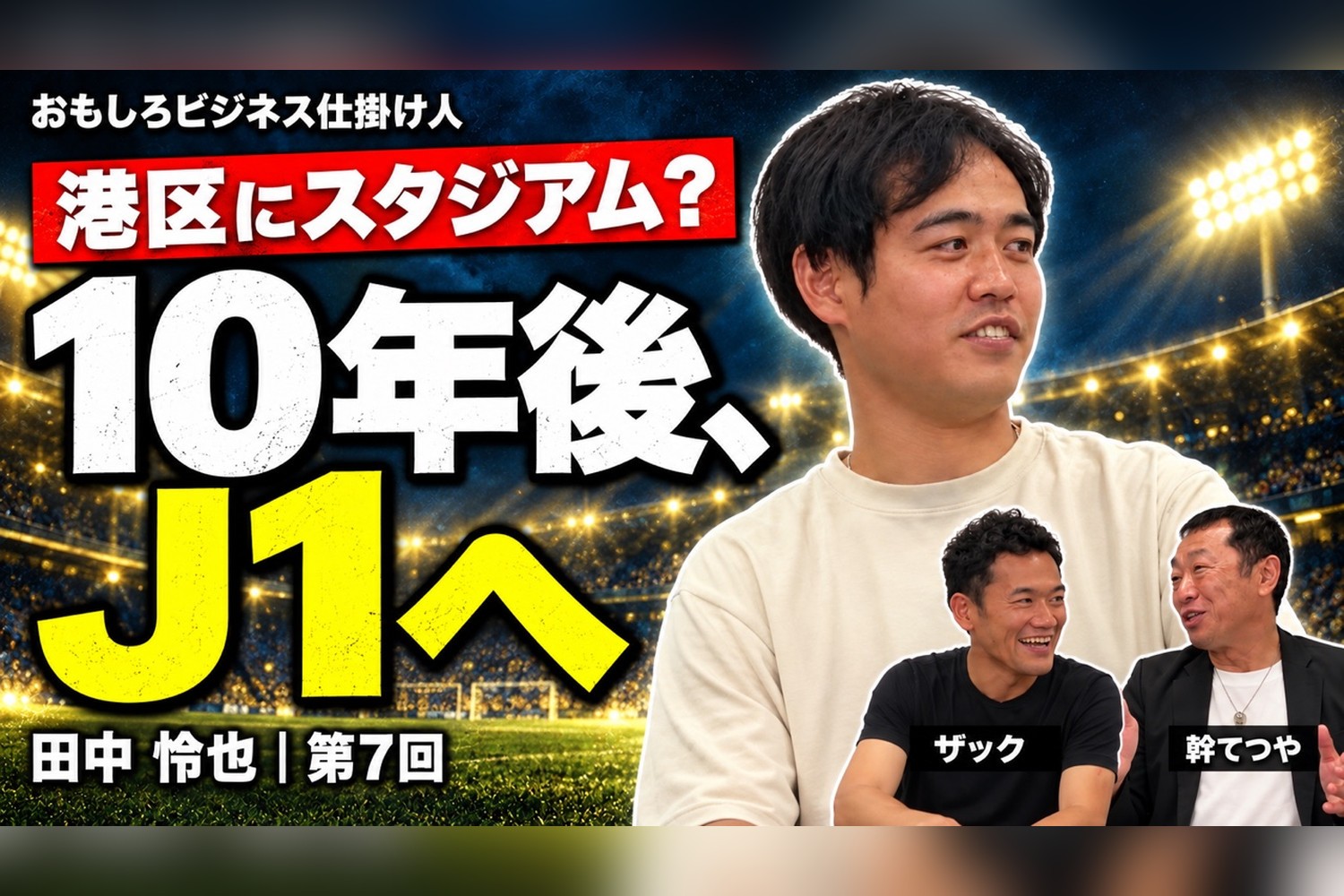
おもビズ! Vol.6-6 10年後にJ1へ。港区にスタジアムは作れるのか? | 田中怜也さん 第6回
おもビズ! Vol.6-6
10年後にJ1へ。港区にスタジアムは作れるのか?
(ゲスト:FCフェニックス 田中怜也さん)
(The English version follows the Japanese text.)
Creative Guildの仲間たちがお届けする「おもビズ!(おもしろビジネス仕掛け人)」。幹てつやさんと、AIパパことザックさん(佐藤雄大さん)が迎えるのは、FC PHOENIXオーナーの田中怜也さんです。本編最終章となる第6回は、十年後のJ1という目標から、港区のスタジアム、育成年代や大人が参加できる活動へと話が広がります。大きな夢を、続けられるクラブの姿へどうつなぐのかを考える回です。
十年後にはJリーグに入り、J1になっていたい。公式説明欄で示される目標は明快です。一方で、一年に一つずつ上がるとして、失敗できる回数には限りがあるという時間の捉え方も紹介されています。これは昇格を保証する計画ではなく、目標までの道のりをどう見ているかという本人の展望です。遠い夢に期限を置くと、今日の一歩の重みも変わってきます。
対話は、港区にスタジアムをつくれるのかという問いにも向かいます。土地の価格という現実を前に、クラブの拠点をどう考えるか。Jリーグの先にあるアジアや世界、スポンサーの設計にも話題が及びます。目標を語るとき、競技の成績だけでなく、場所や支える人との関係まで視野を広げる必要があることを感じさせます。
説明欄では、AIがJ1昇格を、平和サッカーが世界で通用することを示す舞台として捉える場面も紹介されています。何のために、その舞台へ進むのか。大きな目標ほど、達成そのものに意識が向きがちです。その先で届けたい価値を問い直すことが、目先の結果に揺れるときの支えになるのではないでしょうか。
クラブの広がりは、トップチームだけではありません。小学生のスクールに加え、中学生年代のクラブ、45歳以上のママさんサッカーも話題になります。強いチームを目指すことと、さまざまな世代がサッカーに関われる場を育てること。その両方をどう組み合わせるかは、競技団体だけでなく、地域に根づく事業やコミュニティにも通じる問いです。
最後には、十年後の自分や選手へのメッセージが語られます。公式の見どころにあるのは、諦めずに頑張るという言葉です。未来への大きな目標を、日々の営みや参加の広がりと結びつけて考える。皆さんが十年後に見たい景色と、そのために今続けたいことは何でしょうか。ぜひ動画本編で、本編六章を締めくくる田中さんの展望をご覧ください。
OMOBIZ! Vol.6-6: J1 in Ten Years—
Could Minato Have a Stadium? |
FC PHOENIX Reiya Tanaka
OMOBIZ!, a program brought to you by members of Creative Guild, is hosted by Tetsuya Miki and Zack (Yuta Sato), also known as AI Papa. Their guest is Reiya Tanaka, owner of FC PHOENIX. The sixth and final main episode looks toward J1 in ten years, then broadens to a stadium in Minato, youth development, and opportunities for adults to participate. How might a large ambition become a club that can keep going?
The goal presented in the official description is clear: to be in the J.League and reach J1 in ten years. It also introduces Tanaka’s view that, when progressing one division a year, there is limited room for unsuccessful seasons. This is his outlook on the journey, rather than a guaranteed promotion plan. Giving a distant ambition a timeframe changes how we think about the steps in front of us.
The conversation also asks whether a stadium could be built in Minato, with the cost of land bringing a practical constraint into view. Other topics include Asia and the wider world beyond the J.League, and the design of sponsorship. A sporting ambition involves more than results: it also raises questions about a physical home and the people who will support it.
The official highlights describe an AI contribution that frames promotion to J1 as a stage for showing that Peace Football can work internationally. What value is the destination meant to serve? Large goals can draw attention toward achievement itself. Revisiting what we hope to offer beyond that achievement may help maintain direction when immediate results are uncertain.
The club’s wider possibilities are not limited to its first team. The episode also discusses an elementary-school football program, a club for junior-high ages, and a mothers’ football team for those aged 45 and over. How can pursuing a stronger team coexist with creating opportunities for different generations? That question is relevant to community organizations and locally rooted businesses as well.
The closing section turns to messages for Tanaka’s future self and the players. The official highlights point to encouragement to keep trying without giving up. Connecting a long-term goal with everyday effort and broader participation gives us a useful question: what would you like to see in ten years, and what do you want to keep doing now? Watch the full episode for the outlook that closes the six main chapters.




この記事へのコメントはありません。