
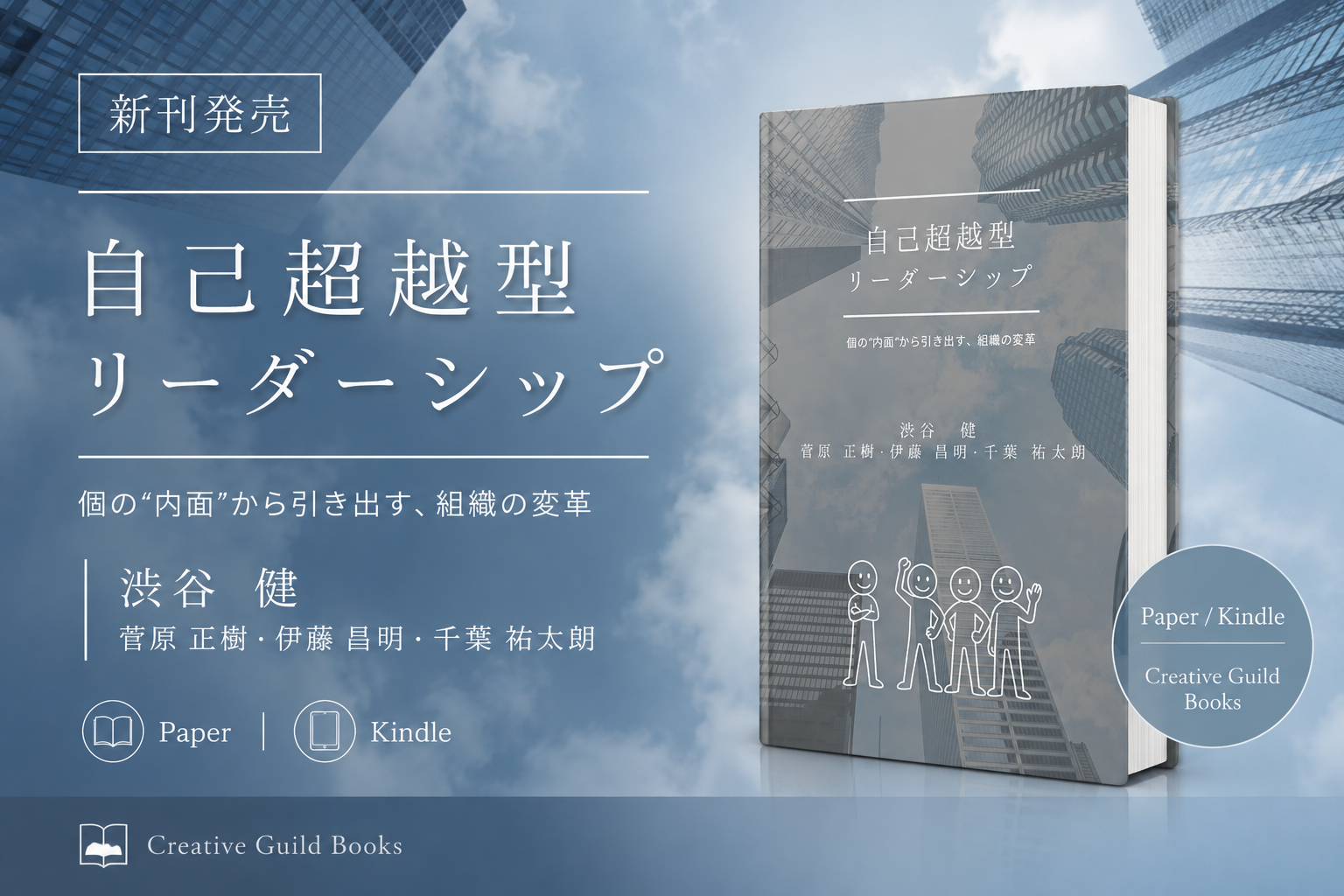
個の内面から、組織の変革を。Creative Guild Books『自己超越型リーダーシップ』を刊行しました
個の内面から、組織の変革を。
Creative Guild Books『自己超越型リーダーシップ』を刊行しました
(The English version follows the Japanese text.)
「“楽しい”から始めよう。」を掲げるCreative Guild Booksより、『自己超越型リーダーシップ ― 個の内面から引き出す、組織の変革 ―』を刊行しました。著者は、渋谷 健、菅原 正樹、伊藤 昌明、千葉 祐太朗の4名。Amazonにてペーパーバック版とKindle版をお求めいただけます。
DX、GX、AI、サステナビリティ。変革の必要性が繰り返し語られる一方で、新しい技術や制度を導入しても、組織が思うように変わらない。そんな経験を持つ方は少なくないのではないでしょうか。
本書が見つめるのは、技術や仕組みのさらに奥にある「人」と「リーダーシップ」です。ここでいうリーダーとは、役職や権限を持つ人だけではありません。未来に責任を持ち、自分自身の思い込みや立場の境界を越え、仲間とともに次の一歩を生み出す人。そのあり方を、本書では「自己超越型リーダーシップ(STL)」と呼んでいます。
全3部で構成される本書は、まず日本企業が変革の壁を越えにくい背景を、DX・GX、組織文化、ガバナンス、企業事例から読み解きます。続いて、長期的かつ社会的な視座、共創的で謙虚なマインド、倫理観と内面の研鑽、メタ認知を伴うシステム思考という4つの柱から、STLの中核を整理。さらに、日本型組織の強みを否定するのではなく、稟議、根回し、暗黙の了解といった「しがらみ」を見つめ直し、信頼を残しながら組織を鍛え直す道筋を提示しています。
理論だけで終わらないことも、本書の特徴です。日本航空と稲盛和夫氏をはじめとするケース、実践ツールキット、日常で試せる問い、そして著者たちの率直な座談会を収録しました。「完成された答え」を示すのではなく、読者が自分の現場を見つめ、仲間と対話し、小さく行動を始めるための伴走者となる一冊を目指しています。
この本は、DBICのプログラムで出会った仲間たちが、毎週の対話とAIの活用を重ねながら、自分たちの実践知を形にしたものです。「教える人」と「教わる人」を越え、異なる会社、地域、専門性を持つ仲間が問いを持ち寄り、学び合い、共に一冊をつくる。その制作プロセス自体が、自己超越型リーダーシップの実践でもありました。
経営者や管理職、DX・GXや事業変革を担う方はもちろん、役職にかかわらず「自分の一歩から周囲をよりよくしたい」と願う方に手に取っていただきたい一冊です。組織を変えたいけれど、どこから始めればよいか分からない。そんなときは、自分の内側にある問いに耳を澄ませ、身近な仲間とのラフな対話から始めてみませんか。
未来は、遠くの誰かが与えるものではなく、今ここにいる私たちが共につくるものです。本書が、あなた自身の物語を紡ぎ、仲間とともに未来へ踏み出すきっかけとなれば幸いです。
Transforming Organizations from Within:
Creative Guild Books Publishes Self-Transcending Leadership
Guided by the idea “Let’s begin with fun,” Creative Guild Books has published Self-Transcending Leadership — Transforming Organizations from Within the Individual. The book is coauthored by Takeshi Shibuya, Masaki Sugawara, Masaaki Ito, and Yutaro Chiba, and is available on Amazon in paperback and Kindle editions.
DX, GX, AI, and sustainability—the need for transformation is discussed again and again. Yet even when new technologies and systems are introduced, organizations do not always change as intended. Many readers may recognize this experience.
This book looks beyond technology and systems to the people and leadership at their core. Here, a leader is not limited to someone with a title or formal authority. It is anyone who takes responsibility for the future, moves beyond personal assumptions and the boundaries of their position, and works with others to create the next step. The book calls this way of leading “Self-Transcending Leadership,” or STL.
Organized in three parts, the book begins by examining why Japanese companies often struggle to overcome barriers to transformation, considering DX and GX, organizational culture, governance, and corporate cases. It then defines the core of STL through four pillars: a long-term and socially oriented perspective; a collaborative and humble mindset; ethics and inner discipline; and systems thinking supported by metacognition. Rather than dismissing the strengths of Japanese-style organizations, it reexamines the constraints created by practices such as ringi, nemawashi, and tacit understandings, and offers a path for strengthening organizations while preserving trust.
Another defining feature of the book is its emphasis on practice rather than theory alone. It includes cases involving Japan Airlines and Kazuo Inamori, a practical toolkit, questions readers can explore in everyday life, and a candid roundtable discussion among the authors. Rather than presenting a “finished answer,” it is intended as a companion that helps readers examine their own workplaces, engage in dialogue with others, and begin taking small steps.
The book was created by people who met through a DBIC program and shaped their practical knowledge through weekly dialogue and the use of AI. Moving beyond the roles of “teacher” and “learner,” people from different companies, regions, and areas of expertise brought their questions together, learned from one another, and jointly created a book. The creative process itself was also a practice of Self-Transcending Leadership.
This book is intended not only for executives, managers, and those responsible for DX, GX, or business transformation, but also for anyone who wants to make things better for the people around them through their own actions, regardless of title. If you want to change your organization but do not know where to begin, why not listen to the questions within you and start with an informal conversation with people close to you?
The future is not something given to us by someone far away; it is something those of us here and now create together. We hope this book will help you weave your own story and take a step toward the future alongside others.



この記事へのコメントはありません。