
「成長し続けるチームを創る」ミニセミナーレポート 開催レポート
「やりきり」で終わらないチームをどうつくる?
港区立産業振興センター 「成長し続けるチームを創る」ミニセミナー開催レポート
(The English version follows the Japanese text.)
「新しい取り組みを始めても、いつも“やりきり”で終わってしまう」。そんな経験を持つ方は少なくありません。チームや組織をもっと成長させたいと思っても、具体的にどのように仕組み化すればよいのか分からない——。今回、港区立産業振興センターで開催したミニセミナー「成長し続けるチームを創る ビジネスを動かすための仕組みをデザインする実践ワークショップ」では、ギルドマスター渋谷が登壇し、こうした課題を持つ実践者の方々と、チームや事業を継続的に動かすための構造について対話を通じて探究しました。
参加者は、IT関連、公益法人、飲食業、編集、組織開発など、多様な分野で活動する実務者の方々です。それぞれの仕事領域は異なるものの、「チームをどうつくるか」「組織をどう動かすか」という共通の問題意識を持つ人たちが集まりました。セッションでは、成長を止めている現状課題の整理から、継続的な成果を生み出す仕組みの理解、チームとして仕組みを活かすための要件整理、そして具体的なアクション設定までを一連の流れとして扱い、参加者はフォーム入力や対話を通じて、自分自身の事業やチームの状況を言語化していきました。
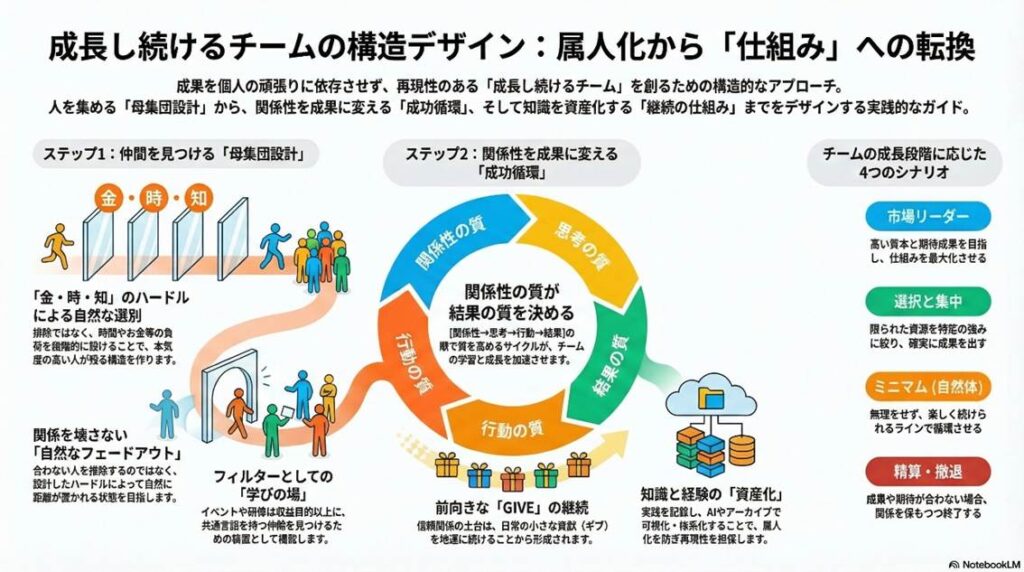
レクチャーではまず、「チームは人から始まる」というシンプルな前提が共有されました。ただし、重要なのは単に人数を増やすことではなく、自分たちにとって必要な仲間と自然につながる仕組みを設計することです。SNSなどで接点を広げ、イベントで関心を引き出し、学びや実践の場で関係性を深めていく。そうした段階を通じて、本当に一緒に動く仲間が見えてくるという考え方が示されました。
対話を通じて見えてきた理想のチーム像には、いくつかの共通点がありました。多く挙げられたのは、信頼関係、共通目的、率直で建設的な対話、そして個人の強みの活用です。単に仲が良いチームではなく、互いを尊重しながら意見を言い合える関係が重要だという認識が共有されていました。また、チームを築くためには、ミッションや目標の明確化、共通言語の共有、個人の強みの理解が欠かせないこと、さらに次の一歩としては、自分のビジョンの言語化、発信、接点づくり、活動の振り返りといった具体的な行動が有効であることも確認されました。
2025年度は4か月連続で開催した今回のミニセミナー。2026年度も、こうしたミニセミナーを継続的に、さらにバージョンアップしながら開催していく予定です。あわせて、個別のメンタリングも引き続き行いながら、学びの場にとどまらず、コミュニティのきっかけとなり、そこから実際にチームやプロジェクトが動き出していく場へと育てていきます。ヨリミチ部などのイベントとも連携しながら、実践者同士がつながり、新しい挑戦が生まれる場として展開していく予定です。ぜひ今後の機会もご活用ください。
※ギルドマスター 渋谷 健のメンタリング予約はこちらから。
https://coubic.com/campus/4124785
How Do You Build a Team That Doesn’t End in “Just Another Project”?
Event Report: Designing Systems to Build Teams That Keep Growing
“Every time we start something new, it ends after we’ve simply ‘done it once.’”
Many people have had this experience. We want our teams and organizations to grow, but it’s often unclear how to design systems that make progress sustainable rather than temporary. At the Minato City Industrial Promotion Center, we hosted a mini-seminar titled “Designing Systems to Build Teams That Keep Growing.” Guild Master Takeshi Shibuya facilitated the session, bringing together practitioners who share similar challenges. Through dialogue and reflection, participants explored how teams and projects can be structured so that they continue to evolve rather than fade away.
The participants came from a wide range of fields, including IT, nonprofit organizations, the food and hospitality industry, publishing, and organizational development. Although their professional backgrounds were different, they shared a common question: How do we build teams, and how do we keep organizations moving forward?
The session was structured around four key steps:
- Identifying the challenges currently preventing growth
- Understanding systems that generate sustainable results
- Clarifying the conditions required for teams to use those systems effectively
- Defining concrete next actions
Participants used forms and dialogue throughout the session to reflect on their own organizations and articulate the current state of their teams and projects.
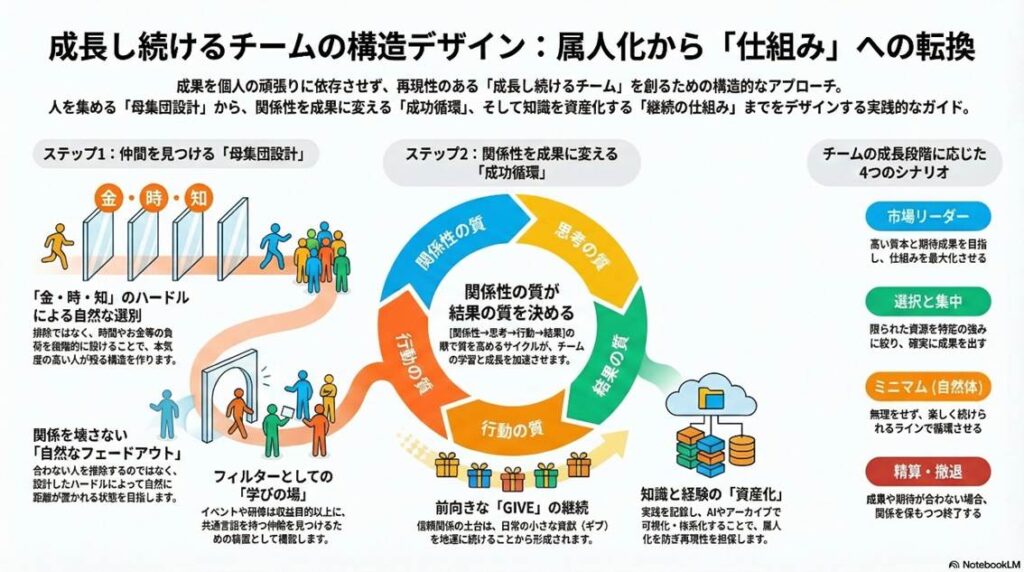
The lecture began with a simple premise: every team starts with people. However, the goal is not simply to increase the number of people involved. What matters is designing a system that naturally connects you with the right collaborators.
In practice, this means expanding points of contact—through platforms such as social media—sparking interest through events, and gradually deepening relationships through learning and practical collaboration. Through these stages, the people who are truly ready to work together begin to emerge naturally.
Through the discussions, several common themes appeared in participants’ visions of an ideal team. Many emphasized trust, shared purpose, open and constructive dialogue, and the ability to leverage each individual’s strengths. In other words, participants were not looking for teams that simply “get along well.” Instead, they emphasized relationships where people respect each other and feel able to exchange ideas honestly.
They also identified key conditions necessary for building such teams, including:
- Clear mission and goals
- A shared language and common understanding
- Awareness of each person’s strengths and capabilities
Participants also discussed practical next steps they could take immediately, such as clarifying their own vision, sharing their ideas publicly, expanding points of contact, and reflecting on their experiences to put them into words.
The seminar series ran for four consecutive months in FY2025. In FY2026, we plan to continue and further develop these mini-seminars. Alongside the sessions, we will also continue offering individual mentoring for participants.
Our goal is not only to provide learning opportunities, but also to create a starting point for community formation—spaces where teams and projects can begin to take shape and move forward. Through initiatives such as YORIMICHI-Club, we will continue building environments where practitioners can connect, exchange ideas, and launch new challenges together. We look forward to welcoming you to future sessions.
*Book a mentoring session with Guild Master Takeshi Shibuya here.
https://coubic.com/campus/4124785


この記事へのコメントはありません。