
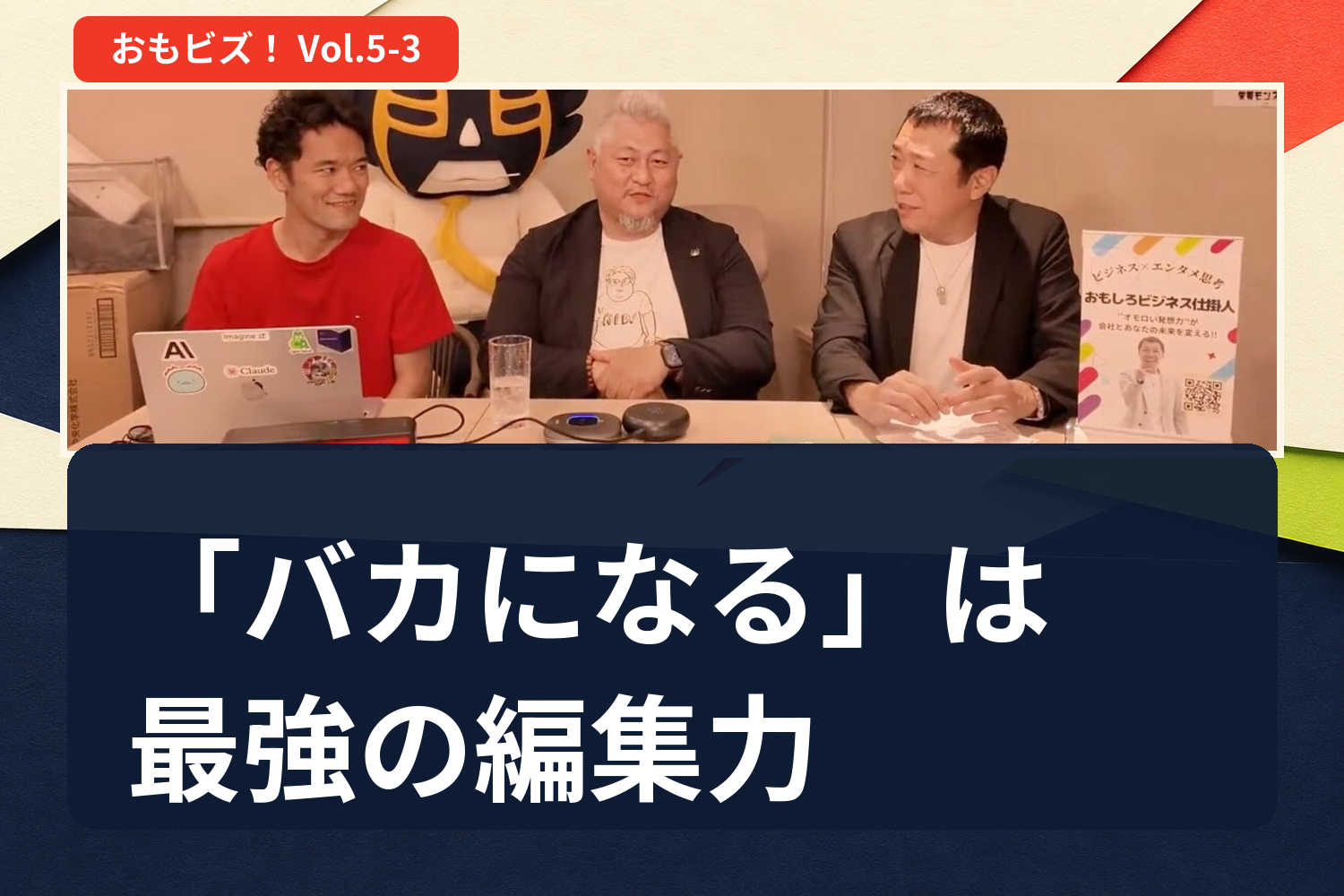
おもビズ! Vol.5-3 「バカになる」は最強の編集力 “なんでやねん”から虎ノ門を動かす
港区発! 面白ビジネス仕掛け人!―小野寺学さん 第3回
「バカになる」は最強の編集力 “なんでやねん”から虎ノ門を動かす
(The English version follows the Japanese text.)
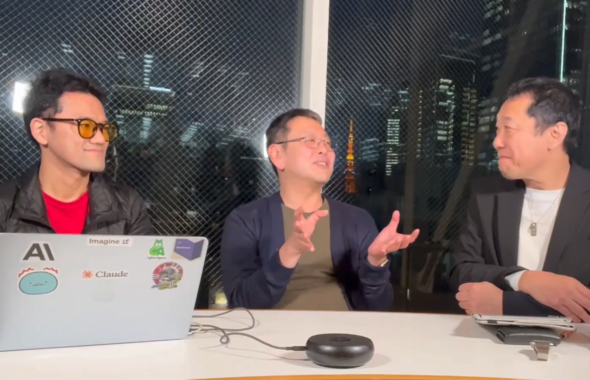
Creative Guildの仲間たちがお届けする「おもビズ!(おもしろビジネス仕掛け人)」では、さまざまな分野で活躍する“面白い人”や“面白いテーマ”を取り上げ、その人ならではの視点や対話から、これからの社会やビジネスのヒントを探っていきます。パーソナリティを務めるのは、人やビジネスの“面白さ”を独自の角度から引き出す幹てつやさん。そして、AIやデジタルを身近な学びとして届ける“AIパパ”ことザックさん(佐藤雄大さん)です。
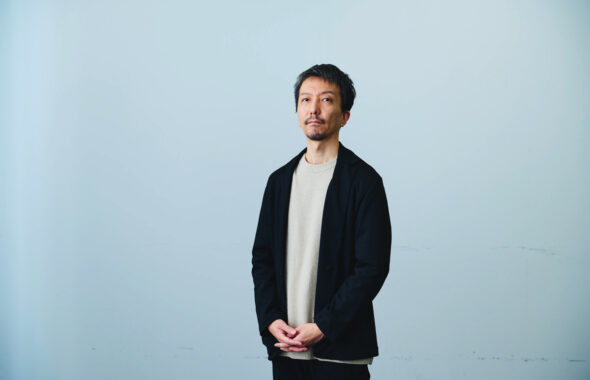
今回もゲストは、虎ノ門を拠点にアート&デザイン、映像、イベント、まちのコトづくりに取り組むグー・チョキ・パートナーズ株式会社 代表取締役の小野寺学さん。第3回のテーマは、小野寺さんが大切にする「ちょっと“バカ”になってみる」という姿勢です。それは、ただふざけることでも、勢いに任せて無謀に動くことでもありません。常識に小さな隙間をつくり、違和感を、人が参加できる企画へと変えていく思考法です。
違和感を、人が参加できる企画へ
幹さんから「バカになるときは、どんな感覚なのか」と聞かれた小野寺さんは、特別にスイッチを入れているわけではなく、「日常ですかね」と答えます。楽しいことは楽しい。人があまりやらないこと、普通なら考えないことに、つい反応してしまう。その遊び心は、本人にとっては構えた方法論ではなく、世界の見方そのものなのでしょう。
対話の途中、AIは小野寺さんの面白さを、「危うさや違和感を、笑える形に変える力」と分析します。普通なら怒られそうなこと、変だと思われそうなことを、デザインやキャラクター、街の企画へと変え、人との関係をつくっていく。つまり、その遊び心は単なる軽さではなく、場を動かすための“編集力”だというのです。
ピンポイント防災が動かしたもの
その象徴的な実践が、虎ノ門一丁目琴平町会と桜川町会と取り組む「ピンポイント防災」です。虎ノ門ヒルズ周辺には、災害時にかまどとして使える「かまどベンチ」が設置されていました。しかし、実際に使ったことがなければ、いざというとき本当に役立つのか分かりません。小野寺さんは、その“使われていない備え”に「なんでやねん」とツッコミを入れ、実際に火を起こし、地域の飲食店とスープをつくって味わう「炊き出しグランプリ」へと変えていきました。
防災訓練を、義務感で参加する行事ではなく、食べて、笑って、試せる地域の時間にする。そうすることで、設備の使い方が共有され、企業や飲食店、町会、行政の間にも新しいつながりが生まれます。“前例がない”は、やらない理由ではなく、最初の前例をみんなでつくるための余白になる。面白さが、実装と関係づくりを同時に進めています。
「なんでやねん」を実装へ
小野寺さんのアイデアの出発点には、しばしば怒りや疑問があるといいます。「なぜアクセルとブレーキは間違えやすい位置に並んでいるのか」「なぜ一般道で使わない速度まで車は出せるのか」。世の中の当たり前に対して、心の中でずっと「なんでやねん」とツッコミを入れる。ただ不満を述べるだけではなく、「こうしたらいいのでは」と代案を考え、仲間に相談し、協力をお願いしながら動かしていくところに、小野寺さんの経営者としての力があります。
「ちょっと“バカ”になる」とは、考えることをやめることではありません。むしろ、正しさや前例に固まり過ぎず、違和感を素材として扱い、他者が参加できる形に編集することです。楽しさから始めるから、人が近づける。地道に関係をつくるから、企画が街に根づいていく。小野寺さんの“なんでやねん”は、虎ノ門を面白くするだけでなく、眠っていた仕組みを本当に使えるものへ変える問いになっています。ぜひ動画本編で、その発想が実装へ変わる瞬間をご覧ください。
“Being a Little Foolish” as Editorial Power: How “Why Does It Have to Be This Way?” Moves Toranomon | Manabu Onodera, Episode 3
“OMOBIZ! — Interesting Business Instigators from Minato,” brought to you by members of Creative Guild, introduces fascinating people and themes while exploring ideas for the future of society and business through lively dialogue. The program is hosted by Tetsuya Miki, who draws out the interesting side of people and business from his own distinctive angle, and Zack, known as “AI Papa,” who makes AI and digital technology feel approachable as tools for learning.
The guest once again is Manabu Onodera, Representative Director of Goo Choki Partners Inc., whose work in Toranomon spans art and design, video, events, and community projects. Episode 3 focuses on a stance he values: allowing yourself to be “a little foolish.” This does not mean fooling around for its own sake or moving recklessly on impulse. It means opening a small gap in conventional thinking and transforming discomfort into an idea that other people can join.
Watch “Being a Little Foolish” as Editorial Power in the Japanese section.
Turning Discomfort into Something People Can Join
When Miki asks what it feels like to “be foolish,” Onodera says he does not consciously flip a special switch. “It is probably just everyday life,” he replies. Fun things are fun. He naturally reacts to what few people try and to questions most people do not think to ask. For him, playfulness is less a formal method than a way of seeing the world.
During the conversation, AI describes Onodera’s distinctive strength as the ability to turn risk and discomfort into a form people can laugh about. Things that might normally provoke anger or seem strange are translated into design, characters, and neighborhood projects that create relationships. His playfulness, in other words, is not mere lightness. It is a form of editorial power that can move a place.
Pinpoint Disaster Preparedness in Practice
One vivid example is Pinpoint Disaster Preparedness, a project developed with the Toranomon 1-chome Kotohira Neighborhood Association and the Sakuragawa Neighborhood Association. Benches around Toranomon Hills had been designed to function as cooking stoves during a disaster. But if no one had actually used them, how could the community know whether they would work when needed? Onodera responded to that dormant preparedness with his characteristic “Why does it have to be this way?” He helped turn it into a real event: people lit the stoves, worked with local restaurants, made soup, and shared the results through a friendly emergency-cooking competition.
Disaster training was reframed from an obligation into a neighborhood experience where people could eat, laugh, and test the equipment together. In the process, residents learned how the infrastructure worked, while new connections formed among businesses, restaurants, neighborhood associations, and the local government. “There is no precedent” became an invitation to create the first precedent together. The interesting idea advanced practical implementation and relationship-building at the same time.
Moving from “Why?” to Implementation
Onodera says many of his ideas begin with irritation or doubt. Why are accelerator and brake pedals placed so close together when people can confuse them? Why can ordinary cars reach speeds that cannot be used on public roads? He keeps directing an internal “Why does it have to be this way?” at the assumptions built into everyday life. Yet he does not stop at complaint. He imagines an alternative, talks with other people, asks for their help, and begins moving the idea into the world. That combination is central to his strength as an entrepreneur.
Allowing yourself to be “a little foolish” does not mean giving up thought. It means refusing to become trapped by correctness and precedent, treating discomfort as raw material, and editing it into a form others can enter. Fun creates an approachable starting point; patient relationship-building helps the idea take root. Onodera’s running “Why?” does more than make Toranomon entertaining. It turns sleeping systems into things the community can actually use. Watch the full episode to see how this way of thinking becomes implementation.
この記事へのコメントはありません。