
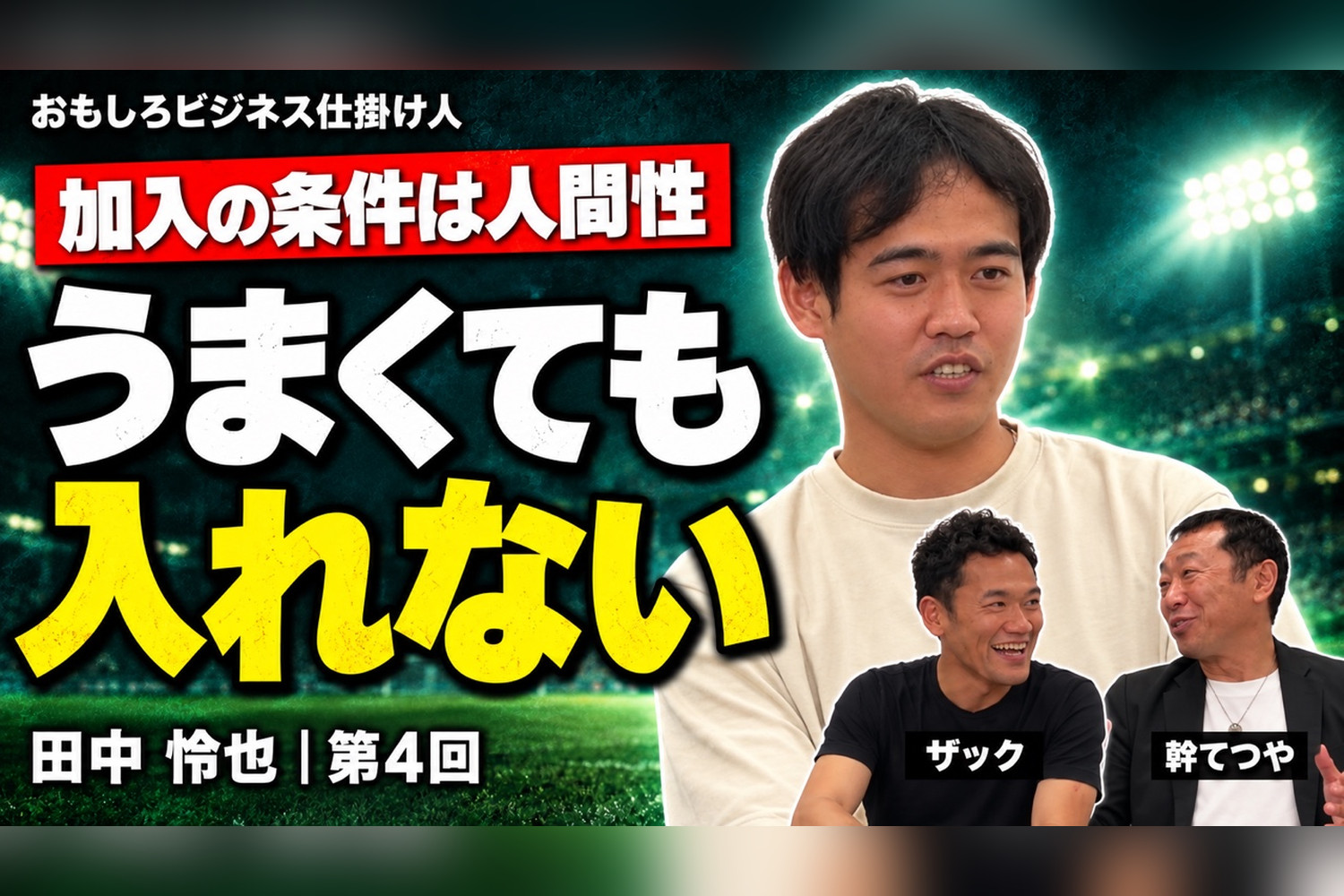
おもビズ! Vol.6-3 うまくても入れない。平和サッカーに合わない選手は加入させないクラブ | FC PHOENIX 田中怜也さん 第3回
おもビズ! Vol.6-3 うまくても入れない。平和サッカーに合わない選手は加入させないクラブ |
FC PHOENIX 田中怜也さん 第3回
(The English version follows the Japanese text.)
Creative Guildの仲間たちがお届けする「おもビズ!(おもしろビジネス仕掛け人)」。幹てつやさんと、AIパパことザックさん(佐藤雄大さん)が迎えるのは、FC PHOENIXオーナーの田中怜也さんです。第3回のテーマは「平和サッカー」。勝利を目指すチームが、関わるすべての人への敬意をどう守るのか。選手の加入から試合中の判断まで、理念を実際の行動へつなぐ工夫を掘り下げます。
平和サッカーは、関わるすべての人にリスペクトを持ち、感動を与えるという考え方です。その姿勢は、選手を迎える場面にも表れます。田中さんは、どれほど技術が優れていても、理念に合わない人は加入させないと説明します。目の前の戦力だけで判断せず、一緒にどんなサッカーをつくるのかを確かめる。組織の価値観は、掲げた言葉だけでなく、誰を仲間に迎えるかという選択から形になるのかもしれません。
さらに登場するのが、選手たち自身が決めた五つの約束「PEACE」です。理念をオーナーの思いだけにとどめず、プレーする人たちが自分たちの約束へ落とし込む。この取り組みは、チームの方針を日々の判断につなぐ入口になります。自分たちで決めた約束だからこそ、実際の試合でどう守るかも問われます。会社やコミュニティでも、大切にしたい価値観を具体的な行動にする際のヒントになりそうです。
ただ、試合では理念と勝利の間で迷う場面もあります。1対0で勝っているとき、時間を使って試合を進めることはどう考えるのか。相手を止めるために意図的なファウルをすることは許されるのか。動画では、時間稼ぎは認め、わざとのファウルは認めないというチームの判断が紹介されます。同じ「勝つための行動」でも、何を選ぶかを話し合う。その具体性が、平和サッカーの輪郭を見せてくれます。
もう一つの大切な問いは、相手を尊重することと、仲間同士で甘やかし合うことの違いです。平和サッカーと甘やかし合いは別だという話は、優しさと厳しさをどう両立するかという組織づくりの課題にも重なります。敬意を持ちながら本気で勝利を目指すには、どんな約束が必要でしょうか。成果を急ぐ場面でも守りたいものを、私たちは仲間と具体的に話せているでしょうか。
理念を大切にするほど、現場では答えに迷う瞬間が生まれます。FC PHOENIXの実践から見えてくるのは、その迷いを具体的な選択として話し合うことの大切さです。選手の加入、五つの約束、試合中の駆け引き。それぞれの場面で敬意と勝利をどう両立するのか。ぜひ動画本編で、田中さんが語る平和サッカーの考え方と、チームの判断に触れてみてください。
Peace Football: Choosing Players and Match Decisions with Respect | Reiya Tanaka, Episode 3
OMOBIZ!—Interesting Business Instigators from Minato, brought to you by members of Creative Guild—welcomes Reiya Tanaka, owner of FC PHOENIX. Hosts Tetsuya Miki and Zack, also known as “AI Papa” Yuta Sato, explore “Peace Football” in this third episode. How can a team pursue victory while respecting everyone involved? From welcoming players to making decisions during a match, the conversation examines how a guiding philosophy becomes action.
Peace Football means showing respect for everyone involved and creating experiences that move people. That commitment also shapes recruitment. Tanaka explains that even an exceptionally skilled player will not be admitted if they do not fit the club’s philosophy. The question extends beyond immediate playing strength to the kind of football they want to build together. An organization’s values may take shape as much through whom it welcomes as through the words it puts on display.
The episode also introduces “PEACE,” five commitments decided by the players themselves. Rather than leaving the philosophy as the owner’s personal aspiration, the people on the pitch turn it into commitments of their own. This offers a starting point for connecting the team’s direction with everyday decisions. Having made those commitments, the players must also consider how to uphold them in actual matches. Businesses and communities may find a useful lesson here about translating shared values into concrete behavior.
Matches, however, create moments when the relationship between values and victory becomes difficult. When leading one–nil, how should the team think about running down the clock? Is a deliberate foul to stop an opponent acceptable? The video introduces the team’s decision to permit time-wasting but reject intentional fouls. Both might be described as actions taken to win, yet the team discusses which it will choose. That specificity makes the meaning of Peace Football clearer.
Another important question is the difference between respecting people and letting teammates off too easily. The discussion distinguishes Peace Football from mutual indulgence, touching on a familiar organizational challenge: combining kindness with demanding standards. What commitments help people pursue victory seriously while maintaining respect? When pressure to deliver results increases, have we discussed with our colleagues exactly what we still want to protect?
Taking a philosophy seriously brings difficult choices into everyday practice. FC PHOENIX’s approach suggests the importance of discussing those choices in concrete terms. Recruitment, five shared commitments, and tactics during a match each raise the question of how respect and victory can coexist. Watch the full episode to hear Tanaka explain Peace Football and the decisions his team makes.


この記事へのコメントはありません。