
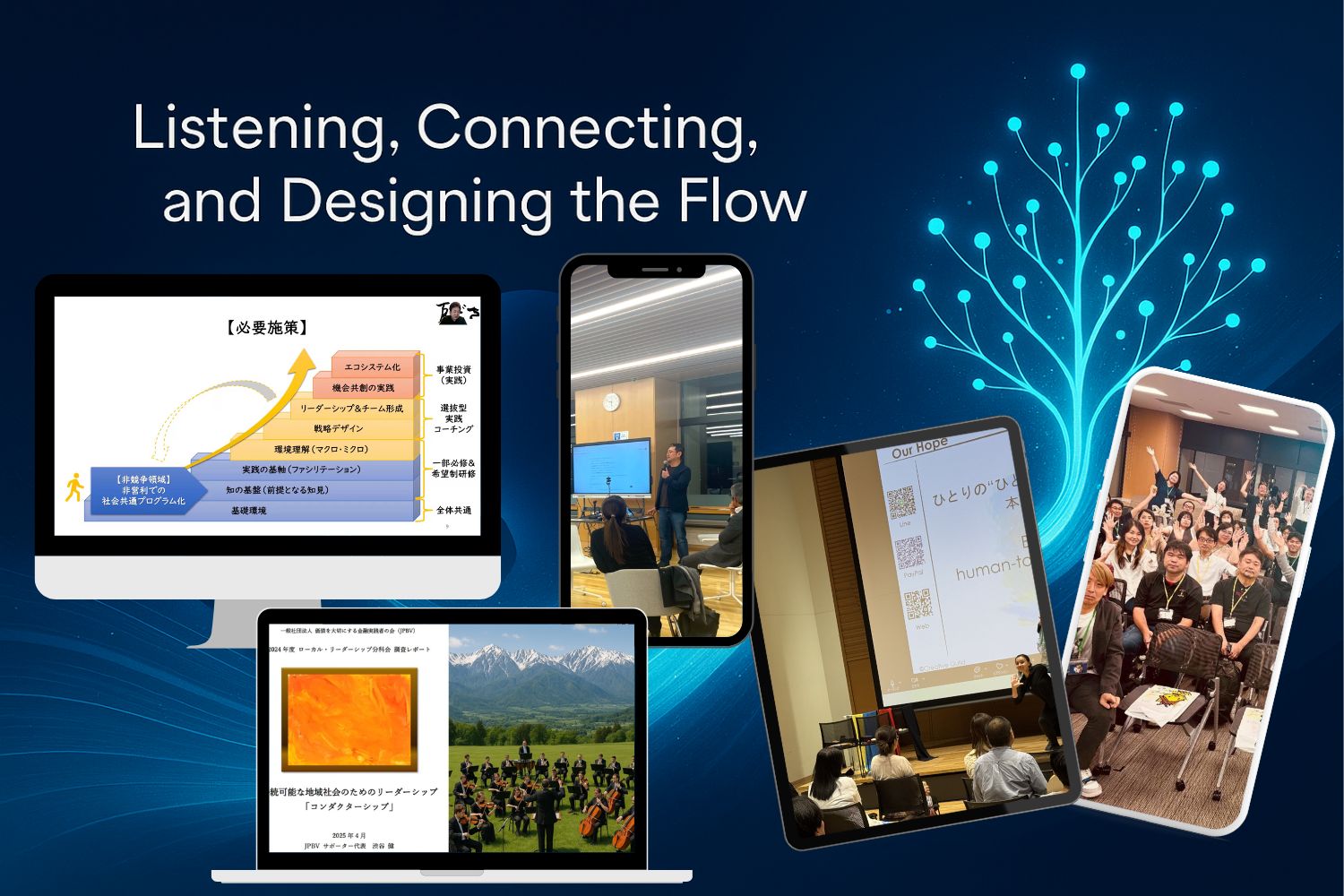
プログラム: 対話とAIによるリサーチ&コミュニティ・デザイン
“ひと”の想いを聴き、知をつなぎ、未来の流れをデザインする。
対話・インタビュー・AI分析による「リサーチ&コミュニティ・デザイン・プログラム」
The English version follows the Japanese text. ↓
社会やビジネスを実際に動かすのは、データや制度だけではなく、そこに関わる“ひと”です。大切なのは、一人ひとりの想い、経験、違和感、課題に丁寧に耳を傾け、立場を越えて人間的につながりながら、未来に向けた具体的な行動を生み出し続けることです。Creative Guildの「リサーチ&コミュニティ・デザイン・プログラム」は、定性調査、インタビュー、対話、AI分析、コミュニティ形成を一体化し、課題発見から共創、事業開発、社会実装までを支援する実践型プログラムです。
■ リサーチ&コミュニティ・デザイン・プログラムの背景
変化の激しい時代において、企業、組織、地域、行政、教育機関、コミュニティが向き合う課題は、ますます複雑化しています。売上や人口、アンケート集計などの定量データだけでは、人がなぜそのように考え、どこで困り、何を期待しているのかという背景まで十分に捉えられません。一方、現場で日々活動する人々の声、経験、行動の中には、顧客ニーズ、組織課題、地域課題、新しい事業機会につながる重要なヒントが眠っています。
Creative Guildは、港区立産業振興センターでのコミュニティ形成事業をはじめ、一般社団法人 長野県経営者協会や一般社団法人 価値を大切にする金融実践者の会(JPBV)との共同調査など、地域、企業、行政、教育機関、金融、コミュニティの多様な現場で「人を起点とした知の共創」に取り組んできました。インタビューや対話を通じて一人ひとりの想いと実践知を引き出し、本人・関係者の同意と適切な情報管理のもとでAIを活用して整理・分析することで、組織や地域の課題構造、関係性、ニーズ、可能性を可視化します。このプロセスを通じて、リサーチそのものが信頼関係とコミュニティを育て、形成されたコミュニティが次の問いとリサーチを生み出す循環をつくってきました。
こうした実践から見えてきたのは、「リサーチ」と「コミュニティ形成」は、本来切り離せない関係にあるということです。人の声を丁寧に聴くことで信頼と関係性が生まれ、関係が深まることで、表面的な回答だけでは見えなかった新たな問いや発見が生まれます。その発見を共有し、行動へ変えることで、組織や地域の新しい“流れ”が動き始めます。本プログラムは、この参加型リサーチと共創の循環を、対話とAIによって設計し、関係者が自ら未来を動かせる仕組みとして開発されました。
■ プログラムの構成
本プログラムは、“ひと”の想いと現場の実情を起点に、リサーチとコミュニティデザインを一体化する5段階の実践プロセスです。ステークホルダーとの対話を通じて関係性を築き、AIを活用した情報整理と知識の可視化によって洞察を深め、具体的なアクションを共創します。単なる調査報告で終わらず、学び、つながり、意思決定、行動、社会への発信を同時に生み出すことを目指します。
① 仮説の整理とリサーチテーマの設定
まず、プロジェクトの目的、対象、課題認識、リサーチ仮説を整理します。「何を明らかにしたいのか」「誰の声を聴く必要があるのか」「どのような意思決定や変化につなげたいのか」を明確にし、調査対象、インタビュー設計、分析軸、成果物を含むリサーチデザインを構築します。必要に応じて、AIを活用したデスクリサーチや既存資料・公開データの整理も行い、議論の前提と探索すべき論点を可視化します。
② 対話とインタビューによる現場リサーチ
経営層、従業員、顧客、地域住民、関係機関などへの個別インタビュー、グループインタビュー、ワークショップ、対話会を通じて、一人ひとりの想い、経験、課題、価値観、期待を丁寧に聴き取ります。ここで重視するのは、単なる「情報収集」ではなく「関係構築」です。参加目的と情報の利用範囲を共有し、安心して話せる環境を整えることで、表面的な回答にとどまらない本質的な声を引き出し、信頼と共感をコミュニティの基盤として育てます。
③ AIによる知識の可視化と構造分析
収集したインタビュー記録、発言、メモ、アンケート、関連資料などを、必要に応じて匿名化・要約したうえでAIを用いて整理・分析します。キーワード抽出、テーマ分類、概念マッピング、関係性整理、共通点・相違点の比較などを通じて、個々の声を「集合知」として統合します。AIの分析結果は人が確認・解釈し、人やテーマのつながり、潜在的な課題構造、強み、機会、次のアクション候補を可視化します。得られた知見は、関係者が対話するための共通言語となり、次の意思決定と実践を導く羅針盤になります。
④ 共創デザインとアクションプランニング
AI分析とリサーチから得られた洞察をもとに、関係者による共創ワークショップを実施します。参加者が自らの言葉で気づき、違和感、可能性を共有し、「どの課題を優先するか」「誰と何を始めるか」「どのような価値を生み出すか」を一緒に設計します。生まれた問いやアイデアを、優先順位、担当、期限、評価指標を含む実行可能なアクションプランへ整理し、事業開発、組織開発、地域プロジェクト、政策・施策検討などの起点につなげます。
⑤ 発信・実践・コミュニティ展開
整理した知見や実践の成果を、調査レポート、記事、Webメディア、イベント、書籍、映像などを通じて発信します。Creative Guildの各種プログラムとも連携し、リサーチで得られたストーリーや方法論を社会へ伝えるところまで伴走します。さらに、コミュニティが自ら次のテーマを設定し、継続的に調査・対話・実践を行えるよう、AIナレッジベース、対話ガイド、インタビューテンプレート、情報共有環境の導入も支援します。
この5つのステップを通じて、リサーチは単なる調査や報告書作成から、「人と知識と社会をつなぎ、新しい行動を生み出す創造のプロセス」へと進化します。そしてコミュニティは、調査対象ではなく、新たな問い、知識、事業、社会的価値を継続的に生み出す主体となり、変化をつくる“流れ”の中心へ育っていきます。
■ プログラム導入によって期待できる効果
本プログラムの大きな特徴は、「リサーチ」と「コミュニティデザイン」を一つのプロセスで同時に実現できることです。調査によって課題やニーズを明らかにするだけでなく、その過程で関係者同士の信頼、共通言語、協働関係を育てます。さらに、リサーチと対話を自社・自地域で継続できる形にすることで、独自の知識、ネットワーク、顧客理解、地域理解を蓄積し、組織や事業の競争力・共創力へ転換できます。
リサーチは一見すると手間のかかる作業ですが、そのプロセス自体が関係性を築く重要な時間です。担当者がインタビュー、分析、対話、発信に関わることで、現場への理解を深め、視野を広げ、俯瞰的・戦略的な思考を磨くことができます。その担当者を中心に顧客、パートナー、専門家、地域の実践者とのコミュニティが形成され、そのつながりは、マーケティング、採用、人財育成、商品・サービス開発、新規事業、地域連携の基盤にもなります。
また、蓄積した対話記録、調査データ、レポートは、本人・関係者の同意、利用目的、アクセス権限を確認したうえでAIナレッジベースへ整理できます。これにより、過去の知見を参照しながら新しいアイデアや課題を検討できるAIディスカッション・パートナーを育て、企画立案、仮説検証、意思決定、知識継承を支援することが可能になります。
さらに、プログラム終了後も、AIナレッジベース、リサーチ設計、インタビュー項目、対話ガイド、分析テンプレートを組織やコミュニティに残せます。これにより、外部へ依存せず、コミュニティ自身がテーマを設定し、継続的にリサーチ、学習、対話、改善を進められる状態を目指します。知識が個人や単発の報告書に閉じず、新たな問いと行動を生み続ける仕組みは、長期的なナレッジマネジメントと組織学習の資産になります。
同様の調査、分析、コミュニティ形成、発信支援をリサーチ会社やマーケティング支援会社へ包括的に依頼する場合、対象範囲や調査規模によっては、中小企業規模でも総額1,300万〜3,200万円、期間9〜16か月程度となるケースがあります(Creative Tools「相場チェッカー」によるAI参考推定)。実際の市場価格と期間は、対象者数、調査方法、成果物、分析内容、コミュニティ運営範囲等によって大きく異なります。本プログラムでは、既存データや社内人材の活用、AIによる整理・分析の効率化、スモールスタートを組み合わせることで、条件によっては従来型の包括支援と比較して5分の1から10分の1程度のコスト・期間を目安に設計できる場合があります。具体的な費用、期間、成果範囲は個別相談とお見積りによってご案内します。
知識とネットワークを自らの資産として蓄積し、現場から問いを生み、学び、対話し、行動し続ける文化を育てる――。それが本プログラムの本質です。企業、自治体、地域、教育機関、経済団体、コミュニティなど、対象と目的に応じてリサーチ設計と支援範囲を柔軟に構成します。まだ課題やテーマが明確になっていない段階からでも、お気軽にご相談ください。
※本プログラムは、Creative Guildのサービス利用規約に基づいて提供いたします。
Listening to People, Connecting Knowledge, and Designing the Flow of Change
Research and Community Design Program Powered by Dialogue, Interviews, and AI
What truly moves society and business is not data or systems alone, but the people involved. The essential question is how deeply we listen to their experiences, aspirations, tensions, and challenges; connect across roles and sectors on an equal and human basis; and translate those connections into sustained action. Creative Guild’s Research and Community Design Program integrates qualitative research, stakeholder interviews, dialogue, AI-assisted analysis, and community building into one practical framework. It supports the entire process from issue discovery and collective understanding to co-creation, business development, and social implementation.
■ Program Background
In an era of rapid change, the challenges faced by companies, organizations, communities, public institutions, and educational bodies are becoming increasingly complex. Quantitative information—such as revenue, population data, and survey totals—is important, but it cannot always explain why people think and act as they do, where they experience difficulty, or what they genuinely hope to change. At the same time, the everyday voices and experiences of people working in the field contain important clues about customer needs, organizational challenges, regional issues, and emerging business opportunities.
Creative Guild has developed people-centered knowledge co-creation through community-building activities at the Minato City Industrial Promotion Center and collaborative research with organizations including the Nagano Employers’ Association and the Japan Practitioners for Banking on Values (JPBV). Through interviews and dialogue, we surface individual aspirations, experiences, and practical knowledge. With informed consent and appropriate information governance, AI can then help organize and analyze the material, visualizing issue structures, stakeholder relationships, needs, and opportunities within organizations and communities. In this process, research itself builds trust and community, while the emerging community generates the next set of questions and research themes.
These experiences have shown us that research and community building are inseparable. Listening carefully creates trust and relationships. As relationships deepen, new questions and discoveries emerge that would not have appeared through surface-level surveys alone. When those discoveries are shared and translated into action, a new social or organizational “flow” begins. This program was developed to design that cycle of participatory research, co-creation, and implementation through the combined power of dialogue and AI.
■ Program Structure
The program follows a five-stage practical process that integrates research and community design, beginning with people’s aspirations and frontline realities. Dialogue builds relationships, AI-assisted organization and visualization deepen insight, and participants co-create concrete actions. The objective is not simply to deliver analysis, but to generate learning, connection, decision-making, action, and public communication at the same time.
① Hypothesis Framing and Research Theme Setting
We begin by clarifying the project purpose, target stakeholders, underlying concerns, and research hypotheses. Questions include: What do we need to understand? Whose voices should be heard? What decisions or changes should the research support? Based on these questions, we design the research scope, interview approach, analytical perspectives, and expected outputs. AI-assisted desk research can also organize existing documents, public information, and relevant trends, making the starting assumptions and priority questions visible.
② Field Research through Dialogue and Interviews
We conduct individual interviews, group interviews, workshops, and dialogue sessions with executives, employees, customers, residents, partner organizations, and other stakeholders. The purpose is to understand their experiences, challenges, values, expectations, and aspirations. The emphasis is not only on collecting information, but on building relationships. By explaining the purpose and intended use of information and creating a safe environment for participation, the process can surface deeper insights while developing trust and empathy as the foundation of the community.
③ AI-Assisted Knowledge Visualization and Structural Analysis
Interview records, statements, notes, survey responses, and related documents can be anonymized or summarized as appropriate and then organized with AI assistance. Keyword extraction, thematic classification, concept mapping, relationship analysis, and comparison of common and differing viewpoints help synthesize individual voices into collective intelligence. Human review and interpretation remain essential. The resulting analysis reveals stakeholder relationships, underlying issue structures, strengths, opportunities, and potential actions. These findings become a shared language for the community and a practical compass for the next cycle of dialogue and implementation.
④ Co-Creation Design and Action Planning
Based on the research and AI-assisted analysis, we facilitate co-creation workshops in which participants share observations and possibilities in their own words. Together, they consider which issues should be prioritized, who should be involved, what value should be created, and what can realistically begin next. Emerging ideas are translated into actionable plans with priorities, responsibilities, timelines, and evaluation indicators, creating starting points for business development, organizational development, regional projects, and policy or program design.
⑤ Communication, Implementation, and Community Development
The resulting knowledge and practical outcomes can be communicated through research reports, articles, websites, public events, books, and video. In collaboration with other Creative Guild programs, we can support the process of translating research stories and methodologies into forms that reach society. We also help establish AI knowledge bases, dialogue guides, interview templates, and information-sharing environments so that the community can identify new themes and continue its own cycles of research, dialogue, and action.
Through these five steps, research evolves from a static investigation or report into a creative process that connects people, knowledge, and society and generates new action. The community is no longer treated merely as the subject of research; it becomes an active source of new questions, knowledge, projects, and social value—and the center of an ongoing flow of change.
■ Expected Program Outcomes
The program’s central strength is its ability to achieve research and community design through one integrated process. It not only identifies needs and challenges but also builds trust, shared language, and collaborative relationships among stakeholders. By enabling the organization or community to continue the process independently, the program helps accumulate distinctive knowledge, networks, customer understanding, and regional insight—and convert them into lasting organizational and co-creation capabilities.
Research may initially appear time-consuming, but the research process itself is valuable relationship-building time. Team members who participate in interviews, analysis, dialogue, and communication gain a deeper understanding of the field, broaden their perspective, and strengthen strategic thinking. Communities formed around those practitioners can become foundations for marketing, recruitment, talent development, product and service development, new business creation, and regional collaboration.
With participant consent, a clearly defined purpose, and appropriate access controls, dialogue records, research data, and reports can also be organized into an AI knowledge base. This enables the development of an AI discussion partner that can reference accumulated knowledge when exploring new ideas and challenges, supporting planning, hypothesis testing, decision-making, and knowledge transfer.
After the initial program, the AI knowledge base, research design, interview questions, dialogue guides, and analytical templates can remain within the organization or community. This helps create a state in which the community can independently define themes and continue research, learning, dialogue, and improvement without complete dependence on external providers. Knowledge no longer remains trapped in individuals or one-off reports; it becomes an organizational learning and knowledge-management asset that continually generates new questions and actions.
Depending on the scope and scale, outsourcing a comparable combination of research, analysis, community building, and communication to research or marketing firms may cost approximately JPY 13–32 million and require nine to sixteen months, even for a small or medium-sized organization. This is an AI-generated reference estimate from the Creative Tools Market Price Checker and should not be treated as a guaranteed market price. Actual pricing and duration vary significantly according to participant numbers, research methods, analytical depth, deliverables, and the scope of community operations. By combining existing information and internal talent with AI-assisted organization, analysis, and a small-start approach, this program may, under suitable conditions, be designed at approximately one-fifth to one-tenth of the cost and duration of a conventional comprehensive engagement. Actual scope, fees, schedule, and deliverables are determined through individual consultation and quotation.
The program’s deeper purpose is to help organizations treat knowledge and networks as assets: generating questions from the field, learning through dialogue, and continually translating insight into action. Research design and support can be tailored for companies, local governments, regional organizations, educational institutions, business associations, and communities. You are welcome to contact us even if the issue or research theme has not yet been clearly defined.
All services are provided in accordance with the Creative Guild Terms of Service.
この記事へのコメントはありません。