
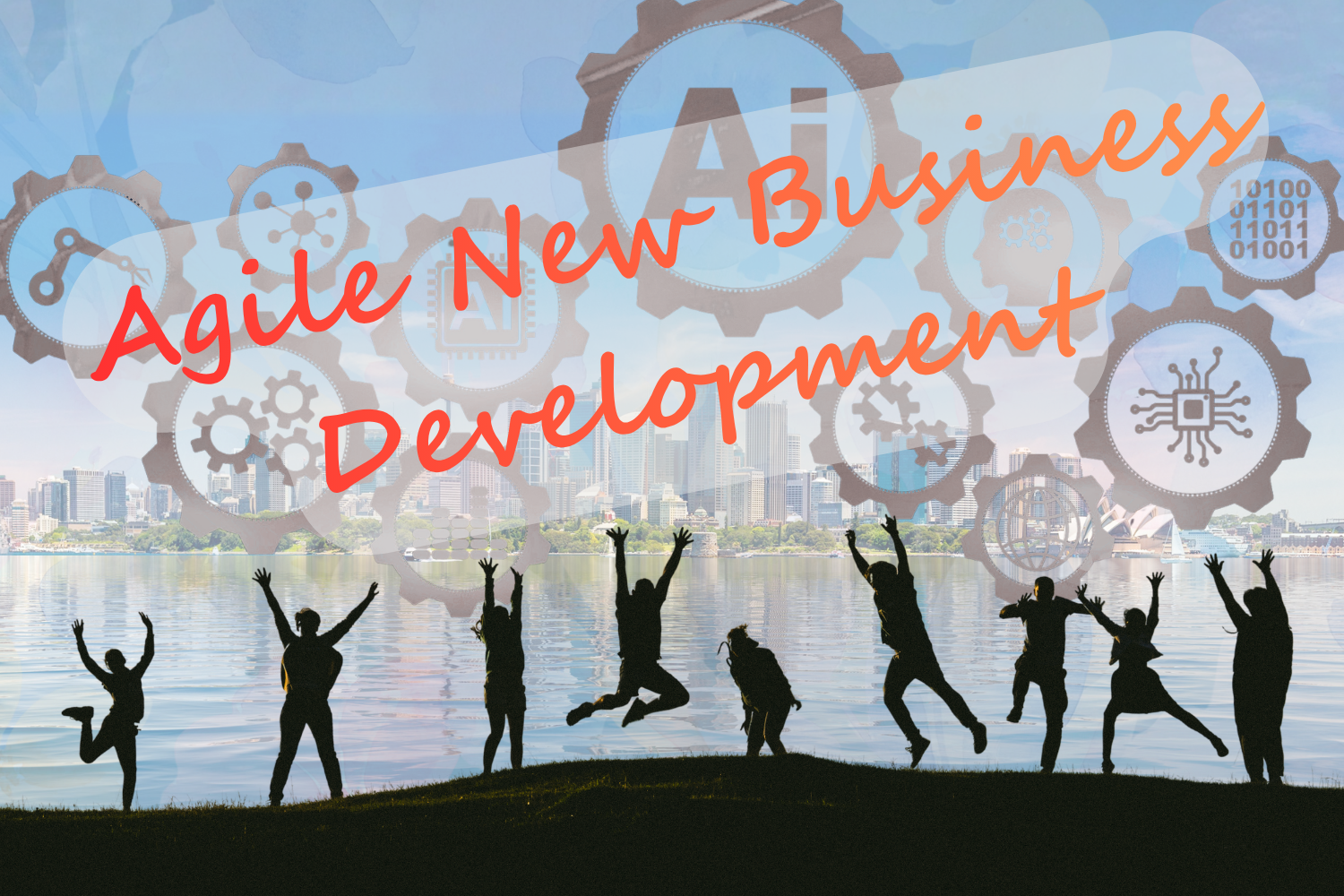
プログラム: 対話とAIによるアジャイル型新規事業開発支援プログラム
現場の知見を、新規事業の成長機会へ。
対話とAIで進める「アジャイル型新規事業開発支援プログラム」
(The English version follows the Japanese text.)
市場環境や顧客ニーズが大きく変化するなか、未来の事業機会につながる重要な知見は、自社の“リアル”な現場にこそあります。外部の専門家や市場データも大切ですが、日々の業務、顧客との対話、商品・サービスの提供現場で生まれる気づきや違和感には、新規事業開発の起点となる顧客課題や未充足ニーズが隠れています。これからの事業開発では、そうした現場知を活かし、環境変化に素早く適応しながら仮説検証を続けることが重要です。
Creative Guildの「アジャイル型新規事業開発支援プログラム」は、対話とAIを活用し、現場の知見を起点に事業アイデアを構想し、PoC(概念実証)で小さく試し、顧客や市場から学びながら事業化へつなげる実践型の新規事業開発支援プログラムです。完成したアイデアを外から持ち込むのではなく、自社の強み・顧客接点・技術・人材の中にある可能性を引き出し、事業として形にします。そのプロセスを通じて、外部へ過度に依存せず、自ら新しい事業を生み出し続ける自走型の事業開発力を組織の中に育てます。
■ アジャイル型新規事業開発支援プログラムの特徴
本プログラムは、時間とコストをかけて完成形を一気に立ち上げるのではなく、現場の“リアル”を起点に、事業仮説を小さく試しながら育てるアジャイル型のアプローチを採用しています。対話を通じて現場の声、顧客課題、違和感、強みを丁寧にすくい上げ、AIでリサーチ・情報整理・分析を高速化することで、事業アイデアの創出から仮説構築、顧客検証、PoCまでのサイクルを加速します。
また、大型投資を前提とせず、判断可能な単位に分けてステップバイステップで進めます。プロセスで得られた市場情報、顧客の反応、判断基準、検証データ、実践ノウハウは、次の新規事業開発にも活用できる組織の“アセット”として蓄積されます。さらに、実践を通じて事業開発人材が育ち、経営層・事業部門・現場を越えた対話が生まれることで、組織の意思決定や関係性にも前向きな変化を促します。
無理に背伸びをするのではなく、自社の現場、顧客基盤、技術、人材、ブランドなど、すでに持っている強みを活かして自然体で進めることを大切にしています。その積み重ねが、継続的に新規事業を生み出す再現可能な力につながります。本プログラムは、単発の事業アイデア創出や外部依存型のコンサルティングではなく、事業・人材・組織がともに進化するプロセスをデザインする取り組みです。
■ 新規事業開発の基本アプローチ
本プログラムは、現場の“リアル”を起点に、対話とAIを活用して新規事業を小さく試し、学び、育てるアジャイルなプロセスで構成されています。テーマ設定、リサーチ、対話、フィードバック、PoC、戦略整理、学習・資産化を通じて、事業構想から実証、社内合意、実行、組織への定着までを段階的に進めます。
① テーマ設定(経営課題と顧客課題から問いを立てる)
まず、経営戦略と現場のリアルを接続し、「どの顧客の、どの課題に、なぜ取り組むのか」という新規事業のテーマを明確にします。日々の業務や顧客接点にある違和感、要望、未解決課題、強みを起点に、探索と意思決定を前へ進める“意味のある問い”を設定します。
② 市場・顧客リサーチと仮説構築(AIで探索を加速する)
設定したテーマに基づき、市場動向、競合、顧客ニーズ、自社の強みや保有資源を多面的に分析します。生成AI等を活用してリサーチ、情報整理、比較、論点抽出を高速化し、顧客価値・提供方法・収益性・実現可能性に関する検証可能な事業仮説を構築します。
③ 対話による事業構想の深化(社内外の知見を統合する)
経営層、現場メンバー、顧客、社内外のキーパーソンとの対話を重ねながら、事業仮説の精度を高めます。異なる立場や専門性を持つ人の知見を統合し、顧客課題の本質、独自の提供価値、自社が取り組む意義をより深く捉えます。
④ 顧客・市場フィードバックの統合(集合知で磨き上げる)
アンケート、インタビュー、コミュニティネットワークなどを通じて幅広い意見や反応を集め、AIで整理・分析します。期待、懸念、利用条件、改善点などの多面的なフィードバックを統合し、事業アイデアと価値提案をより実践的で伝わる形へ磨き上げます。
⑤ PoC・仮説検証(小さく試して確かめる)
構想だけで終わらせず、実行可能な範囲からPoC(概念実証)を開始します。最小限のサービス、プロトタイプ、コンテンツ、業務運用などを用いて小さく試し、顧客や現場の反応、実現性、継続性を確認しながら、事業仮説の妥当性を検証します。
⑥ 事業戦略の整理・合意形成(実行可能な計画にする)
PoCの検証結果を踏まえ、対象顧客、提供価値、ビジネスモデル、実行体制、ロードマップ、評価指標を整理し、実行可能な事業戦略として構造化します。同時に、関係者との対話を通じて認識と期待値をそろえ、構想を「実際に進められる状態」へ移します。
⑦ 学習・ナレッジ資産化(次の新規事業へつなぐ)
プロセス全体で得られた市場知識、顧客理解、検証データ、意思決定の根拠、成功・失敗からの学びを整理し、次の新規事業開発に活用できるナレッジとして蓄積します。この学習サイクルを継続することで、挑戦するたびにスピードと精度が高まり、新しい事業が生まれ続ける組織へ進化します。
■ 導入によって期待できる効果
本プログラムは、単に新規事業を一つ立ち上げることだけを目的とせず、組織の中に「事業を生み出し続ける力」を育てることを目指します。対話とAIを組み合わせたアジャイル型新規事業開発により、リサーチ、仮説構築、検証、意思決定を効率化し、事業創出のスピード、投資効率、学習速度の向上が期待できます。
新規事業開発を大手コンサルティングファーム等へ広範に委託する場合、案件の規模や支援範囲によっては、戦略設計から事業立ち上げまでに1〜2年、1億〜数億円規模の投資が必要となるケースがあります。一方、本プログラムでは、対象領域・検証範囲・社内体制等の条件によりますが、デジタルやメディア領域の一例として、約3か月・300〜500万円程度で事業の立ち上げフェーズに到達することも可能です。AIによる市場調査・仮説構築・コンテンツ生成の高速化、対話による意思決定と合意形成の効率化、PoCを前提としたスモールスタート設計によって、完成形をつくってから動くのではなく、動きながら設計し、検証結果から学びながら育てることで、時間とコストの圧縮を図ります。
さらに重要なのは、その過程で得られる顧客理解、判断基準、検証データ、実践ノウハウが組織内に蓄積されることです。外部依存型のプロジェクトと異なり、経験を一過性・属人的なものにせず、次の事業開発にも使える“アセット”として残すことで、二回目、三回目の挑戦ほどスピードと精度を高められます。その結果、長期的な投資効率と組織の学習能力が向上し、生まれた余力を次の挑戦へ再投資する好循環をつくります。
また、本プログラムの価値は事業面だけにとどまりません。現場の“リアル”から仮説を立て、顧客や関係者との対話を重ね、PoCで検証するプロセスを通じて、構想を実行へつなげる力が高まり、継続的に新規事業を創出する仕組みが組織内に育ちます。同時に、仮説思考、顧客理解、対話・ファシリテーション、意思決定、AI活用のスキルを備えた事業開発人材が育成されます。部門横断の共創によって組織の関係性や意思決定にも変化が生まれ、Creative Guildのコミュニティネットワークを通じて、多様な外部知、新たなパートナー、顧客候補、共創機会へ接続することも可能です。
小さく始め、顧客と現場で確かめ、学びながら育てる。その積み重ねによって、事業・人材・組織・ネットワークが一体となって進化することが、本プログラムの最大の価値です。短期的には新規事業の立ち上げスピードと投資効率を高め、長期的には自社で未来の事業機会を探索・検証・実装し続ける力を育てます。対話とAIを活用し、新規事業開発の内製化と持続的な事業創出を支援する実践プログラムです。
※本プログラムは、Creative Guildのサービス利用規約に基づいて提供いたします。
Turn Frontline Insights into New Business Opportunities
Agile New Business Development Program Powered by Dialogue and AI
In a rapidly changing market, some of the most valuable signals for future growth are found within the organization’s day-to-day frontline reality. External expertise and market data are important, but so are the unmet customer needs, operational frictions, emerging behaviors, and practical insights revealed through everyday work and customer interactions. Effective new business development increasingly depends on an organization’s ability to recognize those signals, turn them into testable hypotheses, and adapt quickly as conditions change.
Creative Guild’s Agile New Business Development Program is a hands-on business development program that combines dialogue and AI to turn frontline knowledge into new business concepts, test them through small-scale proofs of concept, and develop them through continuous customer and market learning. Rather than importing finished ideas from outside, the program draws on the organization’s existing strengths, customer relationships, technologies, people, and experience. The goal is to build an internal, self-sustaining capability to identify, validate, and launch new businesses without excessive dependence on external providers.
■ Key Features of the Agile New Business Development Program
Instead of investing heavily in a fully designed business before testing it, the program uses an agile approach that starts with real frontline conditions and develops business hypotheses through small, iterative experiments. Dialogue helps surface customer problems, operational insights, tensions, and organizational strengths, while AI accelerates research, synthesis, comparison, and analysis. Together, they shorten the cycle from opportunity discovery and hypothesis building to customer validation and proof of concept.
The program emphasizes step-by-step progress rather than large upfront investment. Market knowledge, customer feedback, decision criteria, validation data, and practical know-how generated throughout the process remain within the organization as reusable assets for future business development. At the same time, the work develops internal business-building talent, encourages cross-functional dialogue, and improves the organization’s capacity for coordinated decision-making.
We do not ask organizations to overextend themselves or imitate someone else’s model. Instead, the program builds on the organization’s existing customer base, technologies, people, brand, operational knowledge, and other strengths. Repeated small experiments create a more sustainable and repeatable capability for new business creation. In this sense, the program is not simply a consulting engagement to produce one business idea; it is a process for evolving the business, the people, and the organization together.
■ Seven-Step New Business Development Process
The program follows an agile process that starts with frontline reality and uses dialogue and AI to test, learn, and grow new business ideas. Through theme setting, research, dialogue, feedback integration, proof of concept, strategic alignment, and knowledge capture, we move step by step from opportunity discovery and concept design to validation, internal agreement, execution, and organizational adoption.
1) Theme Setting: Framing a Question from Business and Customer Challenges
We begin by connecting management priorities with frontline reality and clarifying which customer problem or business opportunity the organization should address—and why. Observations, requests, unresolved issues, and organizational strengths found in everyday operations and customer interactions become the basis for a meaningful question that guides exploration and decision-making.
2) Market and Customer Research: Accelerating Hypothesis Building with AI
Based on the selected theme, we examine market trends, competitors, customer needs, organizational strengths, and available resources from multiple perspectives. Generative AI and other tools accelerate research, information synthesis, comparison, and issue identification, helping the team build testable hypotheses about customer value, delivery methods, revenue potential, and feasibility.
3) Deepening the Business Concept Through Dialogue
We refine the hypotheses through repeated dialogue with executives, frontline members, customers, and key stakeholders inside and outside the organization. Integrating different roles and areas of expertise helps reveal the underlying customer problem, sharpen the unique value proposition, and clarify why the organization is well positioned to act.
4) Customer and Market Feedback Integration
We gather feedback through surveys, interviews, and community networks, then use AI to organize and analyze the responses. Expectations, concerns, usage conditions, barriers, and improvement opportunities are integrated to make the business idea and value proposition more practical, relevant, and compelling.
5) Proof of Concept: Testing Small and Learning in Practice
Rather than stopping at concept design, we launch a proof of concept wherever practical. A minimum service, prototype, piece of content, or operational process is tested on a small scale so the team can observe customer and frontline reactions, evaluate feasibility and continuity, and validate the core business hypothesis under real conditions.
6) Business Strategy and Stakeholder Alignment
Using the PoC results, we clarify the target customer, value proposition, business model, delivery structure, roadmap, and evaluation metrics, then organize them into an executable business strategy. Dialogue with stakeholders aligns expectations and responsibilities so the concept can move from “promising” to “ready to execute.”
7) Organizational Learning and Knowledge Assets
Market knowledge, customer insight, validation data, decision rationale, and lessons from both successes and failures are organized as reusable knowledge for future business development. Repeating this learning cycle increases speed and precision with each initiative and helps the organization evolve into one that can continuously generate and implement new business opportunities.
■ Expected Business and Organizational Outcomes
The program is not designed only to launch a single new business. Its deeper purpose is to build an internal capability to keep identifying and creating businesses over time. By combining dialogue, AI, and agile validation, the program streamlines research, hypothesis development, customer testing, and decision-making, with the potential to improve business-building speed, investment efficiency, and organizational learning.
When new business development is broadly outsourced to a large consulting firm, projects may—depending on scope, complexity, and support requirements—take one to two years and require investments ranging from JPY 100 million to several hundred million. By contrast, depending on the domain, validation scope, and internal resources available, one example of this program in a digital or media-related field may reach the business launch phase in approximately three months with a budget of around JPY 3–5 million. AI accelerates market research, hypothesis building, and content development; dialogue improves decision-making and stakeholder alignment; and a PoC-first design limits initial exposure. Rather than waiting for a finished model before acting, we design while moving and improve through evidence—reducing time and cost while preserving learning.
Equally important is what remains inside the organization after the project. Customer insight, decision criteria, validation data, and practical know-how are retained as reusable assets rather than disappearing with an external provider or remaining isolated within a few individuals. As a result, the second and third initiatives can move faster and with greater precision. Over time, this strengthens organizational learning and investment efficiency, creating a virtuous cycle in which newly available resources can be reinvested in further experimentation and growth.
The program’s value extends beyond the business concept itself. By starting from frontline reality, building hypotheses, engaging customers and stakeholders in dialogue, and validating ideas through PoCs, the organization strengthens its ability to move from concept to execution and develops an internal system for continuous new business creation. The process also develops people with skills in hypothesis-driven thinking, customer discovery, facilitation, decision-making, and AI utilization. Cross-functional co-creation can improve organizational relationships and governance, while Creative Guild’s community network can connect the initiative with diverse external knowledge, potential partners, prospective customers, and new co-creation opportunities.
Start small, test with customers and the frontline, and grow through evidence-based learning. The program’s greatest value lies in enabling the business, people, organization, and network to evolve together. In the short term, it can improve launch speed and investment efficiency. In the long term, it develops the organization’s own ability to discover, validate, and implement future business opportunities. It is a practical program for internalizing new business development and sustaining business creation through dialogue and AI.
All services are provided in accordance with the Creative Guild Terms of Service.


この記事へのコメントはありません。