
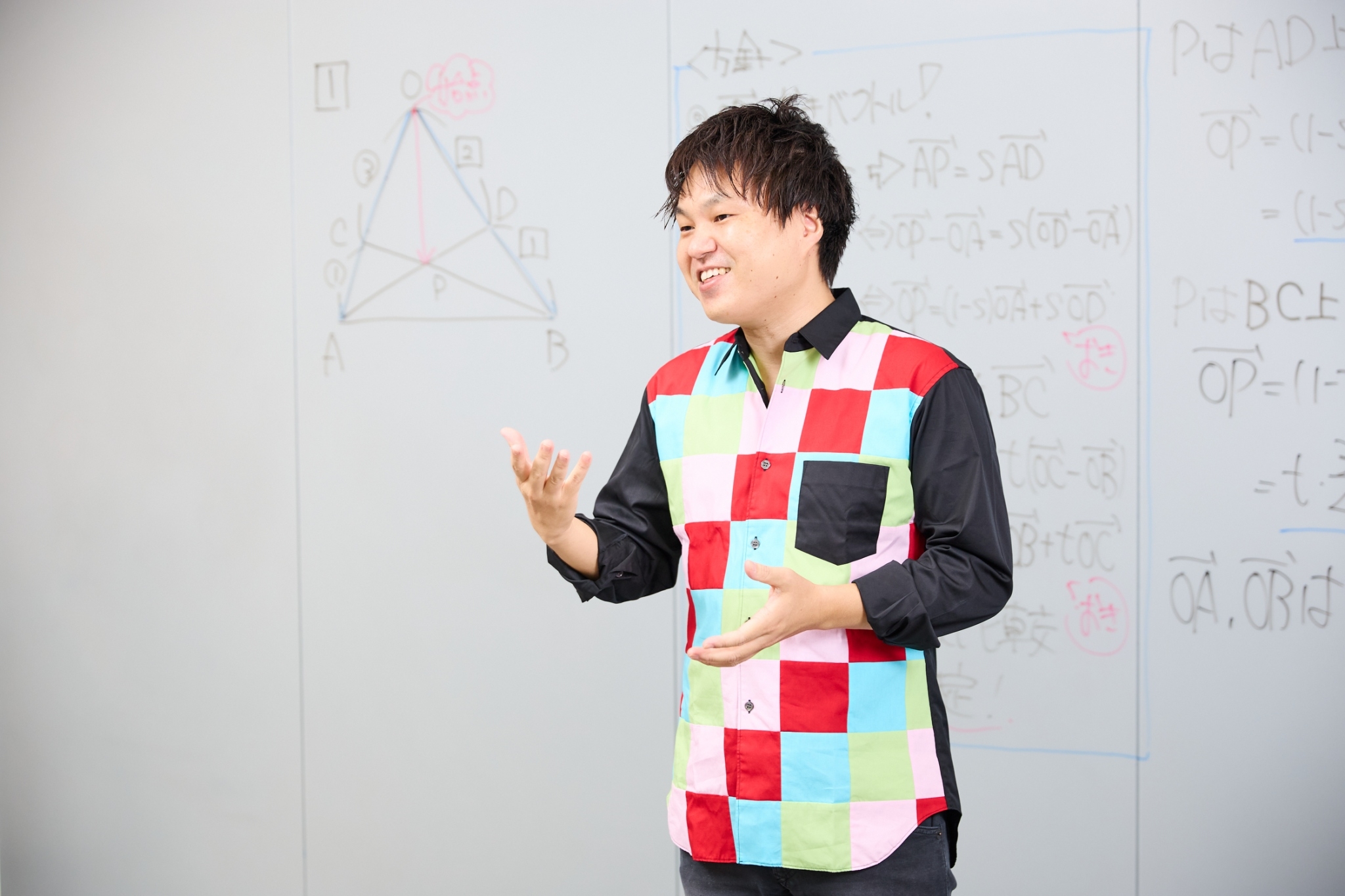
Guild名鑑 No.188 数学予備校講師 小倉 悠司さん
学び方を学ぶ。
数学予備校講師 小倉 悠司さんが数学で育む、AI時代の“考える力”
(The English version follows the Japanese text.)
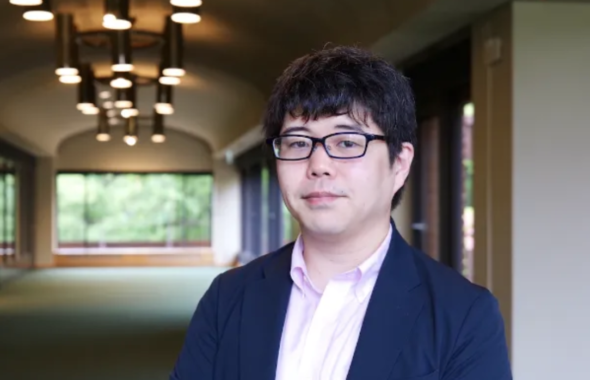
港区を起点にいろんなところで働く・暮らす、楽しい時間を創りたい人たちによるコミュニティCreative Guild。このギルド名鑑ではそんなCreative Guildでつながったユニークな方々をご紹介しています。今回ご紹介するのは、数学の楽しさを伝える教育者・小倉悠司さん。ただ知識を伝えるのではなく、“学び方を学ぶ”機会を提供することで、このAI時代に不可欠な“考える力”を育んでいます。
小倉さんは学生時代から授業手法の研究を続け、「なぜそうなるのか」を徹底して考えるスタイルで有名予備校の人気講師に。東大・京大・医学部クラスから共通テストレベルまで幅広く担当してきました。また、N高グループでも数学の授業や教材制作に携わり、オンラインとリアルの両方で教育の可能性を広げています。「数学をもっと好きになる」ことをテーマとしたイベント「数学教育フェス」を主催するほか、参考書や大人が“数字を学び直す”ための書籍も多数出版。数学の楽しさを伝える活動の幅を広げ続けています。
そんな小倉さんが大切にしているのは、感情が動く瞬間。それは、予測から外れることで生まれたり、思いがけない発見に出会ったりすることで生まれる知的な喜び、つまり“学ぶことの楽しさ”に出会った瞬間です。だからこそ、ただ正解を求めるのではなく、そのための枠組み(フレーム)や方向性(ベクトル)を整え、考える過程を整理することを重視しています。それは、学ぶことの楽しみ方を伝えるアプローチであり、結果として“学び方を学ぶ”機会を提供することにつながっています。
AIの時代になり、私たちは世界最高レベルの“アウトプット”に簡単にアクセスできるようになりました。そのとき、もし「なぜそうなるのか」を考えることをしなかったとしたらどうなるでしょうか。手に入れたアウトプットが本当に正しいのかどうかも分からず、ましてや、それを応用することもできません。結果として、私たちは機械的にものごとを処理することしかできなくなってしまうかもしれません。それは、AIの時代が本当に求めている姿と言えるのでしょうか。
数字は非常に抽象的な表現方法です。しかしその奥には、具体としての事実や現実の出来事が広がっています。私たちがこの社会の中で問題に向き合い、新しい可能性を築いていくためには、この具体と抽象を往復しながら考える力が不可欠です。数学はその基礎を鍛えるためのもの。そして数学の楽しさを伝える小倉さんの取り組みは、まさに“楽しい”から始まる未来づくりの根源を支えるものと言えるでしょう。もちろんそれは学校教育に限られるものではありません。だからこそ、立場や年代を超えて数学に触れることで、それぞれが自分なりの“楽しい”学び方を見つけていけたら素敵ですね。
著書:
「マンガでカンタン!小学算数は7日間でちょっと好きになれる。」
「マンガでカンタン!中学数学は7日間でやり直せる。」
Learn How to Learn.
Yuji Ogura, a mathematics preparatory school instructor,
the “power to think” for the AI era through mathematics.
Creative Guild is a community based in Minato City for people who want to create enjoyable lives and work across many places. In this Guild Directory, we introduce unique individuals connected through Creative Guild. The person we are featuring this time is Yuji Ogura, an educator who shares the fun of mathematics. Rather than simply delivering knowledge, he nurtures the “power to think,” which is essential in the age of AI, by providing opportunities to learn how to learn.
Since his student days, Ogura has studied teaching methods and became a popular instructor at a well-known preparatory school with a style centered on thoroughly exploring “why things work the way they do.” He has taught a wide range of classes, from University of Tokyo, Kyoto University, and medical school tracks to the Common Test level. He has also been involved in teaching mathematics and developing learning materials for the N High School group, expanding educational possibilities through both online and in-person formats. In addition to organizing the “Math Education Festival,” an event centered on helping people enjoy mathematics more, he has published numerous reference books as well as books that encourage adults to relearn numbers and mathematics. His activities to share the joy of mathematics continue to expand.
What Ogura values most are moments when emotions move. These moments arise when our predictions are challenged or when unexpected discoveries appear—moments of intellectual joy, in other words, the moment we encounter the joy of learning itself.. For this reason, he does not simply emphasize arriving at correct answers. Instead, he focuses on organizing the process of thinking by setting up frames and vectors. This approach teaches people how to enjoy learning itself and ultimately provides opportunities for people to learn how to learn.
In the age of AI, we can easily access world-class outputs. But what happens if we stop asking “why does this work?” Without understanding the reasoning behind something, we cannot judge whether the output we obtain is truly correct, let alone apply it in new situations. As a result, we might end up doing nothing more than mechanically processing information. Is that really the role humans should play in the age of AI?
Numbers are a highly abstract form of expression. At the same time, behind them lies a vast landscape of concrete facts and real-world events. To confront problems in society and build new possibilities, we must cultivate the ability to move back and forth between the concrete and the abstract. Mathematics strengthens this very foundation. Ogura’s efforts to share the joy of mathematics support the roots of a future that begins with enjoyment. Of course, this is not limited to school education. Precisely because we are adults, it may be important for us to rediscover the joy of learning. By encountering mathematics, beyond positions and generations, perhaps each of us can rediscover our own way of enjoying learning.

この記事へのコメントはありません。