
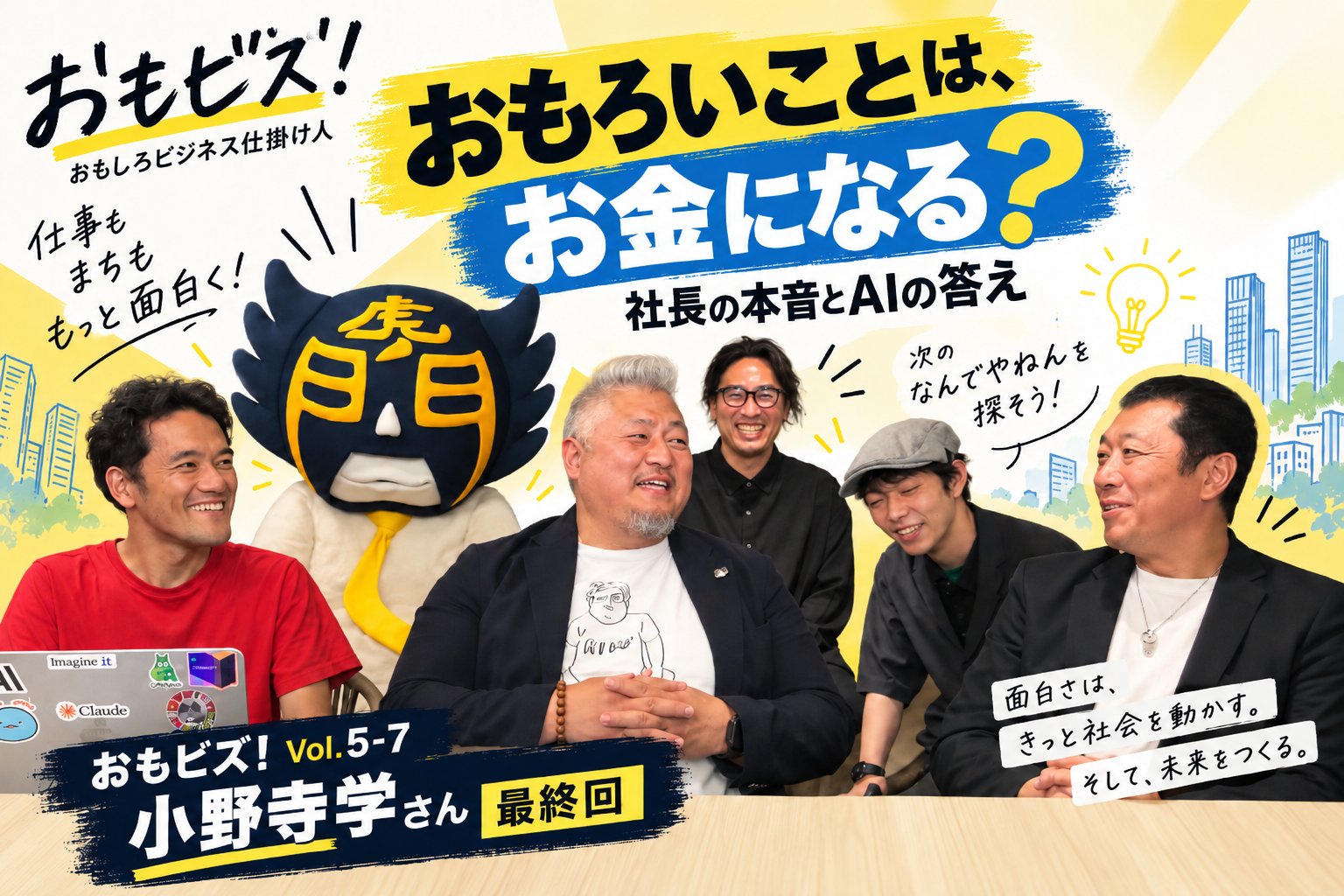
おもビズ! Vol.5-7 おもろいことは、お金になる?社長の本音とAIの答え | 小野寺学さん 最終回
おもろいことは、お金になる?社長の本音とAIの答え |
おもビズ! Vol.5-7 小野寺学さん 最終回
(The English version follows the Japanese text.)
Creative Guildの仲間たちがお届けする「おもビズ!(おもしろビジネス仕掛け人)」では、さまざまな分野で活躍する面白い人やテーマを取り上げ、その人ならではの視点や対話から、これからの社会やビジネスのヒントを探ります。パーソナリティは、人やビジネスの面白さを引き出す幹てつやさんと、AIやデジタルを身近な学びとして届ける「AIパパ」ことザックさんです。
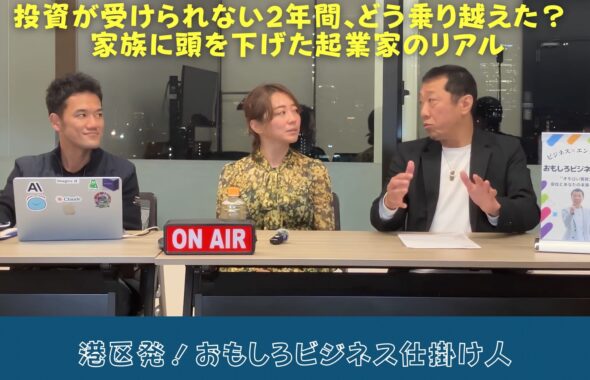
今回もゲストは、虎ノ門を拠点にアート&デザイン、映像、イベント、まちのコトづくりに取り組むグー・チョキ・パートナーズ株式会社 代表取締役の小野寺学さん。シリーズ最終回のアフタートークでは、会社の若い仲間も加わり、小野寺さんの働き方や人柄、AIとの即興対話、そして「おもろいことはお金になるのか」という経営の本音へ話が広がります。
登場するのは、16歳から虎ノ門の清掃活動に参加し、現在は映像やウェブ制作、イベント運営などを担う26歳のメンバーです。小野寺さんは彼の経歴と仕事ぶりを楽しそうに紹介し、本人も小野寺さんの仕事と遊びの両方をよく見てきたと語ります。年齢や立場を越えて冗談を交わせる関係から、グー・チョキ・パートナーズらしいチームの空気が伝わってきます。
そこへ加わるAIは、小野寺さんを思わせる関西弁で「次のなんでやねんを探そう」と会話を転がします。しかし、質問にはなかなか答えず、周囲から「話を聞いていない」と突っ込まれる展開に。整った答えを出すのではなく、少しずれた応答を笑いへ変えるやり取りそのものが、小野寺さんのいう「面白がる」姿勢を映します。
後半では、「面白いことがそのままお金になるとは限らない」という現実も率直に語られます。小野寺さんは、面白くても収益につながらないことは多く、借金を抱えた時期には家族から安定した道を勧められたと振り返ります。現在も、まちの活動でどう稼ぐかを模索しながら、舞台やCMなどのクリエイティブな仕事を事業の柱にしています。
それでも、面白さとビジネスを切り離してはいません。通常の仕事でも、少し遊びを加えるだけで見え方や結果が大きく変わると小野寺さんは話します。面白い企画を無理に収益化するのではなく、依頼された仕事の中に新しい見方や小さな仕掛けを持ち込む。その工夫が、仕事の価値を広げる一つの方法です。
最後に語られるのは、世の中にある「なんでやねん」を見つけ、それを形にしていくことです。違和感を見過ごさず、笑える問いへ変え、誰かと試してみる。すべてがすぐ売上になるわけではありませんが、その積み重ねが人を集め、場を動かし、次の仕事の入口になります。動画本編で、小野寺さんシリーズを締めくくる軽快なアフタートークをぜひご覧ください。
Can Fun Become a Business? A CEO’s Honest Answer and an AI’s Take
OMOBIZ, brought to you by members of Creative Guild, introduces people and themes that make business more interesting. Through open conversation, the series looks for practical ideas about the future of society and work. The hosts are Tetsuya Miki, who draws out the playful side of people and business, and Zack, known as “AI Papa,” who makes AI and digital technology approachable as tools for learning.
The guest is once again Manabu Onodera, Representative Director of Goo Choki Partners Inc., whose work in Toranomon spans art and design, video, events, and community projects. In this final after-talk, a younger member of the company joins the conversation. Their exchange moves from Onodera’s character and working style to an improvised dialogue with AI and, finally, to the honest question of whether interesting ideas can make money.
The team member first came to Toranomon at the age of sixteen to take part in local cleanup activities. Now twenty-six, he works across video, web production, and event operations. Onodera describes his unusual path and professional ability with obvious affection, while the younger colleague says he has seen both Onodera’s serious work and his constant joking. Their easy banter reveals a team culture in which people can speak across differences in age and position.
An AI then joins in, speaking in Kansai dialect and sounding much like Onodera. It urges the group to look for the next “nandeyanen,” a comic challenge to something that does not quite make sense. Yet it repeatedly fails to answer the question being asked, prompting everyone to point out that it is not listening. The humor comes from turning that imperfect response into another direction for the conversation, which closely mirrors Onodera’s habit of finding interest in a slight misalignment.
The second half addresses the business reality directly. Onodera says there are many things that are interesting but do not generate income. He recalls carrying substantial debt and being urged by his family to choose a more stable path. He is still exploring how community work can support itself financially, while creative work for stage productions, commercials, and other clients remains an important part of the business.
Even so, he does not separate fun from commercial work. A conventional assignment can change dramatically when a small element of play is added. The point is not to force every entertaining idea into a revenue model. It is to bring a fresh angle or a modest creative intervention into work that already has a client and a purpose. That approach can expand the value of the result without hiding the need to earn.
The episode closes by returning to the “nandeyanen” found throughout everyday life. Notice what feels odd, turn the discomfort into a question people can laugh about, and give that question a form others can try. Not every experiment produces immediate revenue, but repeated experiments bring people together, change the atmosphere of a place, and create openings for future work. Watch the full video for the lively conversation that closes the Manabu Onodera series.

この記事へのコメントはありません。