
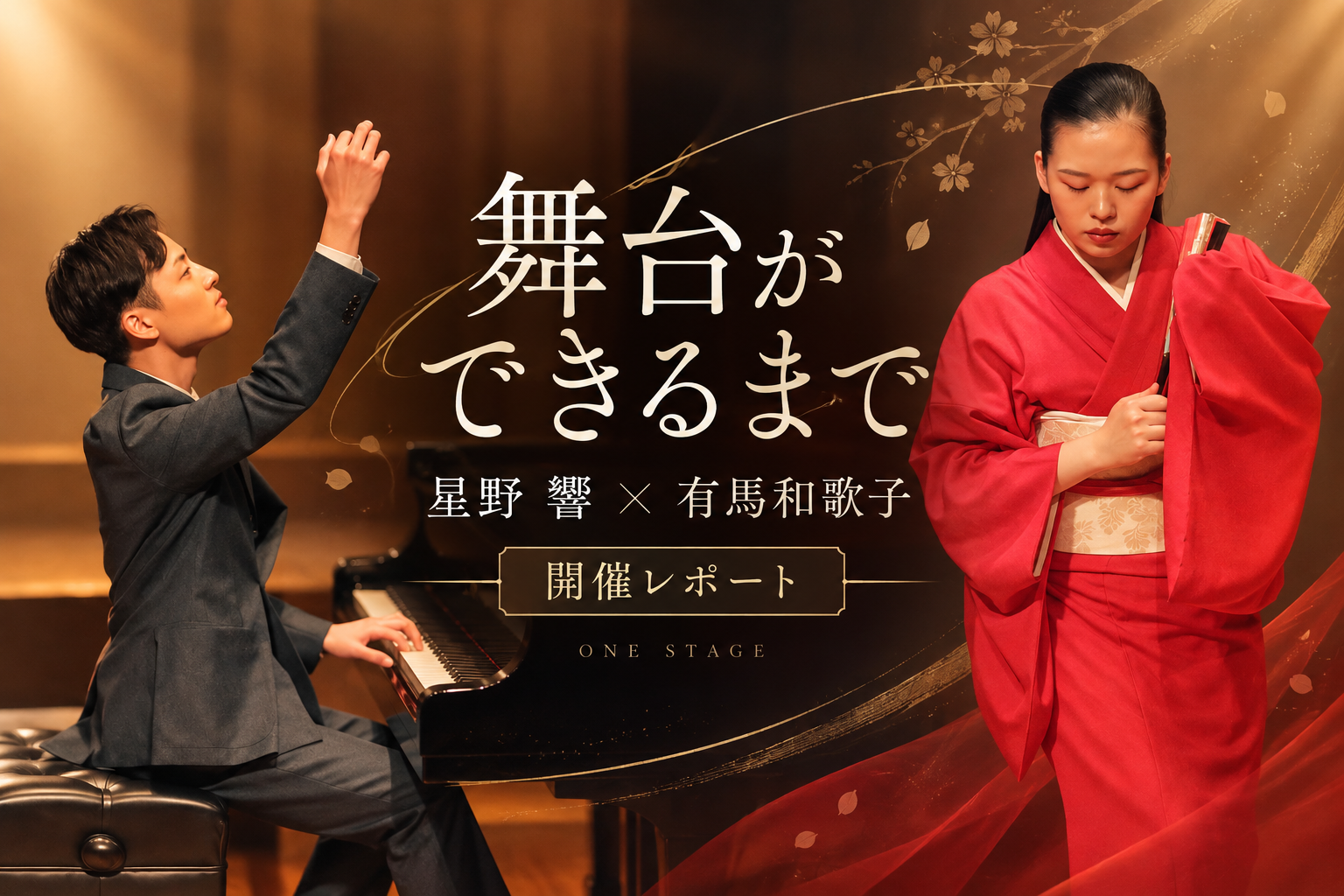
舞台裏まで、舞台にしてしまおう。星野 響×有馬和歌子「舞台ができるまで」開催レポート
舞台裏まで、舞台にしてしまおう。
星野 響×有馬和歌子「舞台ができるまで」開催レポート
(The English version follows the Japanese text.)
2026年8月26日、豊洲シビックセンターホールにて、ピアニスト・星野 響さんと日本舞踊家・有馬和歌子さんによる二人リサイタル「舞台ができるまで」が開催されました。平日の夜の開催ながら、前日から当日にかけても申込みが続き、300席の会場は満席に。開演直後から客席はびっしりと埋まり、舞台と客席が一体となるような空気の中で公演が始まりました。
完成形ではなく、「できるまで」を見せる
今回の公演で特徴的だったのは、ピアノと日本舞踊を単純に“共演”させなかったことです。二人が一緒に一つの演目を演じるのではなく、それぞれが長年向き合ってきた表現の世界を深く開き、その「できるまで」を一つの舞台としてつないでいきました。
オープニングは、有馬さんの「京鹿子娘道成寺」より、そして星野さんによるチャイコフスキー「くるみ割り人形」より「マーチ」「中国の踊り」「金平糖の踊り」。異なる二つの表現が、この日の舞台の入口をつくりました。
星野さんの実演Ⅰでは、「怪獣の花唄」TEPPENスペシャルバージョンを披露。グランドピアノの内部構造や演奏中の指の動き、楽譜への書き込みをスクリーンに映し、普段は見えない演奏の舞台裏を開きました。「くるみ割り人形」を題材に、オーケストラの響きをピアノ一台でどう表現するかも解説。チェロの長く伸びる音を表す工夫に触れ、技法を使う場合と使わない場合を弾き比べながら、わずかな違いが音楽全体の表情を変える面白さを、目と耳の両方に届けました。
有馬さんの実演Ⅱは「操り三番叟」。ほぼ素顔の状態から化粧を施し、衣裳をまとい、かつら、烏帽子を身につけるまで、普段は楽屋で行う支度を舞台上で実演しました。化粧の手つきだけでなく、衣裳にあしらわれた松や鶴など、おめでたい演目を彩る意匠も紹介。準備が整うと、最初から最後まで操り人形の役を演じる舞踊へと移ります。目の前で話していた一人の人が、装いと身体の表現によって役へと変わる。その過程と完成した姿を続けて見せ、舞踊が生まれる時間そのものを届けました。
「プロセスにこそロマン有り」
今回の舞台を貫いていたテーマが、「プロセスにこそロマン有り」です。完成した演奏や舞踊だけでなく、その表現が生まれる過程まで観客に開く。音の響きや身体の動きの背景にある工夫を知ることで、作品を味わう視点も広がっていきます。
星野さんが見せた楽譜への書き込みや、指の動きと響きの関係には、一音にどのような表情を与えるかという判断が表れます。有馬さんの化粧にも、ムラができないよう手早く仕上げる技があります。舞台を支える浴衣での稽古から、本番衣裳をまとった姿を想像し、手足の位置をわずかに調整していく。音をつくることも、役をつくることも、完成形を思い描きながら細部を磨く営みです。二人が日々繰り返している“当たり前”の中に、長年の経験や判断が詰まっています。
完成した作品だけでなく、その作品が生まれる仕組みを知ることで、見えてくる世界そのものが変わる。そこに今回の公演の面白さがありました。
上手さだけでなく、「人」が見える舞台に
有馬さんの支度中には、事前に集めた質問に答える時間も設けられました。化粧をしながら質問に答え、星野さんがそこに言葉を重ねる。二人の自然な掛け合いに客席から何度も笑いが起こり、「兄弟漫才」のような空気まで生まれました。
高い技術を持つプロフェッショナルとして舞台に立ちながら、そこにいるのは一人の人間でもあります。幼い頃からそれぞれの表現に向き合い、その道で生きていく覚悟を持った二人だからこその本気。そして、その本気を必要以上に飾ることなく、普段の会話や関係性まで客席に開いていく。リハーサルの延長のような自然体の時間があるからこそ、その後に披露される完成した表現の凄さも、より立体的に伝わっていきました。
子どもたちにとって、初めての劇場体験にも
会場には多くの親子の姿もありました。中には、今回が人生で初めての劇場体験となった子どもたちや、親子で舞台を鑑賞すること自体が初めてという家族もいました。クラシックや伝統芸能に興味があっても、小さな子どもと一緒では「途中で泣いたらどうしよう」「静かにしていられるだろうか」と足を運びにくいことがあります。
今回の公演は、赤ちゃんを含む子どもたちも歓迎する場として開かれました。すべての解説を理解する必要はありません。ピアノの音が変わる瞬間を耳で感じる。化粧や衣裳によって人の姿が変わっていくのを見る。大人たちが「へえ」と驚き、笑う様子を隣で体験する。そうした時間そのものが、子どもたちにとって舞台芸術や文化と出会う最初の入口になっていました。
仲間が支えるから、アーティストは本気になれる
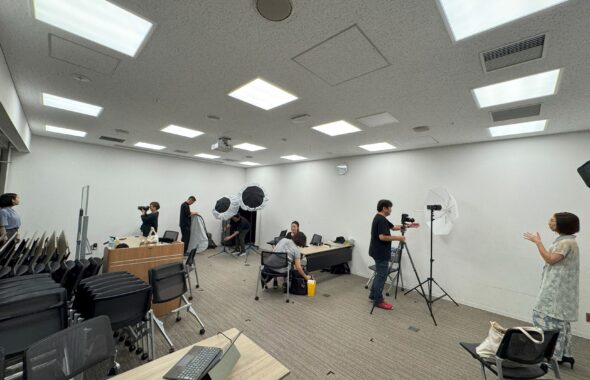
そして、この舞台を支えたのはステージ上の二人だけではありません。撮影、リアルタイム投影、受付、照明、舞台上の物の移動などを、周囲のメンバーが自然に分担。それぞれが自分のできることを担うことで、アーティストは本来向き合うべき表現に集中できる環境が生まれました。
専門家同士でありながら、肩書きに関係なくカメラを持ち、物を運び、互いを支える。トップレベルの専門性と、どこか手作り感のあるチームワークが同居しています。それは、Creative GuildのパートナーであるONE STAGEが大切にしてきた、分野や世代を越えて人がつながり、それぞれの力を持ち寄って新しい表現を生み出すあり方そのものでもあります。
「私たちの当たり前」に価値がある
今回の公演から見えてきた一つの大きな発見が、「私たちの当たり前に価値が宿っている」ということです。楽譜に何気なく書き込まれたメモ。繰り返し磨いてきた指の動き。化粧を仕上げる手つき。衣裳に合わせて手足の位置をわずかに調整する感覚。一つのことに長く、本気で向き合ってきた人にとっては日常でも、その日常には膨大な時間と経験が積み重なっています。
完成した作品だけではなく、そこへ至るまでの工夫や試行錯誤、身体感覚、仲間とのやり取りまで開いてみる。すると観客が出会うのは、単なる「すごい演奏」や「美しい舞踊」だけではありません。その表現を生み出している“人”そのものです。
「舞台ができるまで」を見せることは、単なる舞台裏の公開ではありません。人が一つのことに向き合ってきた時間そのものを、作品として届けること。満席の客席とともにつくられた今回の一夜は、ONE STAGEがこれから開いていく、新しいアート体験の可能性を感じさせる舞台となりました。
公演概要
- 開催日:
- 時間:開場18:00/開演18:30/終演予定20:00頃
- 会場:豊洲シビックセンターホール(5階)
- アクセス:有楽町線 豊洲駅7番出口より1分/ゆりかもめ 豊洲駅直結
- 出演:星野 響(ピアノ)/有馬和歌子(日本舞踊)
- 協力:Creative Guild
※終演時刻は公演案内に記載された予定です。
関連リンク
Turning Backstage into the Stage: Hibiki Hoshino × Wakako Arima “How a Stage Comes to Life” — Event Report
On August 26, 2026, pianist Hibiki Hoshino and Nihon Buyo artist Wakako Arima presented their duo recital, “How a Stage Comes to Life,” at Toyosu Civic Center Hall. Despite being held on a weekday evening, registrations continued through the day of the event, and all 300 seats were filled.
Showing not only the finished work, but how it comes to life
What made this recital distinctive was that it did not simply combine piano and Nihon Buyo into a conventional collaboration. Instead, each artist opened up the world they had cultivated over many years, connecting their two disciplines through the shared theme of the process behind a performance.
The opening featured an excerpt from Arima’s “Kyoganoko Musume Dojoji,” followed by Hoshino performing the “March,” “Chinese Dance,” and “Dance of the Sugar Plum Fairy” from Tchaikovsky’s The Nutcracker.
In Hoshino’s first demonstration, he performed a special TEPPEN version of “Kaiju no Hanauta.” The inside of the grand piano, the movement of his fingers, and markings on the score were projected on a large screen, revealing details that audiences normally cannot see. He also used The Nutcracker to explain how orchestral sound is translated onto a single piano, including how a sustained cello line can be suggested and how small technical choices can change the character of a phrase. By playing examples with and without particular techniques, he made the craft audible as well as visible.
Arima’s second demonstration centered on “Ayatsuri Sanbaso.” Starting almost without stage makeup, she completed her makeup, costume, wig, and eboshi in front of the audience—preparations normally carried out backstage. She also introduced auspicious motifs such as pine and cranes in the costume. Once the preparation was complete, she moved into the dance itself, portraying a marionette from beginning to end. The audience saw both the process of transformation and the completed performance as one continuous work.
“There is romance in the process”
The idea running through the evening was simple: there is romance in the process. Opening the making of music and dance to the audience revealed the decisions behind sound, movement, costume, and character. Hoshino’s score markings and finger movements showed how expression is shaped one detail at a time. Arima’s quick makeup technique, her practice in yukata, and the subtle positioning of hands and feet showed the same attention to a future finished form.
When audiences understand how a work is made, the way they see and hear the finished work can change. That shift in perspective became one of the evening’s defining experiences.
A stage where the people behind the skills could be seen
While Arima prepared for her performance, the two artists answered questions submitted in advance. Their natural banter repeatedly drew laughter from the audience, at times creating an almost sibling-comedy atmosphere. The recital did not hide the people behind the professional skills. Their respect for one another, their long commitment to their respective disciplines, and their relaxed relationship all became part of the experience.
For some children, a first theatre experience
Many families attended, including children experiencing a theatre performance for the first time and families making their first visit to a stage performance together. Babies and young children were welcomed. Even without understanding every explanation, children could hear the piano sound change, watch a dancer transform through makeup and costume, and share the reactions of adults around them. The performance became an accessible first encounter with performing arts and culture.
Artists can give their best when a team supports the stage
The evening was supported by much more than the two performers. Team members shared responsibilities for filming, live projection, reception, lighting, and moving objects onstage. Specialists stepped beyond formal roles to carry equipment, operate cameras, and help one another. That combination of professional expertise and handmade teamwork reflected the spirit of ONE STAGE, a Creative Guild partner that brings different disciplines and generations together to create new forms of expression.
Value lives in what professionals consider ordinary
One of the clearest insights from the recital was that value can live inside what professionals consider ordinary: a note written on a score, a repeated finger movement, the way makeup is applied, or a subtle change in body position to match a costume. For someone who has devoted years to a discipline, these may feel routine. For an audience, they reveal the time and experience behind the art.
Showing “how a stage comes to life” was therefore more than opening the backstage area. It was a way of presenting the time a person has spent seriously engaging with a craft as part of the work itself. The sold-out evening pointed toward new possibilities for the kinds of art experiences ONE STAGE can continue to create.
Event Information
- Date:
- Time: Doors 6:00 p.m. / Start 6:30 p.m. / Scheduled end around 8:00 p.m.
- Venue: Toyosu Civic Center Hall, 5F
- Access: 1 minute from Exit 7 of Toyosu Station on the Yurakucho Line / directly connected to Toyosu Station on the Yurikamome Line
- Performers: Hibiki Hoshino, piano / Wakako Arima, Nihon Buyo
- Cooperation: Creative Guild


この記事へのコメントはありません。