
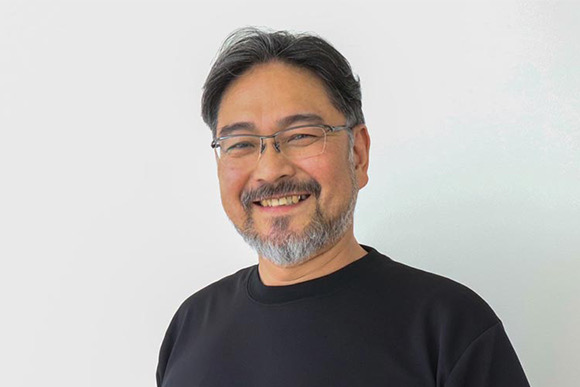
Guild名鑑 No.183 カウンセラー 小林 和紀 さん
”ひと”を知れば、“哲学”は自然と動き出す。
カウンセラー 小林 和紀 さんが伝える、関係性から探求する本質の意味
(The English version follows the Japanese text.)
港区を起点に、いろんなところで働く・暮らす、楽しい時間を創りたい人たちによるコミュニティCreative Guild。このギルド名鑑では、そんなCreative Guildでつながったユニークな方々をご紹介しています。今回ご紹介するのは、カウンセラーの小林 和紀さん。”哲学”を学問や思考としてではなく、“ひと”と“ひと”との関係性の中で自然に立ち上がる「行動」として捉え、心と社会のあり方を探究しながら、再現可能なモデルを多様な分野で築いてきた実践者です。
小林さんは理学部で応用物理学を学んだ後、ホテル業やエンジニアリング領域などの現場で実務経験を重ねてきました。また、自ら会社経営も経験し、医療分野に限らず、環境系やエンターテインメントなど幅広い分野でも活動してきました。その中で一貫して探究してきたのが、物事が成り立つ原理構造の理解です。とくに“ひと”の行動や、その背景にある心理に強い関心を寄せ、個人の内面がどのように組織や社会と結びついていくのかを探求し続けてきました。現在は、その知見をカウンセラーとして活かし、小中高生やその家族のサポートを行っています。
そんな小林さんが大事にしていることは、まさに“ひと”を知ること。それは、表面的に見える肩書や使われている言葉だけでなく、その背景にある情景や文脈までを丁寧に受け止め、関係性を築いていくプロセスです。そして、その関係性の中から生まれる気づきは、ものごとの本質を捉え、自然と「動き出したくなる」感覚を育てていきます。それは“哲学”を単なる知識として扱うのではなく、人間的な実践知――すなわち行動の在り方として捉えることでもあります。
現在、哲学は改めて注目を集めています。しかし一方で、「なぜ哲学なのか」という問いを持たないまま、盲目的に受け取られてしまっている可能性も否定できません。そこには哲学に限らず、与えられた知識や言葉によって「分かったつもり」「できたつもり」になることが、暗黙のうちに許容されてしまう構造が見えてきます。AIの時代においては、その傾向はさらに加速します。情報を素早く得られる一方で、自ら問い直すことをしなければ、本質を掴めないまま情報の波に流され、大勢に同調してしまう危うさも孕んでいるのです。
だからこそ、“そもそも”を考え直していくことが必要です。AI=人工知能のもとは“ひと”の思考であり、社会は“ひと”と“ひと”との関係性によって構成されるもの。そう考えると、小林さんのように“ひと”を知ることの、現代社会における重要性が明確になります。そして、本質を探究して行動につなぐ、実践的な“哲学”をする。それは正解を探すためのものでも、単純に効率を追い求めるためのものでもありません。一人ひとりが自分らしく、豊かに人生を過ごしていくための、“楽しい”から始まる未来づくりの重要なアプローチです。こうした探究のあり方を、ぜひ多様な形で共有し、それぞれの現場で実践していきたいですね。
When You Truly Understand People, Philosophy Begins to Move on Its Own
Kazunori Kobayashi, Counselor — Exploring the Meaning of Essence Through Relationships
Creative Guild is a community rooted in Minato City, bringing together people who want to create enjoyable ways of working and living across different places and contexts. In this Guild Directory, we introduce unique individuals connected through Creative Guild. This time, we feature Kazunori Kobayashi, a counselor who approaches philosophy not as an academic discipline or abstract thinking, but as something that naturally emerges as action within human relationships. Through his work, he has explored the relationship between the human mind and society, building practical, repeatable models across diverse fields.
After studying applied physics in the Faculty of Science, Kobayashi gained hands-on experience in fields such as the hospitality industry and engineering. He also founded and managed his own company and worked across a wide range of domains, including healthcare, environmental initiatives, and entertainment. Throughout this diverse career, one question consistently guided his work: how things fundamentally work at the level of underlying structure. In particular, he has maintained a deep interest in human behavior and the psychology behind it, continually examining how individual inner worlds connect to organizations and society at large. Today, he applies these insights in his work as a counselor, supporting elementary, middle, and high school students, as well as their families.
What Kobayashi values most is, quite simply, understanding people. This means looking beyond visible roles, titles, or the words people use, and carefully engaging with the background, context, and lived experience that shape them. It is a process of building relationships that honor these deeper layers. Within such relationships, moments of insight naturally arise—insights that reveal the essence of things and foster a genuine desire to move and act. In this sense, philosophy is not treated as abstract knowledge, but as human, practical wisdom—an orientation toward action itself.
In recent years, philosophy has once again attracted growing attention. Yet at the same time, it is hard to ignore the risk that philosophy is sometimes embraced without asking the fundamental question: why philosophy at all? More broadly, there is a tendency—far beyond philosophy—to assume we understand something simply because we have been given the right words or information. This structure quietly allows us to feel as though we “get it” or “can do it,” without ever touching what truly matters. In the age of AI, this tendency only accelerates. Information is readily available, but without the habit of questioning and re-examining our assumptions, we risk being swept along by the sheer volume of data—unable to grasp what is essential, and easily conforming to the dominant flow.
That is precisely why it is necessary to return to first principles—to rethink things from the ground up. AI, after all, is built upon human thought, and society itself is formed through relationships between people. Seen this way, the importance of truly understanding people—as Kobayashi does—becomes unmistakably clear in today’s world. Practicing a form of philosophy that explores essence and translates it into action is not about searching for the “right” answer, nor about pursuing efficiency alone. Rather, it is an important approach to shaping a future that begins with curiosity and fun—one in which each person can live more fully and authentically. We hope this way of inquiry can be shared in many forms, practiced across many settings, and gradually woven into everyday life.



この記事へのコメントはありません。