
相手を認めると、仕事の見え方も変わる。| 港区立産業振興センター セミナーレポート
相手を認めると、仕事の見え方も変わる。
今日から始められるエンゲージメント実践講座 開催レポート
(The English version follows the Japanese text.)
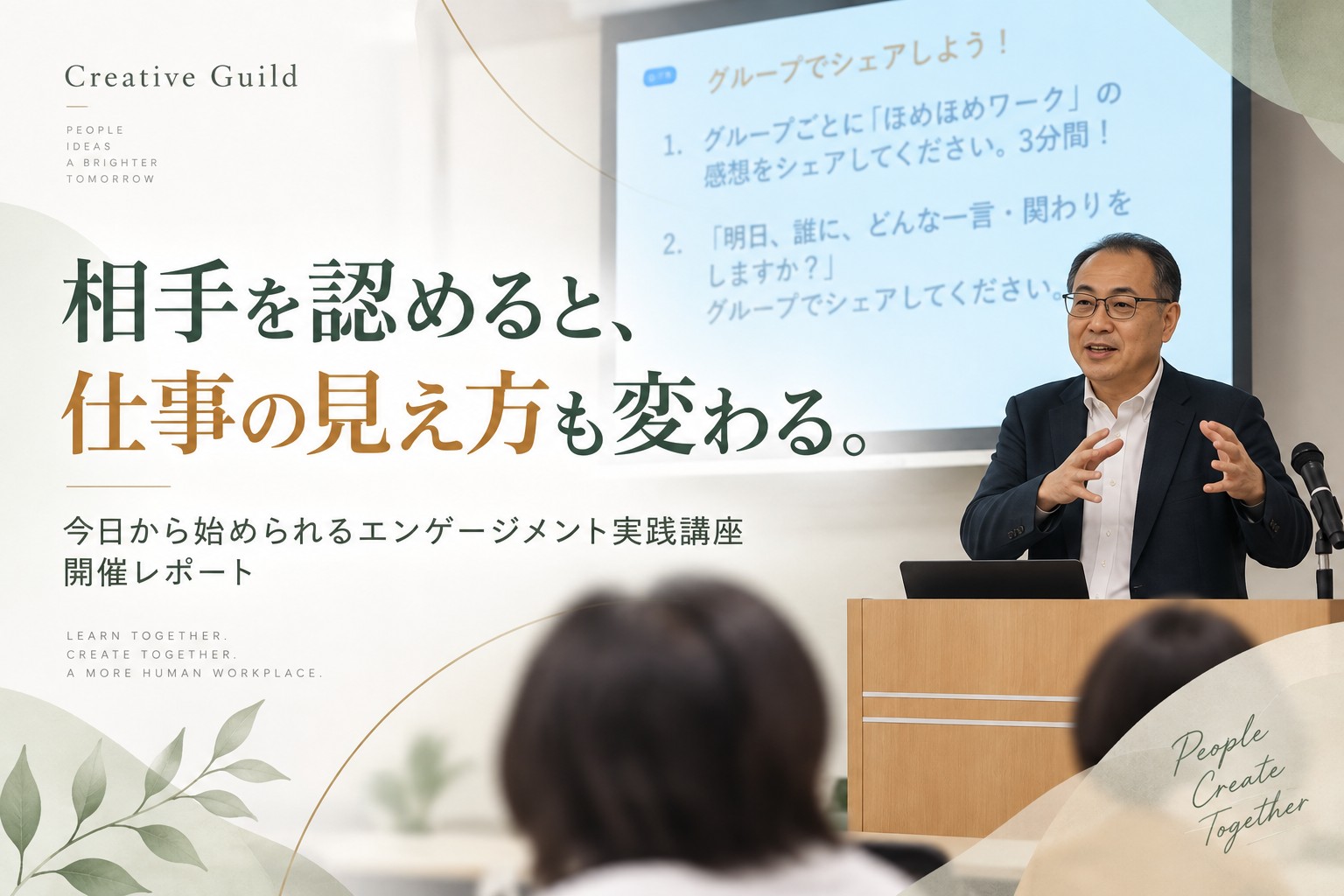
、港区立産業振興センターにて、「今日から始められるエンゲージメント実践講座」を開催しました。講師はCreative Guildの仲間でもある牧 泰嗣さん。今回は「エンゲージメント」を難しい制度論としてではなく、日々の仕事や人との関わりの中から考えていく実践の時間となりました。「明日、会社に行きたいと思いますか?」――そんなシンプルな問いから講座はスタート。エンゲージメントという言葉は、人的資本経営や組織づくりの文脈でよく聞かれるようになりましたが、制度や指標を考える前に、まずは自分自身が仕事をどう感じているのかを見つめてみることも大切です。参加者それぞれが自分の感覚を確かめながら、働くこと、人との関係、そして仕事の意味について考えていきました。
「誰のために働いている?」を考えてみる
講座の中で特に印象的だったのが、「自分は誰のために貢献しているのか?」「誰の、どんなところに役立っているのか?」という問いです。毎日仕事をしていても、自分の仕事が最終的に誰につながり、どんな価値を届けているのかを、あらためて言葉にする機会は意外と多くありません。牧さんからの問いかけをきっかけに、参加者は自分の仕事の先にいる人や、自分が届けている価値を見つめ直していきました。目の前の業務に追われていると、仕事そのものの意味や、自分が誰かに与えている影響も見えにくくなります。だからこそ、一度立ち止まって「自分の仕事は誰につながっているんだろう?」と考えてみる。それだけでも、普段の仕事を少し違った角度から捉え直すきっかけになります。
“ほめる”ことは、相手を認めること
後半には、お互いの良いところを伝え合う「ほめほめワーク」を実施しました。ここで大切にしたのは、成果や能力だけを評価することではありません。「そこが素敵ですね」「そういうところに助けられています」と、相手の行動や存在をきちんと見て、それを言葉にして返していくことです。実際に言葉を交わしていくと、自然と場の空気もやわらぎ、笑顔と会話が広がっていきました。単に「褒める」のではなく、「あなたを見ています」「あなたの存在を大切にしています」と伝えること。それが人と人との関係を少しずつ変えていくことを、体験を通して感じる時間になりました。
エンゲージメントは、日々の関係性から育っていく
仕事への意欲や組織への愛着は、制度だけで生まれるものではありません。自分の仕事が誰かの役に立っていると感じられること。そして、一緒に働く人から自分の存在や行動を認めてもらえること。そんな日々の小さな関係性の積み重ねも、エンゲージメントを育てる大切な要素なのかもしれません。「ありがとう」「助かりました」「あなたがいてくれてよかった」。大きな仕組みを変えなくても、今日からできることがあります。相手を少し丁寧に見て、その良さや感謝を言葉にして伝えてみる。そんな小さなコミュニケーションから、人との関係も、そして仕事の見え方も、少しずつ変わっていく。今回の講座は、“ほめる”という身近な実践を通じて、働くことと人とのつながりをあらためて考える時間となりました。
Recognizing Others Can Change the Way We See Our Work.
Engagement You Can Start Today: Workshop Report
On , we held “Engagement You Can Start Today” at the Minato City Industrial Promotion Center. The facilitator was Yasutsugu Maki, a member of the Creative Guild community. This was a practical opportunity to explore engagement through everyday work and interactions with others, rather than as a complex discussion of organizational systems. The workshop began with a simple question: “Do you want to go to work tomorrow?” Engagement has become a familiar term in discussions of human capital management and organizational development. Before considering systems and metrics, however, it is also important to reflect on how we ourselves feel about work. Each participant checked in with their own feelings as they explored work, relationships, and the meaning of what they do.
Reflecting on “Who Do We Work For?”
Two particularly memorable questions during the workshop were: “Who am I contributing to?” and “Who benefits from my work, and in what way?” Even when we work every day, we may have surprisingly few opportunities to put into words who our work ultimately reaches and what value it brings. Prompted by Maki’s questions, participants took a fresh look at the people beyond their immediate tasks and the value they deliver. When we are caught up in day-to-day duties, it can be difficult to see the meaning of the work itself or the effect we have on others. Taking a moment to ask, “Who does my work connect to?” can help us see our everyday work from a slightly different perspective.
To Offer Appreciation Is to Recognize the Other Person
In the second half, participants took part in the “Home-Home Workshop,” an exercise in sharing what they appreciate about one another. The focus was on more than evaluating achievements or abilities. It was about paying close attention to the other person’s actions and presence, then expressing that recognition in words: “That is something wonderful about you,” or “What you do really helps me.” As people exchanged these words, the atmosphere softened and smiles and conversations spread through the room. Offering appreciation conveyed “I see you” and “Your presence matters to me.” Through the exercise, participants experienced how this kind of communication can gradually change relationships.
Engagement Grows Through Everyday Relationships
Motivation at work and a sense of attachment to an organization do not arise from systems alone. Feeling that our work helps someone, and having the people we work with recognize our presence and actions, may also be important elements in nurturing engagement. “Thank you.” “That really helped.” “I’m glad you are here.” There are things we can begin doing today without changing a major system. We can look a little more carefully at others and put our appreciation and gratitude into words. Starting with these small acts of communication, our relationships and the way we see our work can gradually change. Through the familiar practice of offering appreciation, the workshop gave us an opportunity to reconsider work and our connections with others.
-590x380.png)

この記事へのコメントはありません。